Economic route
Trade relationships, supply access and the Coalition’s transport network create a route through economic influence.
Original IP · Post-collapse frontier RPG · World bible v1.2
A Moon-born soldier is erased from every system and stranded on the Earth his society abandoned.
01 · Game overview
Dead Barren is a grounded open-world RPG set on Earth during the third era of the Exo-Genesis universe.
The player is a Moon-born transport soldier serving a minor Earth posting. After seeing Commander Bernard Depore’s private ledger, he is removed from MoonGov’s biometric systems and marked for disposal. His vehicle fails before the execution can be completed. He begins on foot, without a valid identity, trying to reach a fortified travel station and return to LunaTerra.
The route home can be built through trade, armed resistance, institutional infiltration or technical fraud. Each path ties the personal journey to the world’s economy and political conflict.
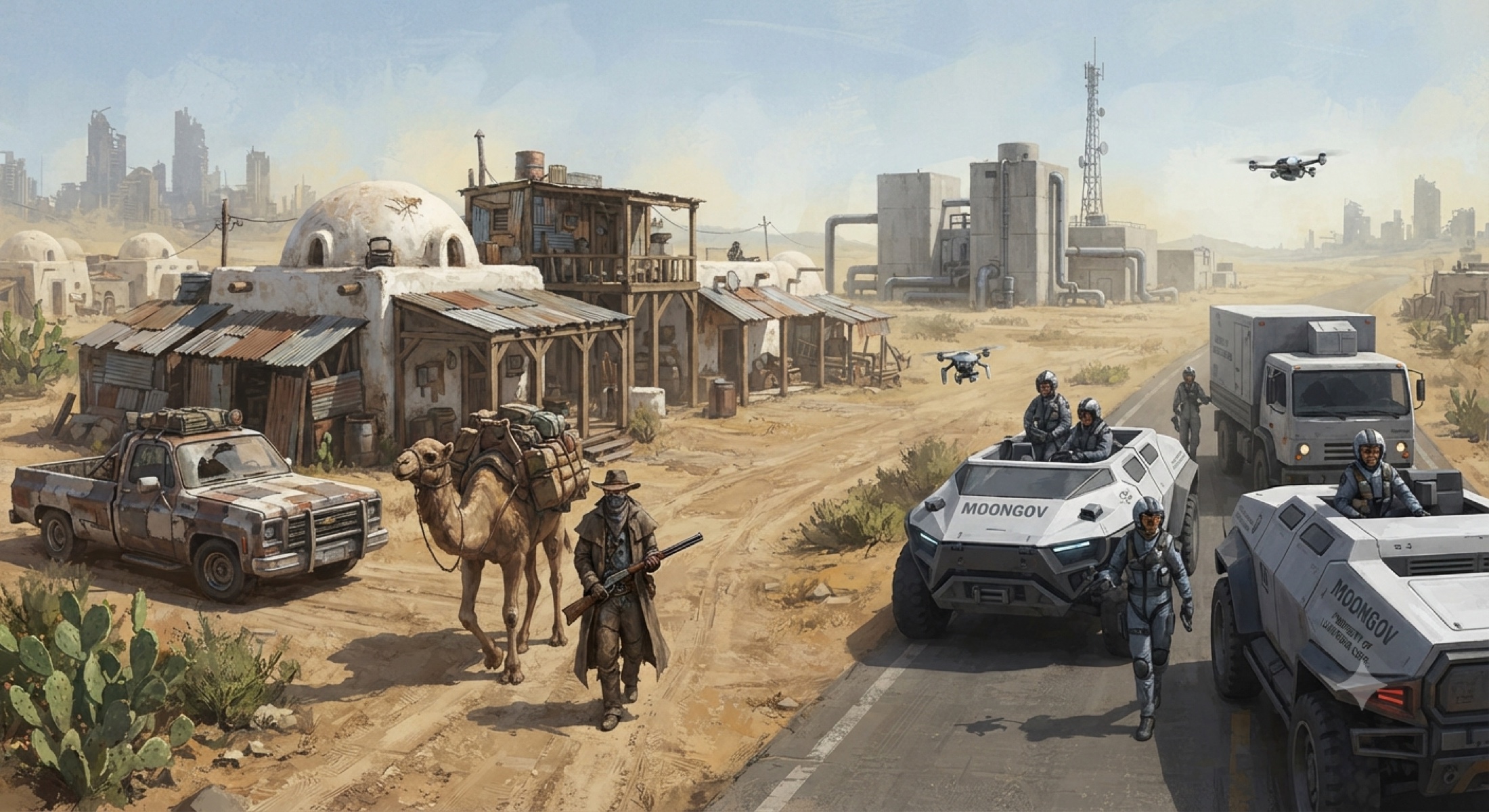
02 · Lore and backstory
Humanity did not leave Earth because it was empty. Governments decided that saving selected populations elsewhere was more achievable than repairing the planet everyone already lived on.
LunaTerra began as a research settlement and became a refuge for political, technical and economic elites. Earth supplied the materials that allowed the Moon to grow. When Venus terraforming began, MoonGov returned for water, metals and fuel. Its stated role was stabilization. Its practical role was keeping launch sites, extraction corridors and supply routes operating.
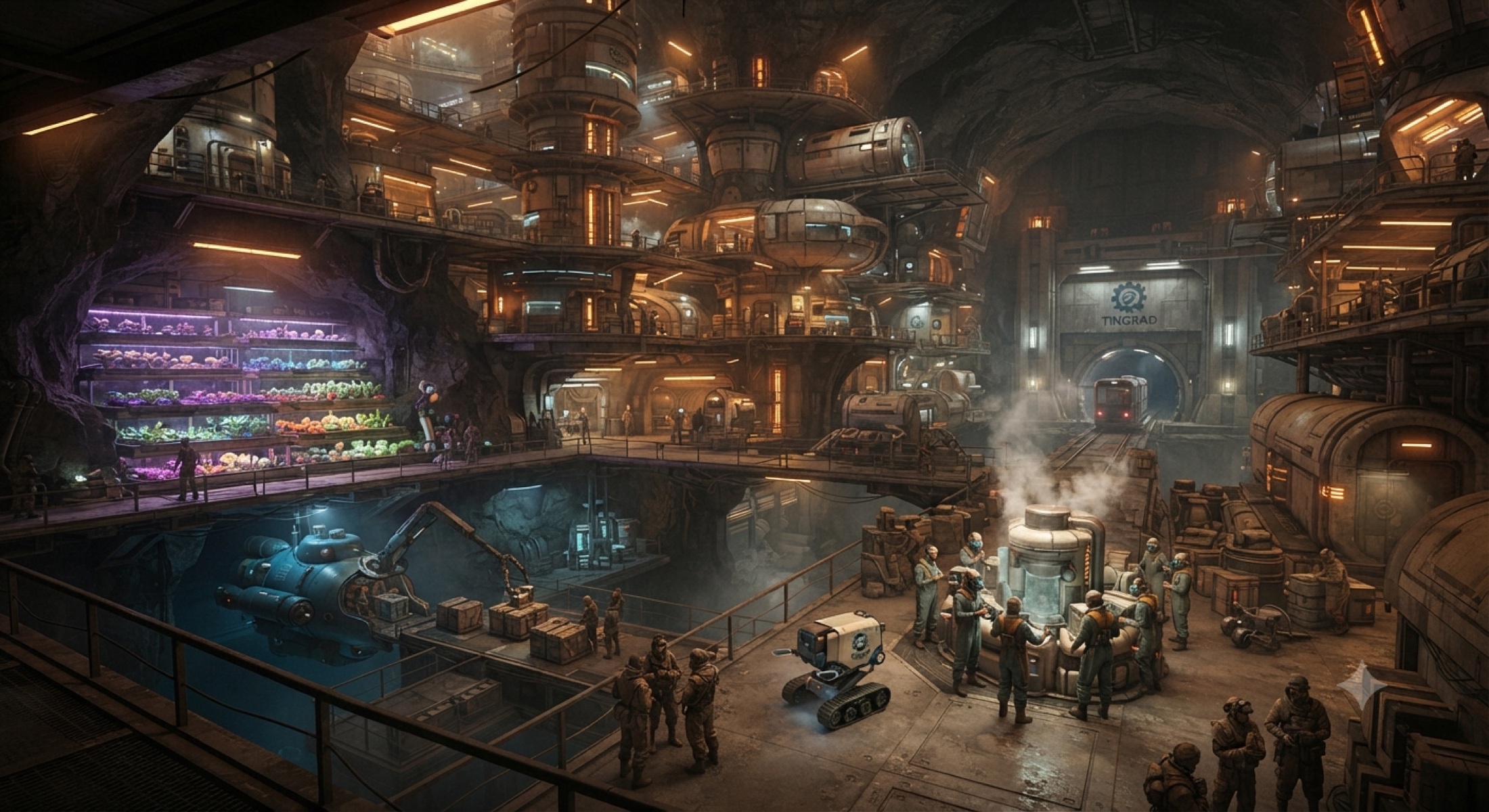
Most people remained on Earth. Communities rebuilt around farms, wells, repairable vehicles, rail tunnels and defensible roads. The Milk Farmer Coalition connected agricultural settlements through trade. Tingrad survived underground by restoring old technology. Frontier formed around the demand that Earth’s resources remain on Earth. The Murati Bridge incident later divided that movement and produced the more violent Splitters.
LAB represents another answer to collapse. Its researchers believe present-day humans and animals cannot survive the worlds being prepared for them, so adaptation has to be engineered. Their creatures were designed, tested and released through programs financed indirectly by Moon pharmaceutical companies. Depore became the broker between corporate funding, MoonGov logistics and illegal human acquisition.
Towns still raise children, move livestock and hold markets. MoonGov convoys use the same roads. People can condemn extraction and still need goods that arrived through it. The setting grows from these practical contradictions.
03 · Main story
The Mooner needs to reach a fortified travel station. The destination is established early; the route depends on relationships, information and leverage developed on Earth.
Depore’s edit turns a legal person into an anomaly. At first, erasure protects the Mooner because patrol drones find no matching identity. The first red scan marks a clear transition: Depore has learned that he survived and has entered him into the regional hunt.
Trade relationships, supply access and the Coalition’s transport network create a route through economic influence.
The player can work with both movements until their schism becomes violent, then must decide which former allies to support.
Evidence, clearances and procedural knowledge let the player move through the institution that erased him.
A fabricated identity and regional-cache manipulation provide access while Depore continues the pursuit outside the database.
Moon pharmaceutical companies need adaptation research for off-world settlement. LAB can perform it but needs equipment, supplies and human subjects. Depore reroutes MoonGov crates as decommissioned stock, takes a cut and arranges disappearances when LAB requests people. Moon Pharma avoids examining how the research is produced. LAB sees only the broker below the corporate chain. Depore is dangerous because he understands the whole transaction.
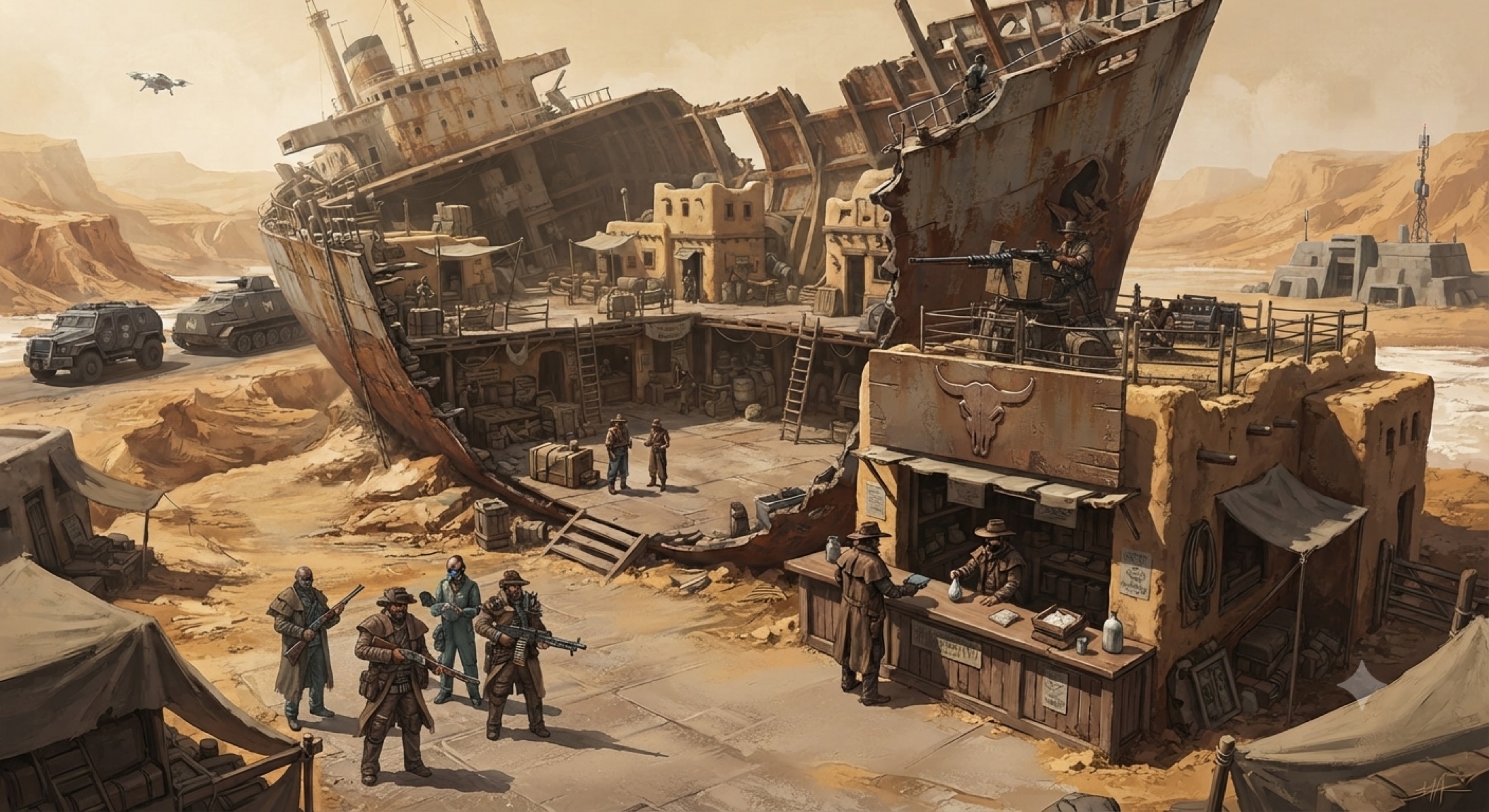
His soldiers also operate off-book shops that sell stolen equipment for Stock. The player may use those shops for much of the game before discovering that each purchase financed the man who erased him. The economy carries the revelation through a rule that was already useful.
Returning to the Moon resolves the immediate objective. The broader outcome depends on promises made along the route. A player who accepts Frontier support, retrieves his family and leaves Earth has adopted the same logic MoonGov uses. Another may remain and join LAB because it offers food, equipment and purpose. The endings follow the player’s relationships and actions instead of correcting them into one approved answer.
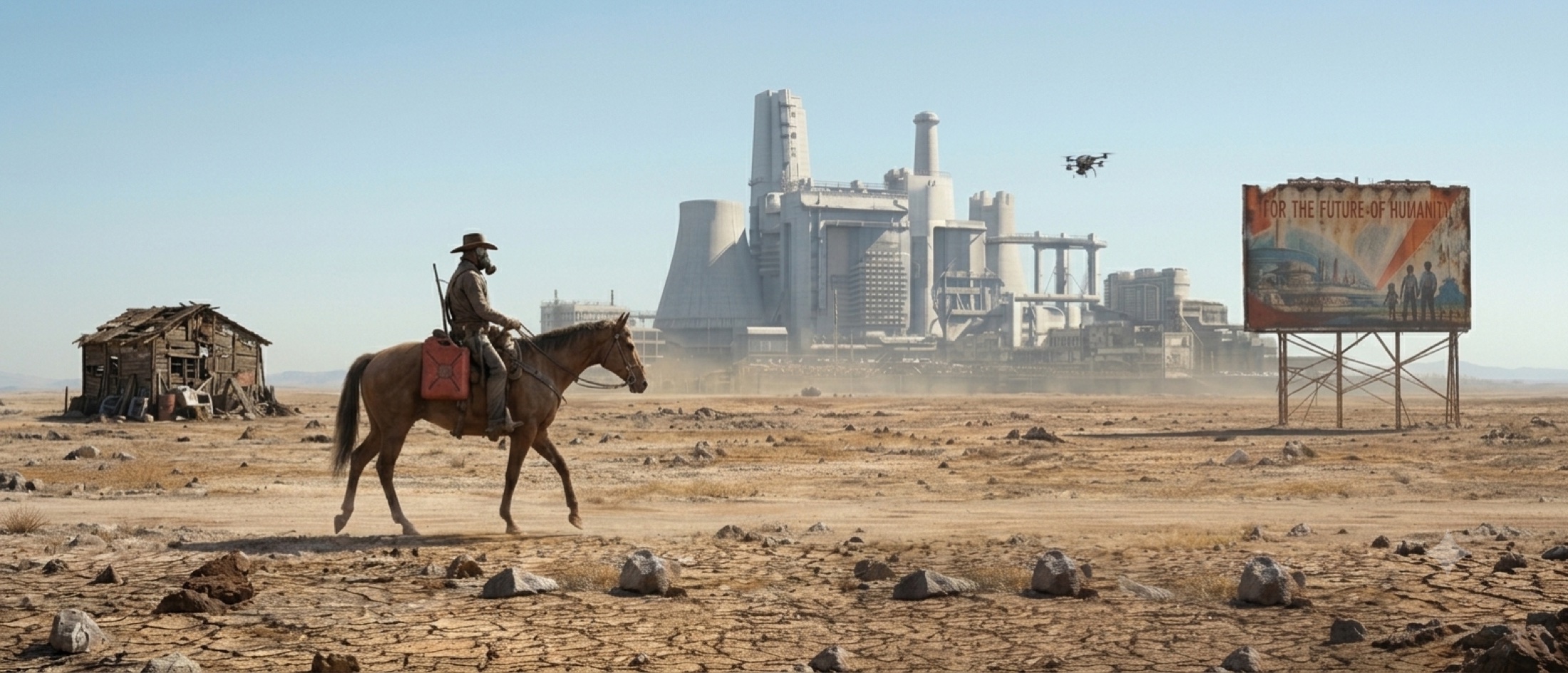 Narrative artifact · Dialogue encounter as songA Wasteland ProphecyAn old prophet tries to assign the player a destiny. Hear the encounter and see how it establishes the project’s dialogue tone. ↗
04 · Art direction
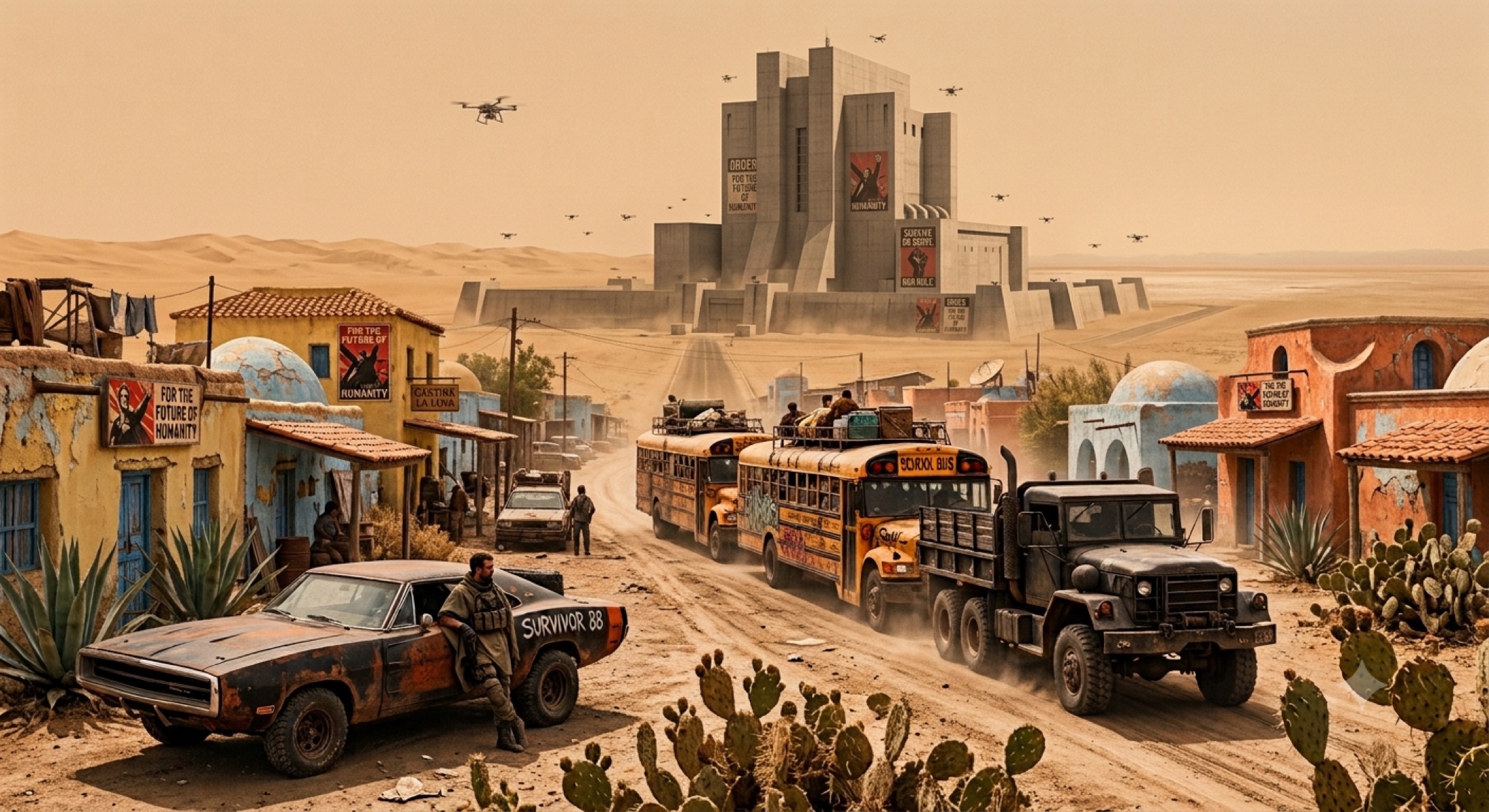
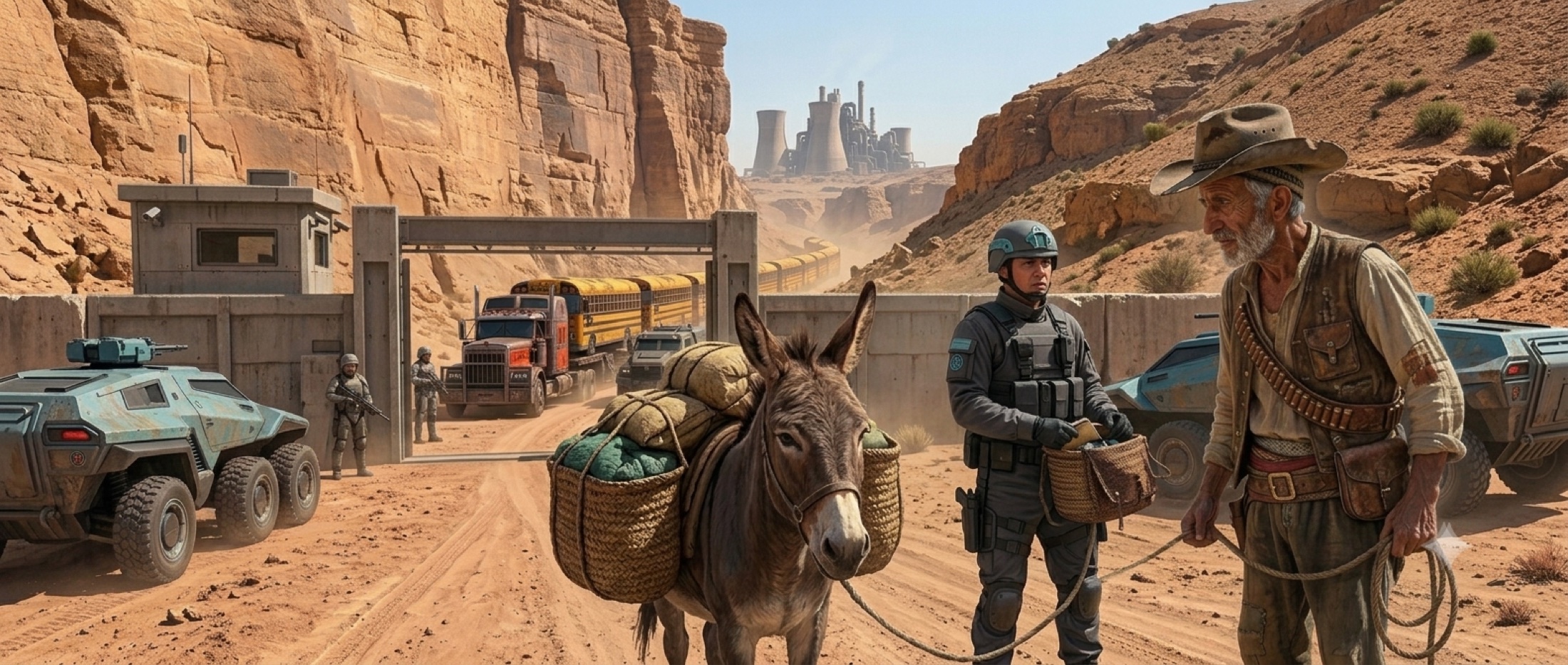
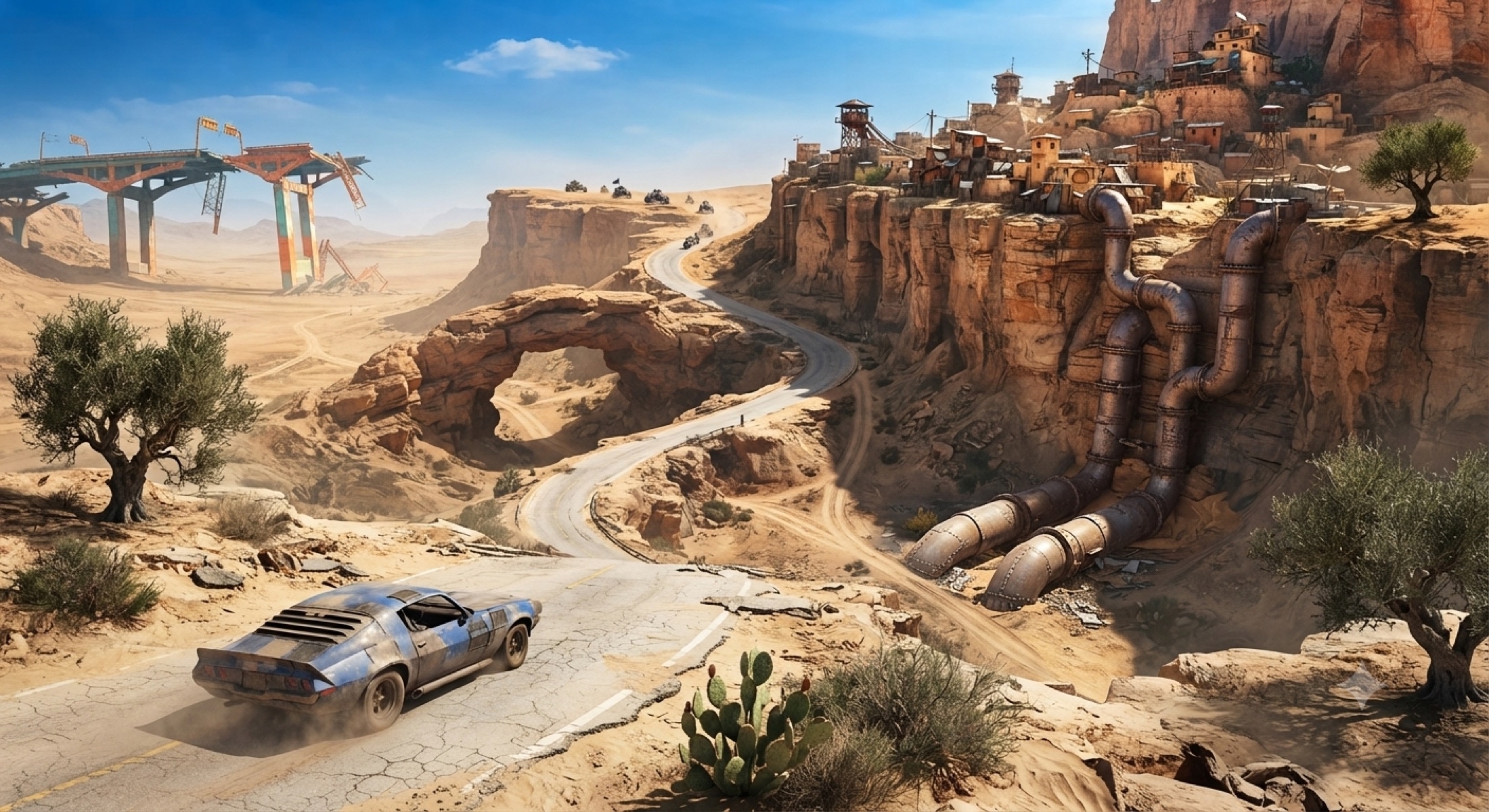
The frontier combines North African and Mediterranean building traditions, the material language of the American frontier, and repairs made from whatever survived. The mix is driven by scarcity rather than regional decoration.
Whitewashed adobe, stone arches and courtyards sit beside timber porches, corrugated roofs, dead vehicle bodies and salvaged concrete.
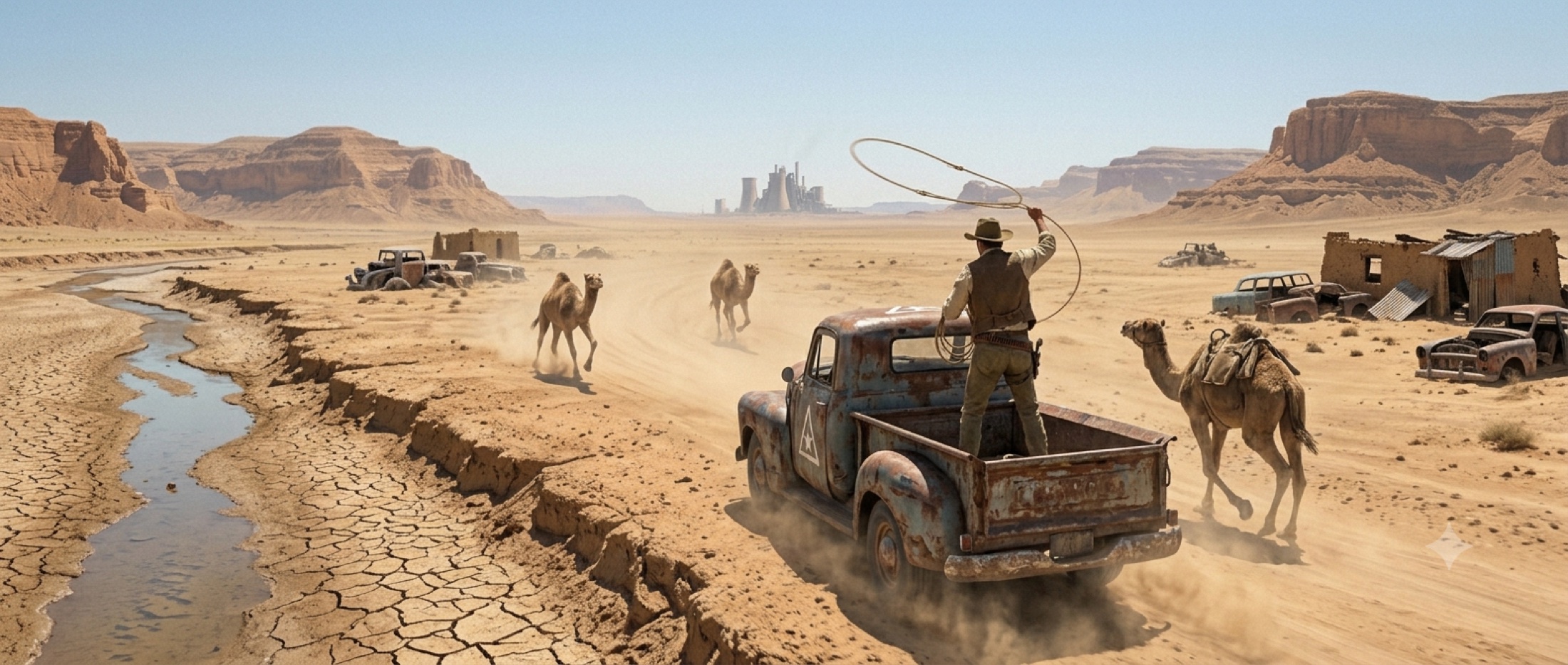
Horses and patched trucks share roads with MoonGov EV convoys, drones and laser weapons. Neither world treats the encounter as spectacle.
Dust, whitewash, rust and faded paint dominate. A generator bulb or clean surface stands out because someone maintained it.
05 · Timeline
The first game occupies one era of a longer history. Earlier decisions explain the institutions visible in the present; later eras remain outside this project’s playable scope.
Energy geopolitics deepen fossil-fuel dependence. Inertia becomes the root condition for later collapse.
Resource conflict and border militarization grow. LunaTerra is proposed publicly as science and privately as fallback.
The Moon becomes habitable for selected populations. Earth is mined to finance the Moon and the Venus program.
MoonGov keeps extraction moving. MFC feeds the frontier. LAB creatures enter the ecology. The game begins here.
The MFC’s logistical power later develops into an urban political order. This city does not yet exist in the game.
Earth, LunaTerra and Venus carry different versions of the original escape plan and its consequences.
06 · Map and locations
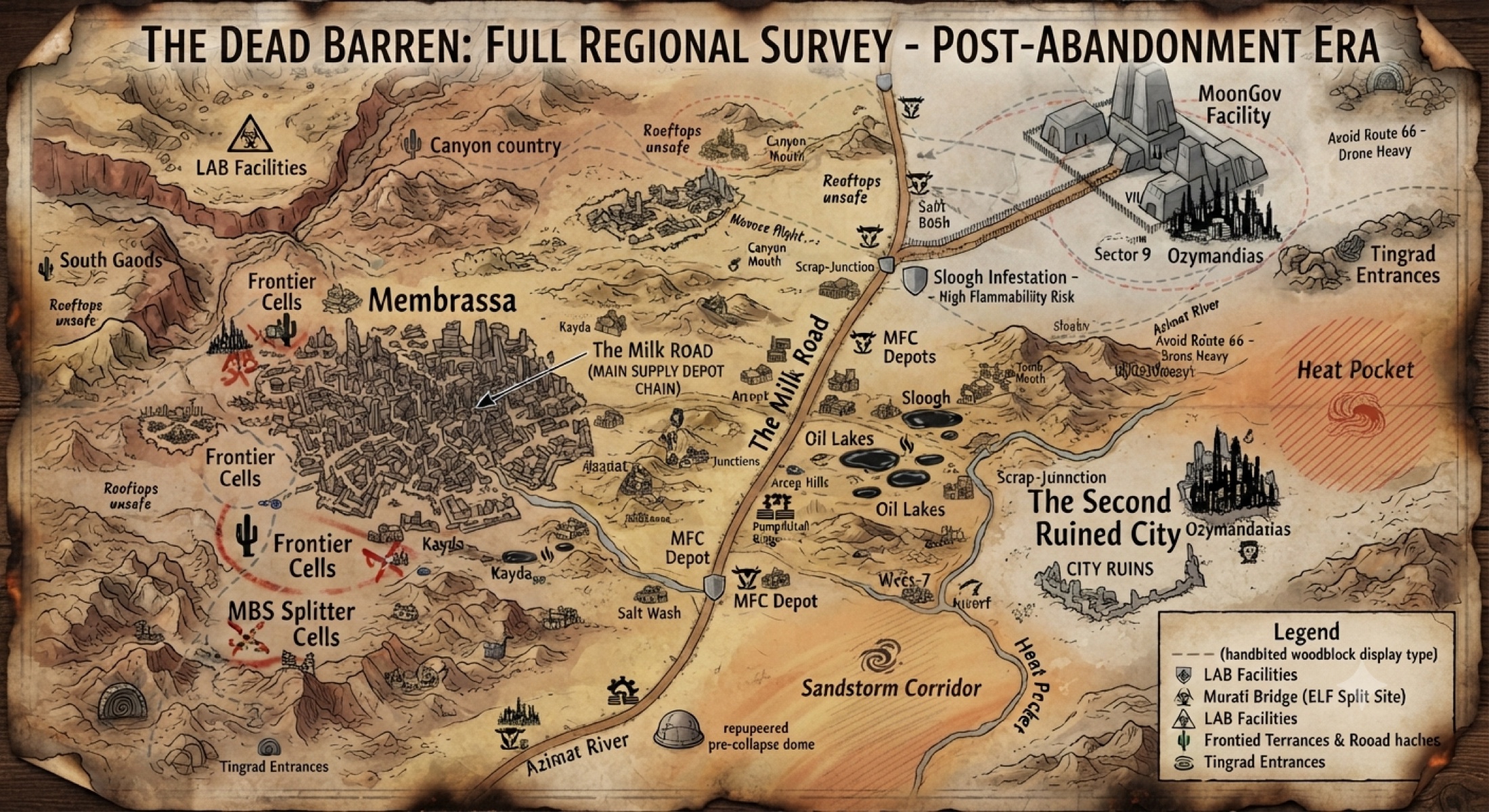
Regions are defined by resources, travel risk and political access. Geography supports the economy and determines why settlements endure.
07 · People and culture
The world is meant to feel inhabited between missions. Work, water, speech, clothing, transport and local obligations establish culture before exposition does.
Farming, convoy protection, repair, salvage and fuel processing organize the week. Noticeboards and conversations refer to jobs that continue without the player.
A filled cup can be courtesy, payment or obligation. Bottled mineral water is a luxury; ordinary canteen water is part of survival and trade.
Frontier speech blends communities that converged after collapse. Moon speech is cleaner and institutionally standardized. “Mooner” carries class resentment before anyone knows the player.
Old MoonGov recruitment boards promise life on Venus. Frontier marks and Splitter graffiti contest those promises. Murati Bridge survives through incompatible accounts.
Long coats, scarves, canvas, leather and repaired boots respond to dust and travel. Armor uses vehicle panels and reinforced workwear.
Horses, camels, diesel rail and repaired vehicles coexist. Fuel, heat and safe routes determine which is practical.
Courtyards, shaded markets, timber awnings and welded additions show how buildings passed between uses and generations.
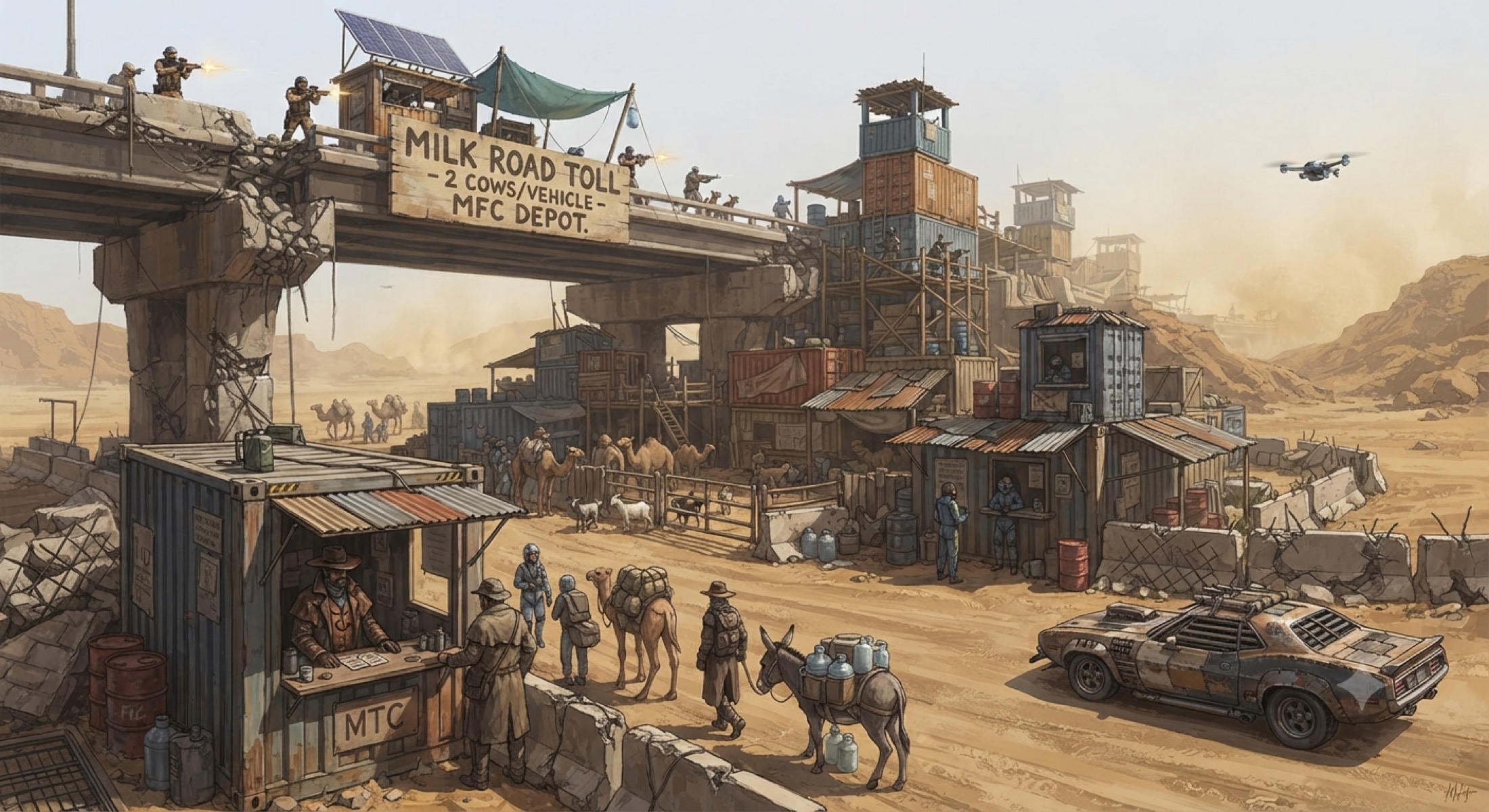
A missing animal, altered toll, broken pump or delayed convoy can expose relationships among factions without becoming a speech about politics.
08 · Factions
Every faction offers a coherent response to collapse. Their beliefs become playable through access, prices, companions, patrols and the work they ask the player to perform.
A technocratic Earth administration protecting extraction and launch infrastructure. Many officers believe triage is the last remaining form of responsibility.
Experimenters who engineer organisms for hostile futures. Their work is internally rational, materially useful and responsible for every monster in the world.
The Milk Farmer Coalition runs convoys, outposts, currency and depot ledgers. Reliability has turned a trade network into informal sovereignty.
The original Earth Liberation Front demands an end to mining and water extraction. Its local cell favors sabotage with restraint.
The Murati Bridge faction holds collaborators responsible for the extraction system. Their missions accept casualties Frontier refuses.
Vault towns use closed farms, water recycling and restored technology to build self-contained survival beneath the political conflict.
Crews claim territories in ruined cities and sell recovered technology. Ownership, reputation and buyer relationships govern the trade.
Independent towns protect wells and routes; raiders live from theft. Neither category is politically uniform or automatically hostile.
09 · Economy and trade
The currencies expose affiliation and risk. Where money can be spent matters as much as its numerical value.
10 · Core game systems
Systems carry world information and consequence. Survival pressure remains readable and avoids turning travel into constant inventory maintenance.
Face coverings prevent casual recognition. Formal scans compare the player against a regional cache that changes through the story.
Hostility follows observed actions and transmitted identification. Escaping unseen prevents a permanent abstract crime score.
A Splitter companion reacts when the player spends Stock and recovers trust after witnessing action against MoonGov.
MFC outposts enable reliable long-distance travel. Horses cover uncertain routes. Vehicles trade fuel and visibility for speed and storage.
Hydration changes slowly enough to shape route planning. Heat pockets and rare storms create location-specific preparation.
Convoys, patrols, markets, animal movement and local work continue on schedules that can be interrupted by the player or other conflicts.
11 · Creatures and encounters
Every creature has a LAB origin, habitat, behavior and gameplay purpose. Each one is a deliberate adaptation whose consequences escaped the facility that produced it.
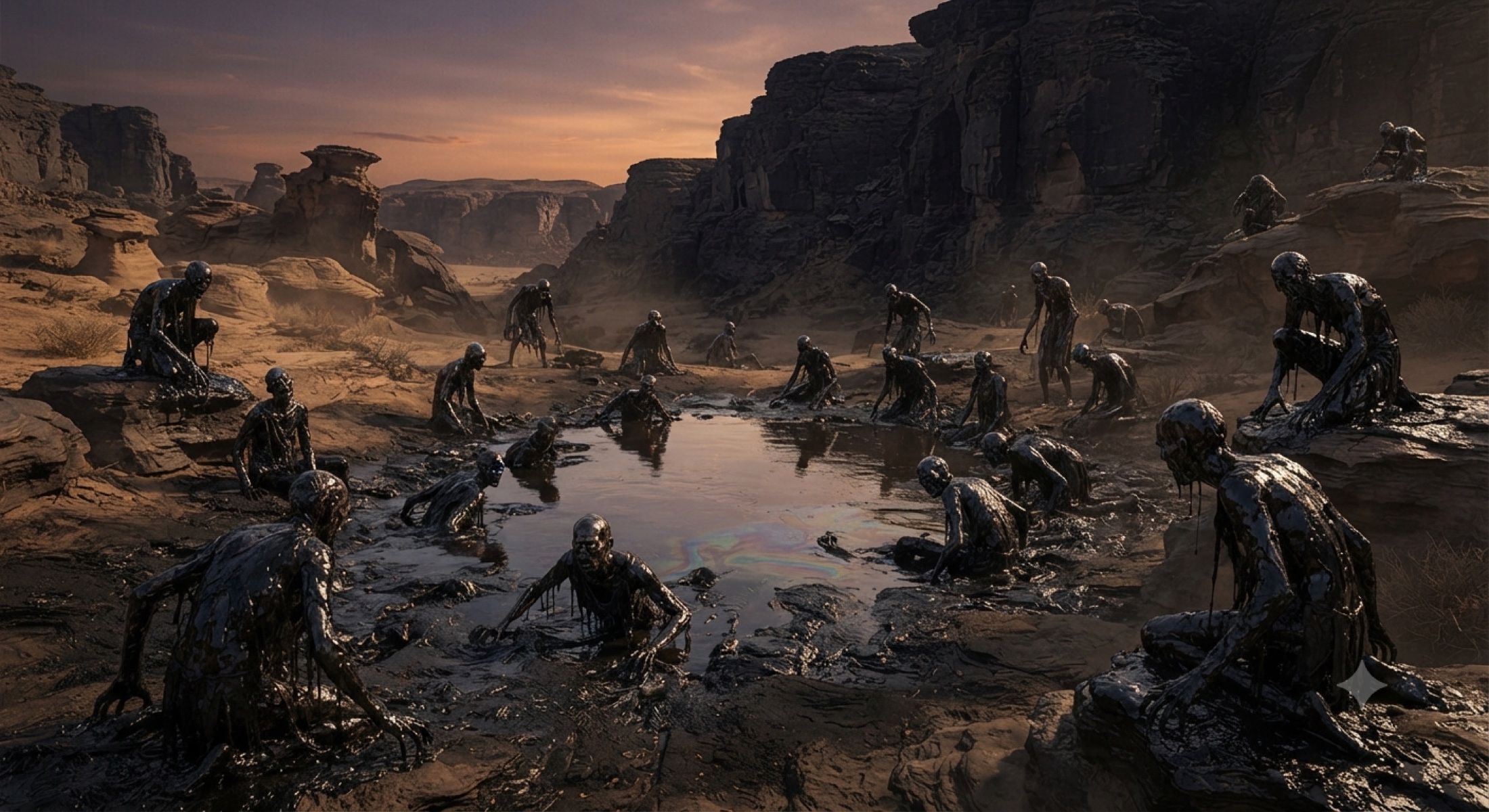
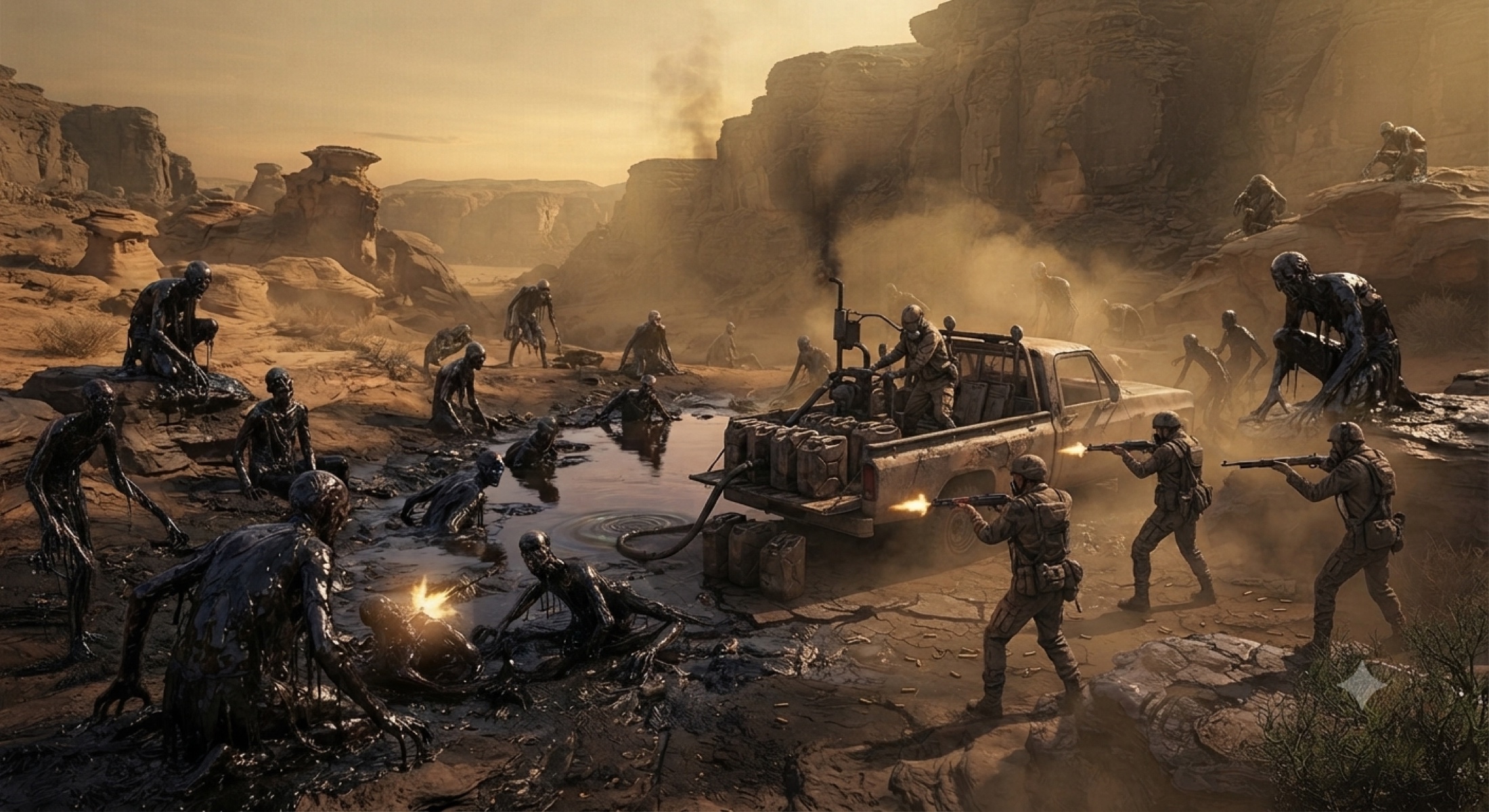
Organic hydrocarbon detectors that congregate around crude oil. They remain passive until the resource is approached and can ignite the entire pool.
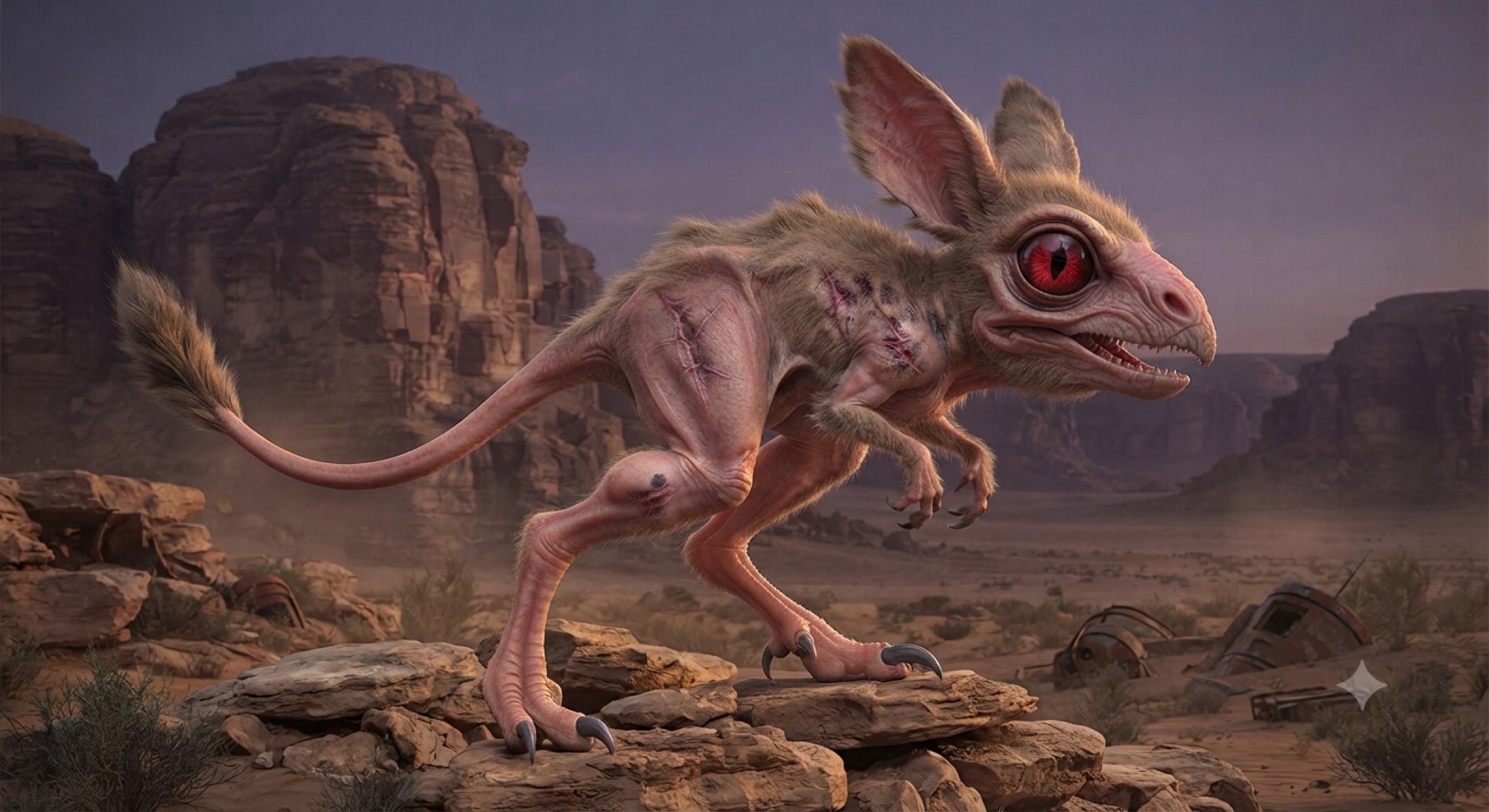
Fast, low-health attackers that leap toward the face. Their distraction becomes dangerous when paired with a larger enemy.
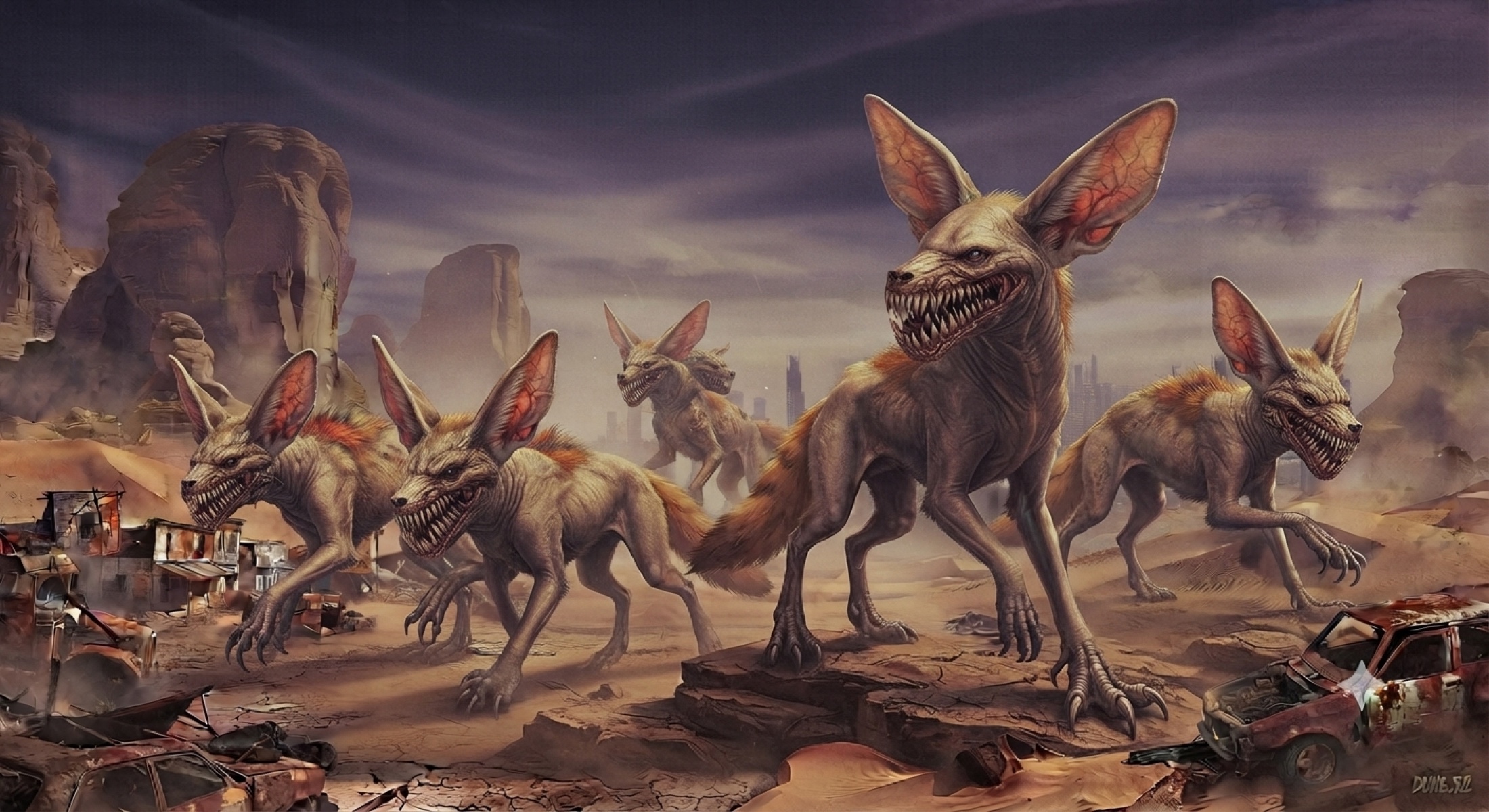
Fennec-derived predators with enlarged sensory organs and erratic lunging movement in canyon country.
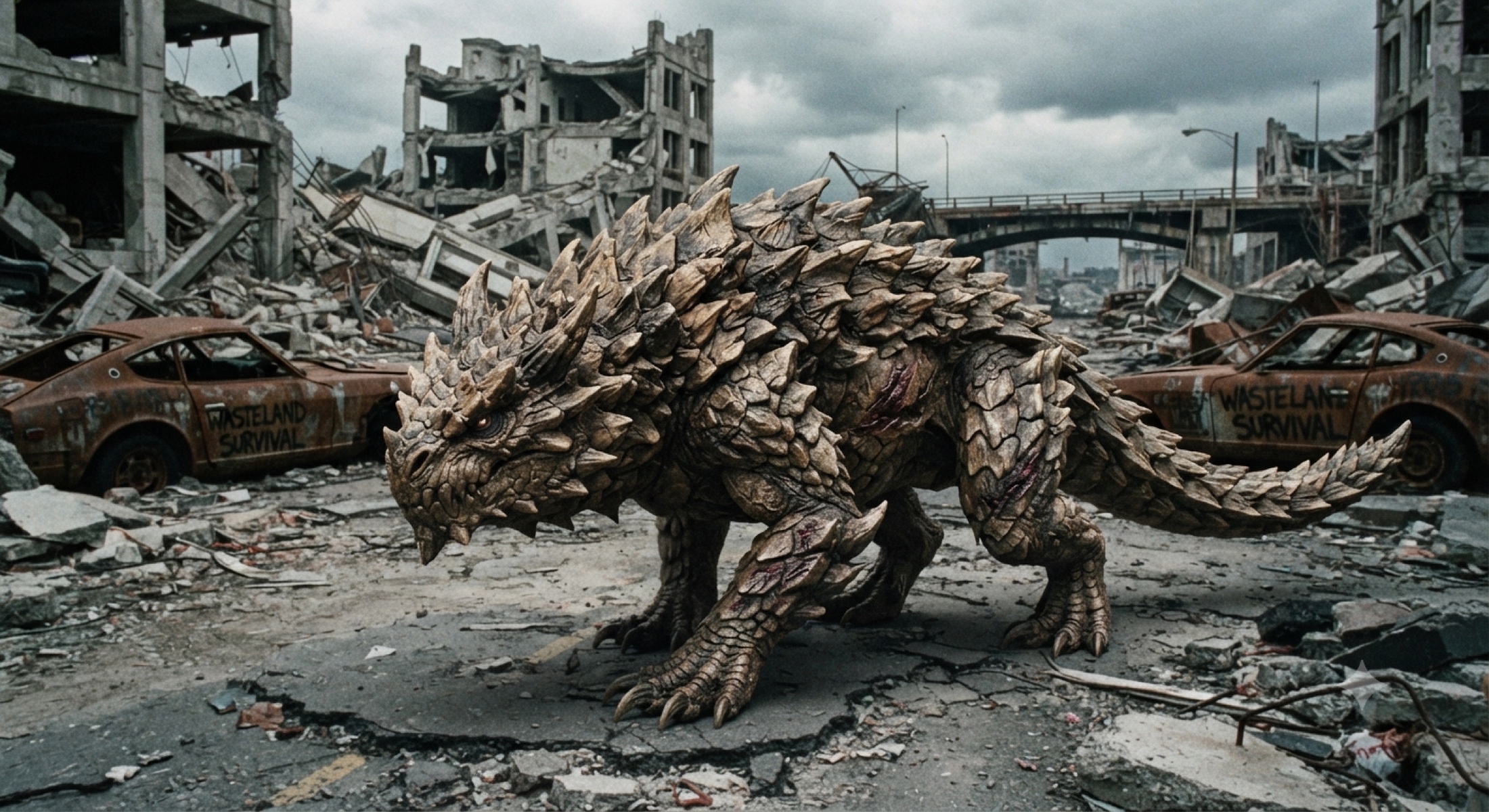
Frontal armor resists small arms. Joints and the underside create anatomical weak points that reward positioning and ammunition choice.
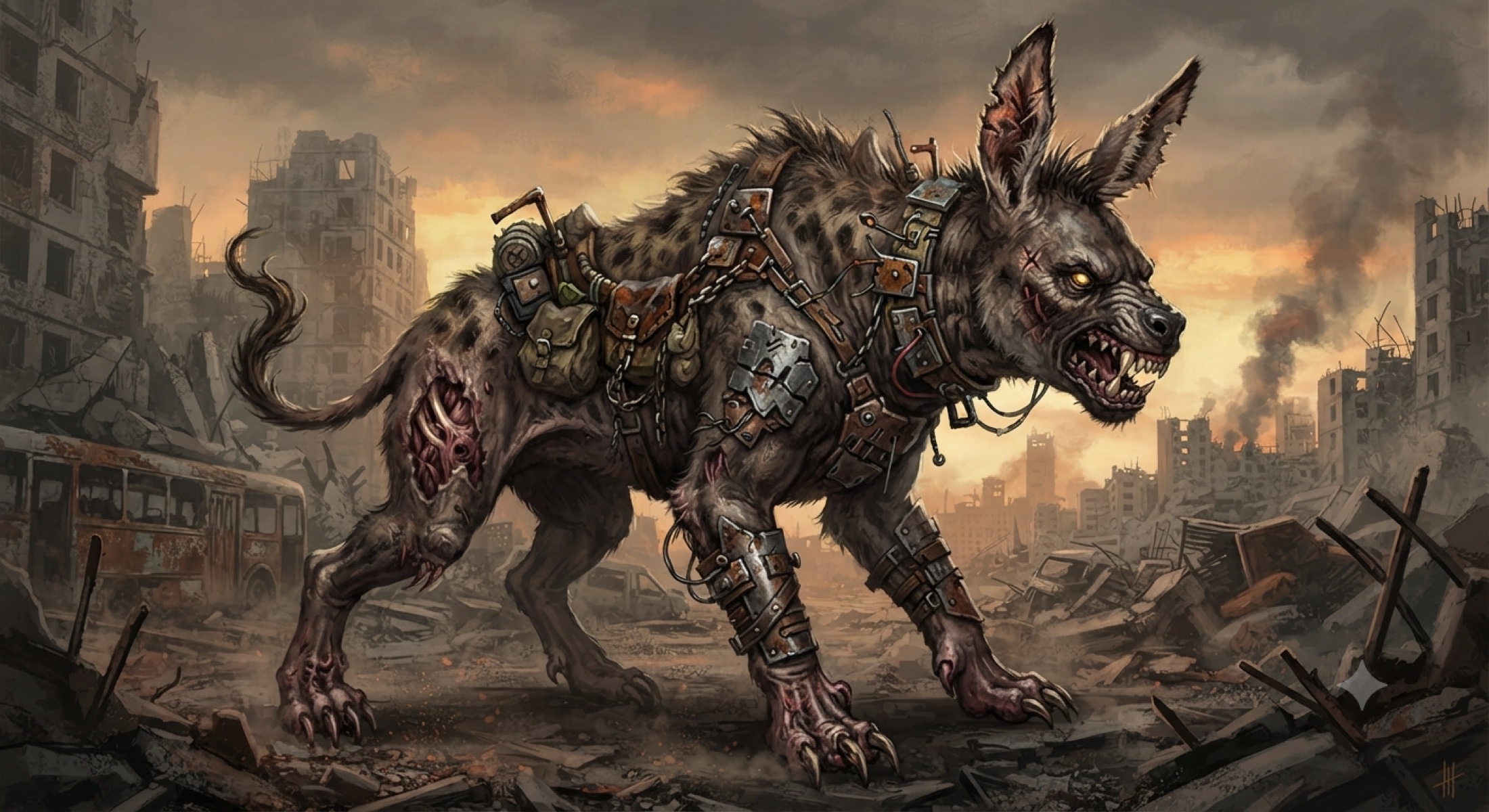
Wild animals remain calm while feeding. Raider-owned variants wear collars and scrap armor that imply a human threat nearby.
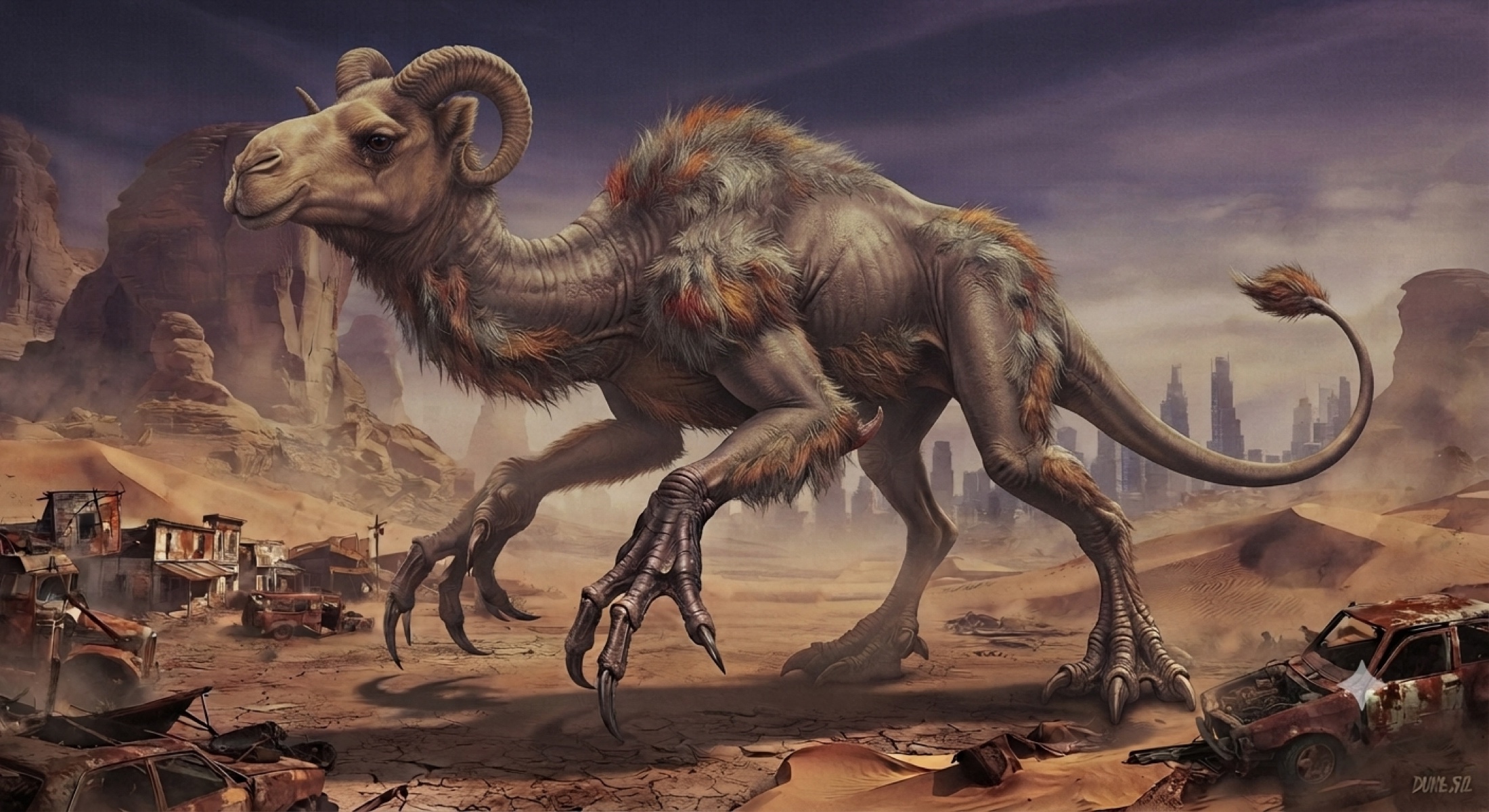
A camel-derived hunter capable of pacing vehicles, turning long sightlines into pursuit spaces.
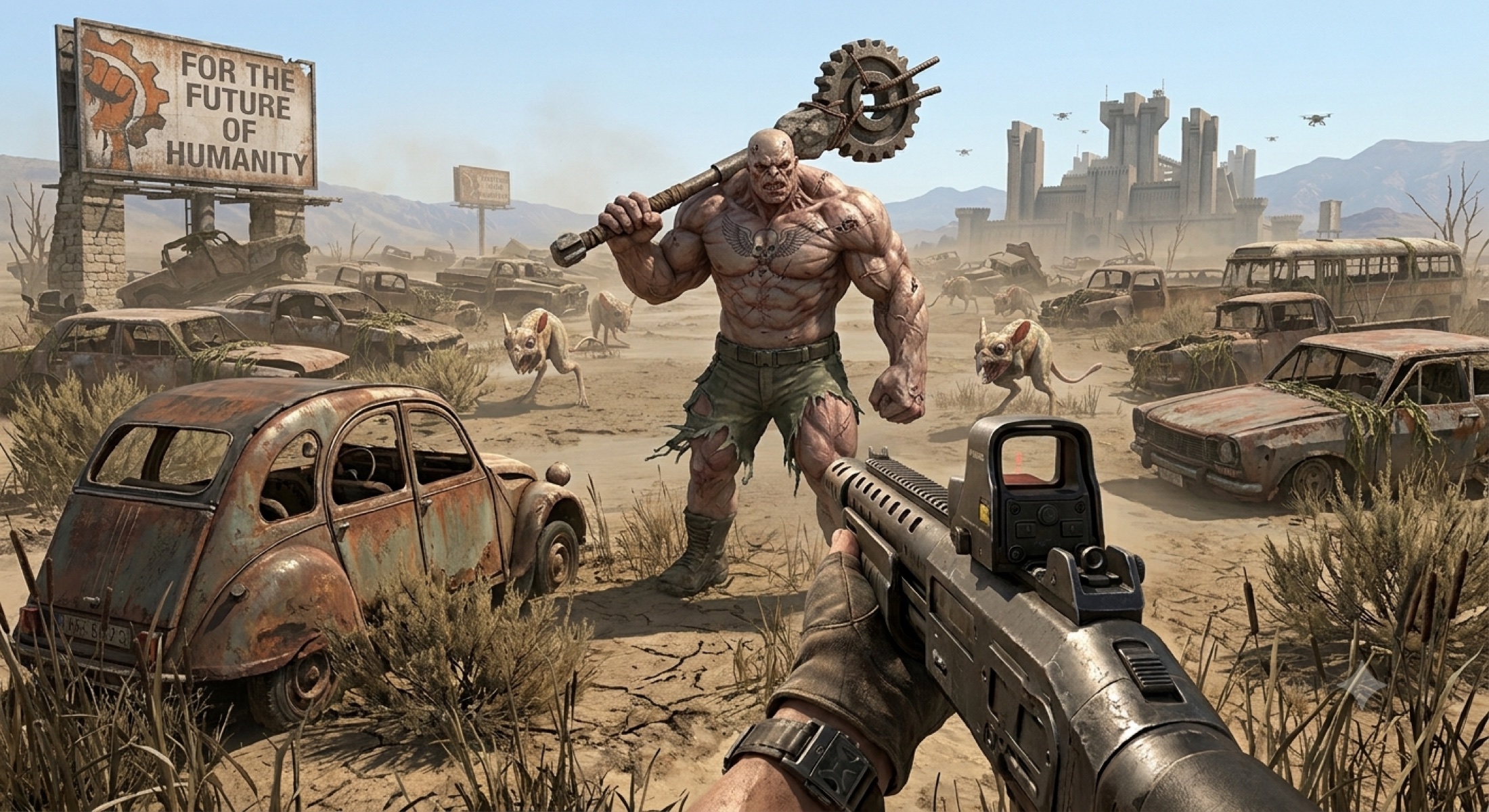
A failed super-soldier whose remaining insignia can connect an encounter to people taken through Depore’s pipeline.
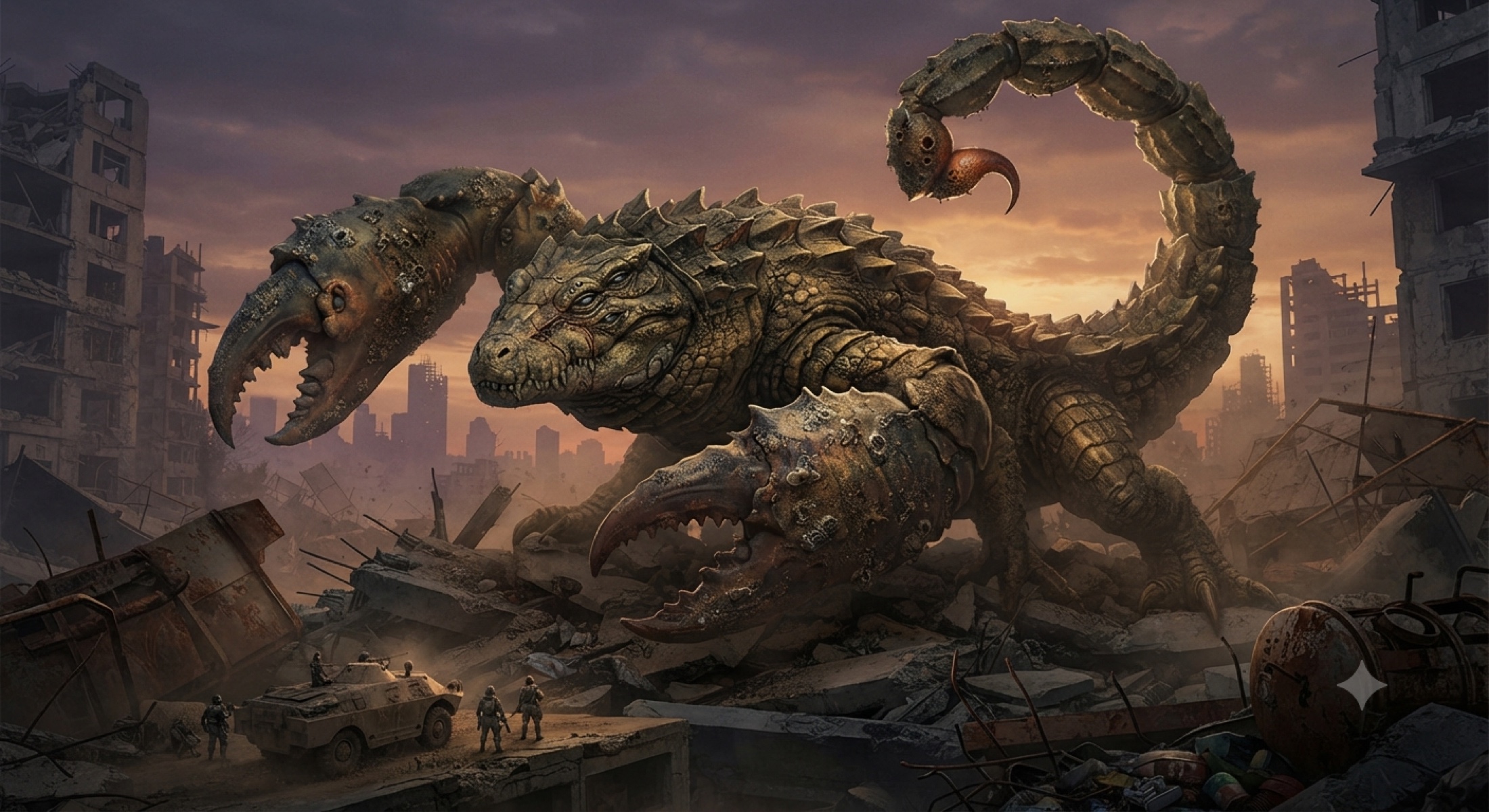
A location-specific creature that turns one ruined city into a remembered place with its own preparation and folklore.
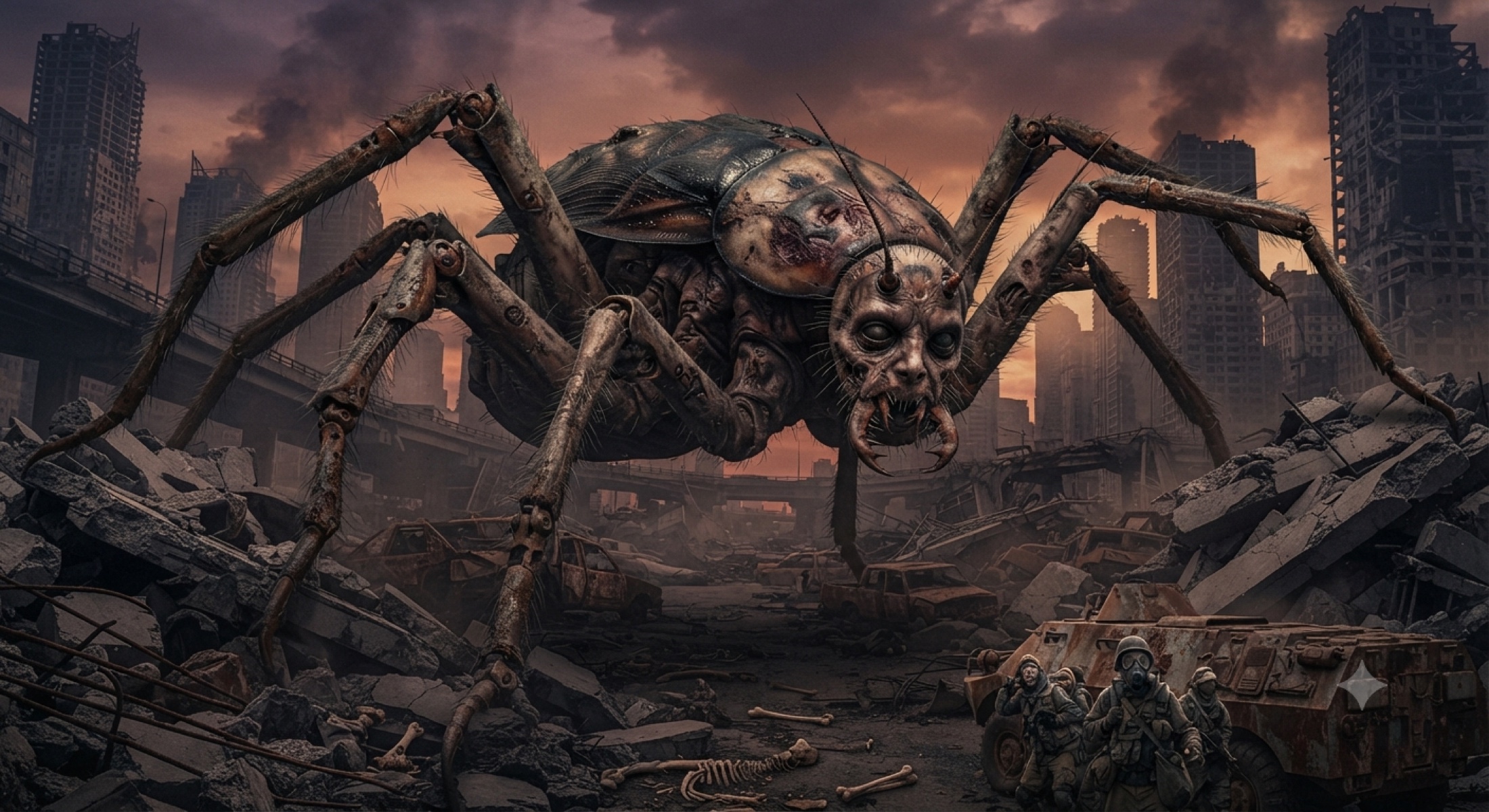
A rare engineered hunter built around pursuit, tracking and fear rather than repeated ambient combat.
World bible · Design portfolio
This portfolio selection condenses a longer bible covering history, narrative routes, character identity, factions, economy, language, locations, creatures and living-world rules.
Next world · Blood of Babel →Original concept, worldbuilding, creative direction, game systems and writing by Hamza Trabelsi. Concept imagery includes AI-assisted visual development.