Character knowledge
Every revelation is limited by what the speaking character can plausibly know. Aaron cannot reveal Jasmine’s parentage because he does not know it.
Original IP · 2D action-platformer · Two-part story
A half-elf boy raised as human crosses an altered forest to find his family. Every adult he meets knows a different part of his identity.
World premise · Lore
Legend of the Howling Wood is a two-part 2D action-platformer about a child crossing an altered forest after soldiers take his family. New creature essences open routes through the world and reveal his half-elf identity. The search leads through PlankLand, the Elf Kingdom, the Hangard Empire and the Refuge, where each group holds a different part of his family’s history.
The Howling Wood was barren before exiled elves made it fertile. Their magic enlarged its trees and altered its animals across generations. Humans now treat the forest as a natural forbidden place, unaware that its danger is the passive defense of a civilization behind magically raised mountains.
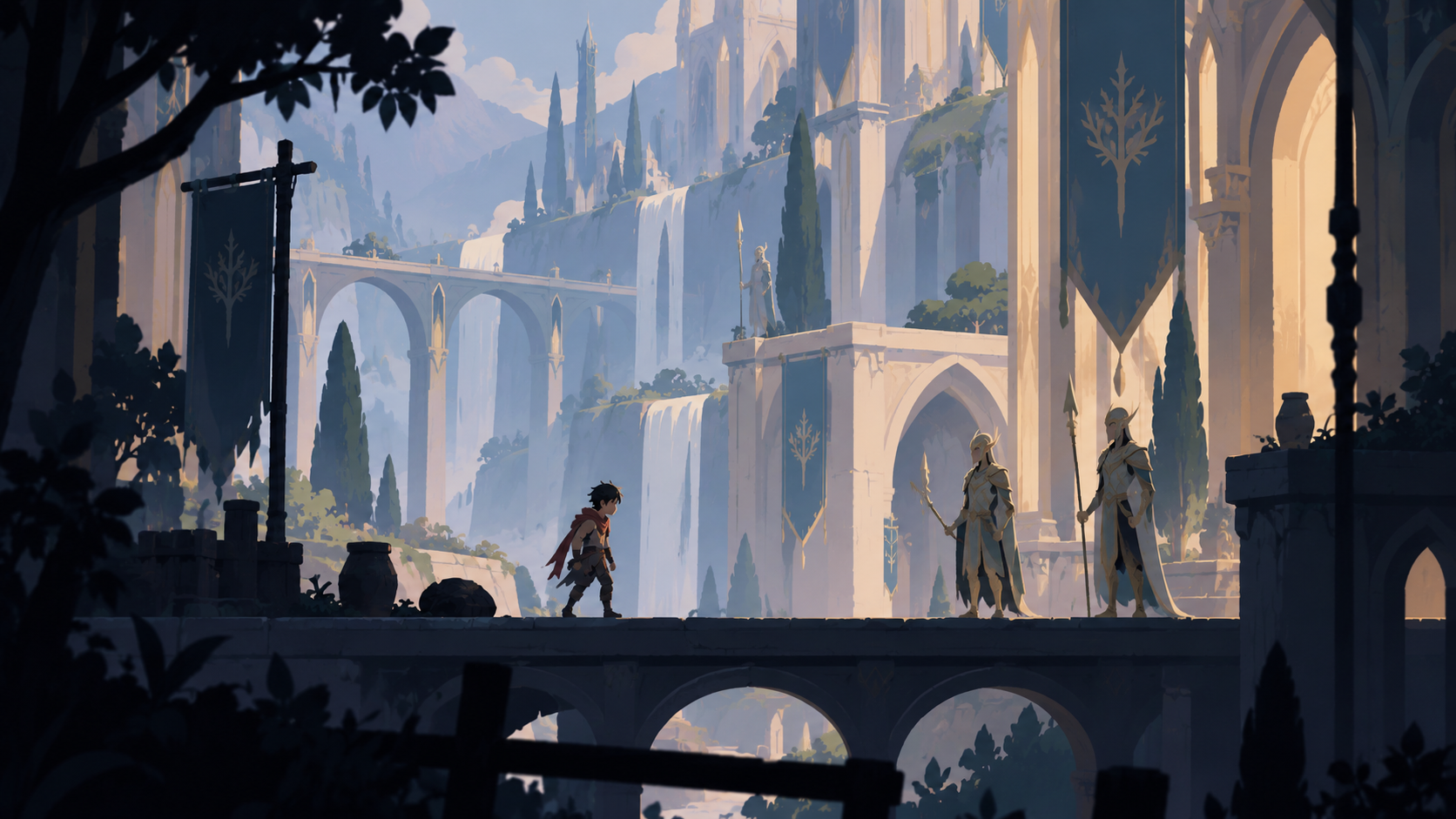
The Elf Kingdom presents itself as rational and beautiful. Its leaders divide society by function: elves provide governance, magic and long planning; humans provide adaptable physical labor. The refusal to treat consent as relevant created the uprising that later became the Hangard Empire.
Hangard begins with a real liberation cause and reproduces hierarchy after victory. Stolen elven knowledge becomes military advantage, grievance becomes founding identity, and Layla becomes Empress. The Refuge is morally cleaner partly because it has little power and incomplete information.
The boy is Aaron and Layla’s half-elf child, raised as human beside Jasmine without knowing they share a mother. He looks human and absorbs magical essence like an elf. Both civilizations try to claim his abilities while preserving the political order that made his existence dangerous.
Nora, enslaved after the raid, is the only surviving person who knows the complete relationship among the boy, Jasmine, Aaron and Layla. Information and political power are intentionally separated. Reaching her determines when the story can change.
Every revelation is limited by what the speaking character can plausibly know. Aaron cannot reveal Jasmine’s parentage because he does not know it.
Aaron protects and manipulates his son. Layla survives oppression and builds an empire. Jasmine’s coldness is self-protection, not simple corruption.
Each absorbed essence opens traversal while proving, long before exposition, that the protagonist is not an ordinary human.
Amber forests and sincere emotion contain slavery, abandonment and institutional cruelty without relying on graphic shock.
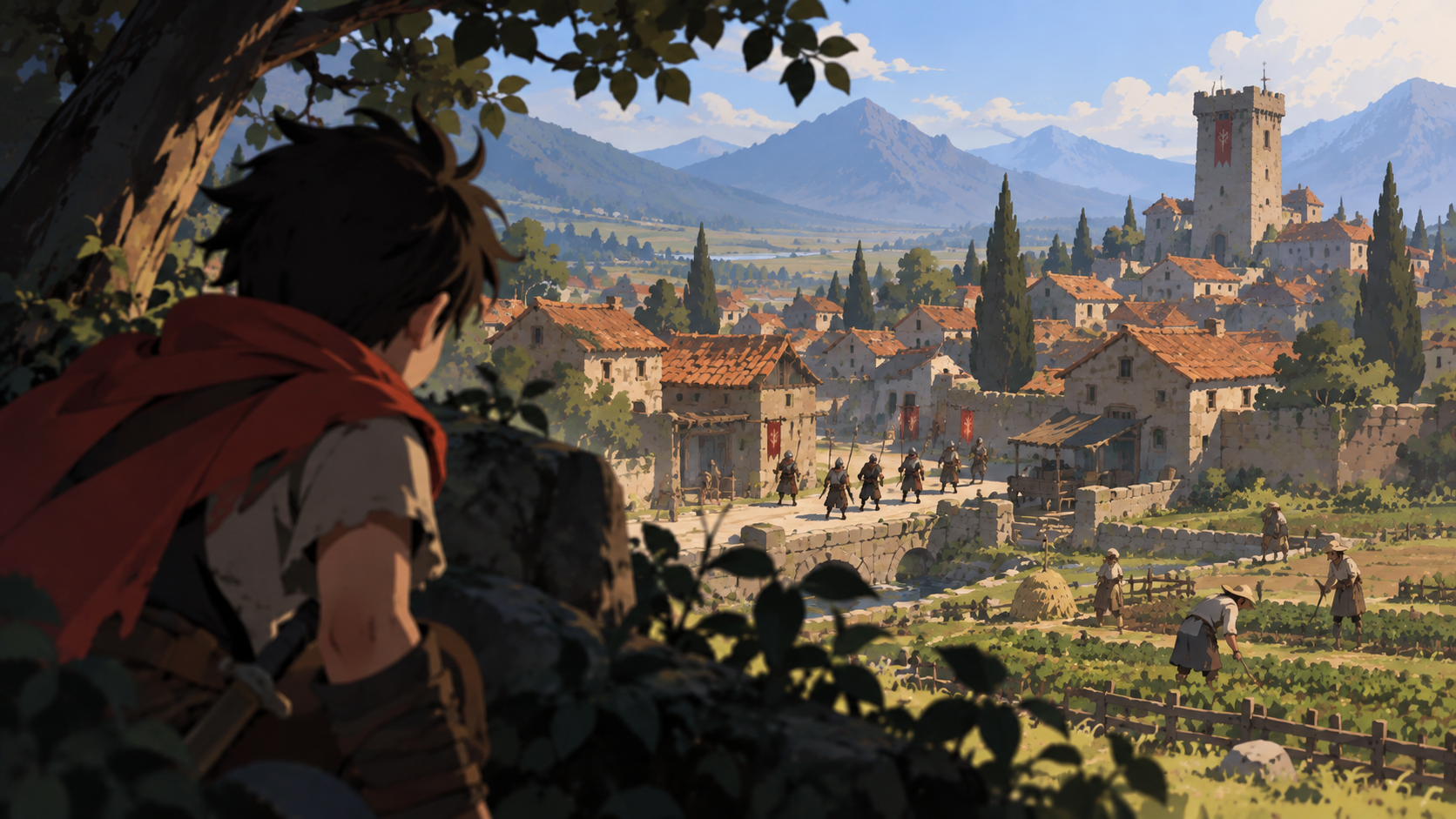
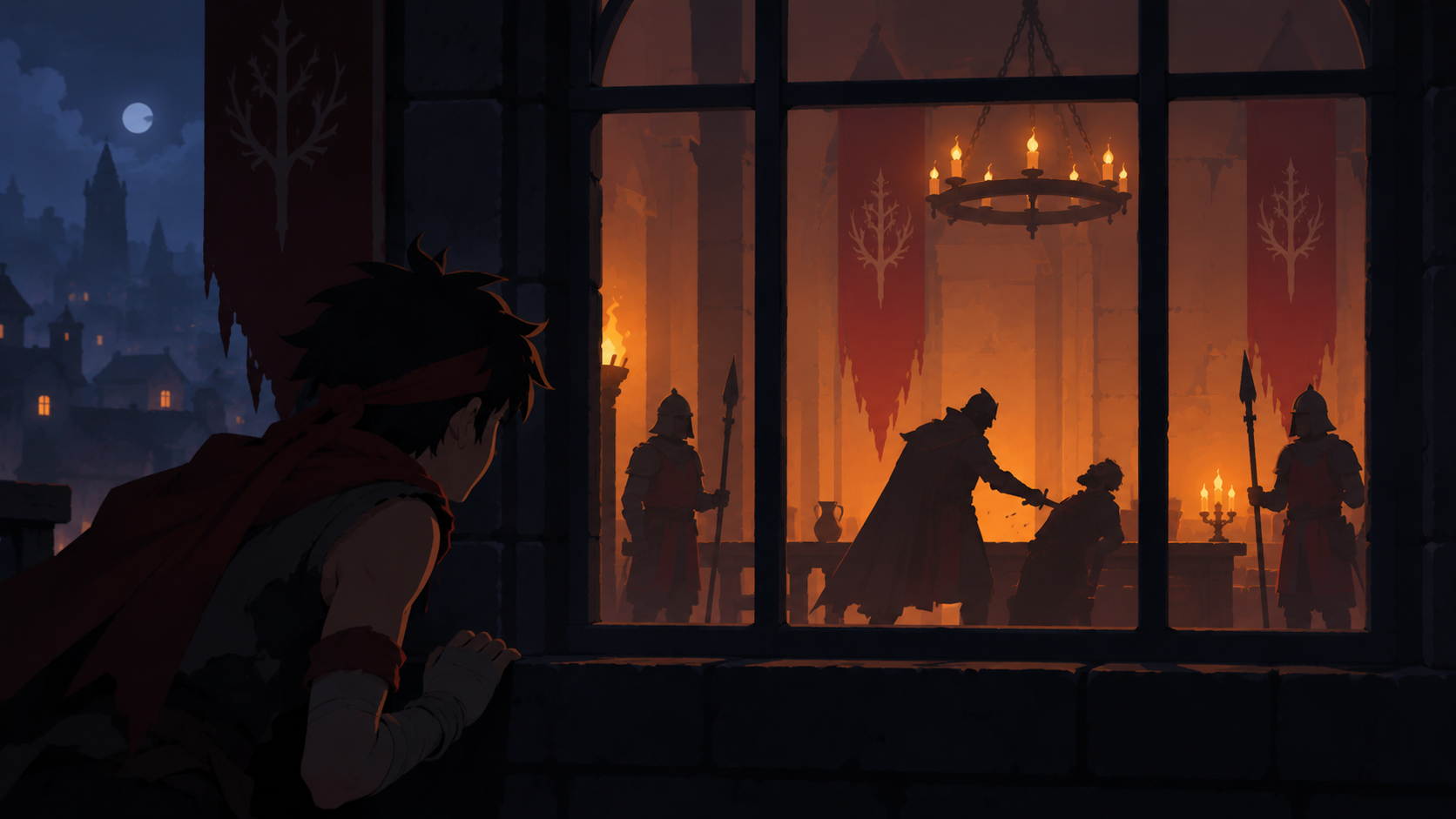
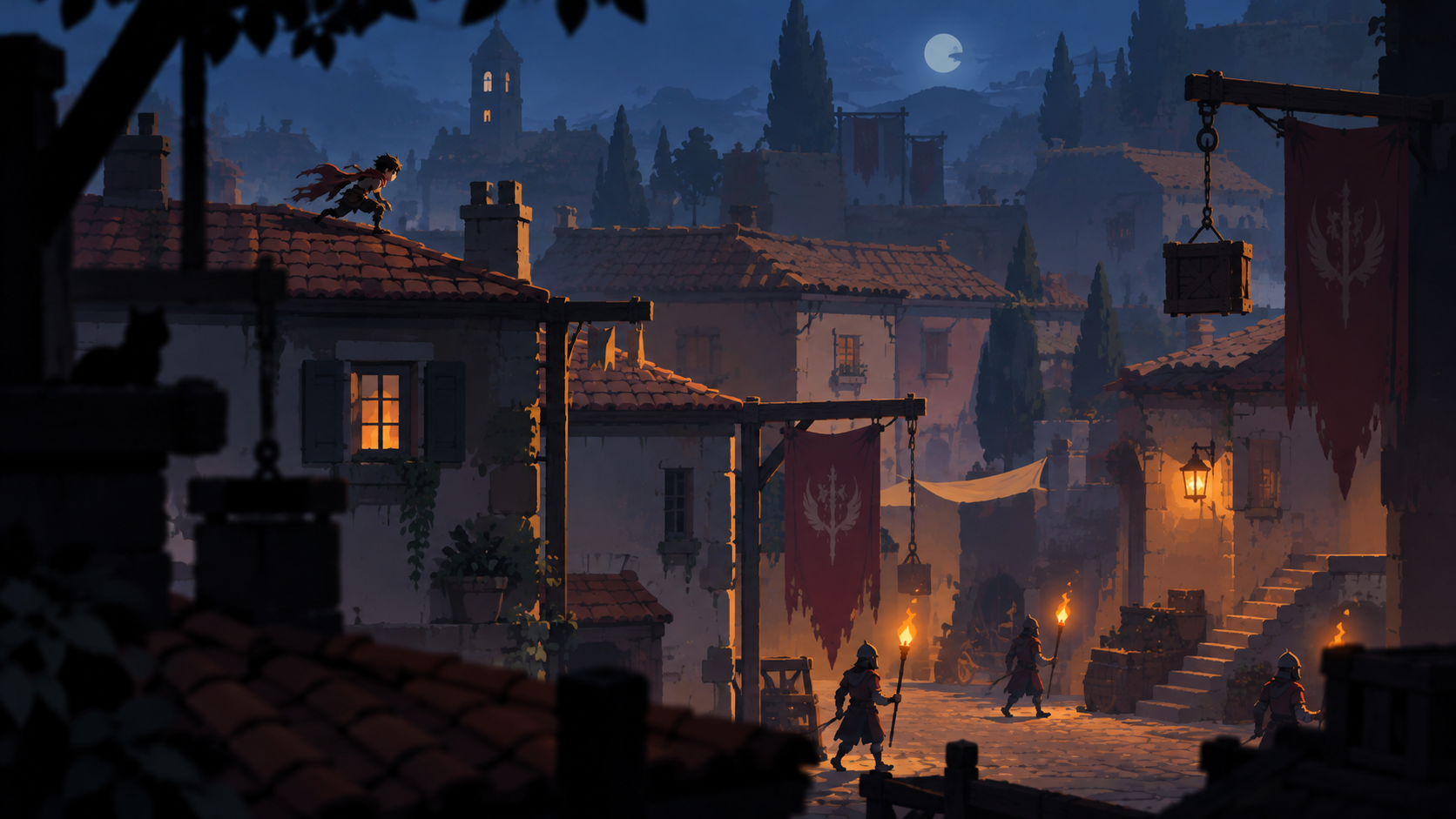
The story moves through human farming towns, an altered forest, an elven state, a military empire and a small refugee settlement. Each place teaches the player how its people understand work, power and belonging.
Takorama is a dense farming town with walls, narrow alleys, connected roofs and a mayor’s tower. The boy knows its shortcuts because he grew up there. That familiarity becomes the movement tutorial during the night his family is taken.
The old human kingdom was feudal and locally administered. Hangard retained much of that structure after conquest and replaced the officials. Farmers and craftspeople therefore experience the new empire through familiar offices carrying harsher authority.
The hidden kingdom is fertile, old and deliberately ordered. Elven culture values magical sensitivity, long planning and knowledge. Its leadership uses these qualities to justify assigning physical labor to humans. The arrangement is discussed as a division of function inside the kingdom, while the people providing labor had no role in defining it.
Hangard culture grew from resistance to the elven labor system. Its architecture and military practice use stolen elven knowledge applied quickly at human scale. Public identity centers on liberation and strength, even as the empire reproduces hierarchy through occupation, inherited position and force.
The Refuge survives inside the forest because imperial soldiers avoid its creatures. It is small, practical and organized around protection. Its members believe Jacob’s escape network brought people to safety, unaware that Aaron redirected many of them into elven labor camps.
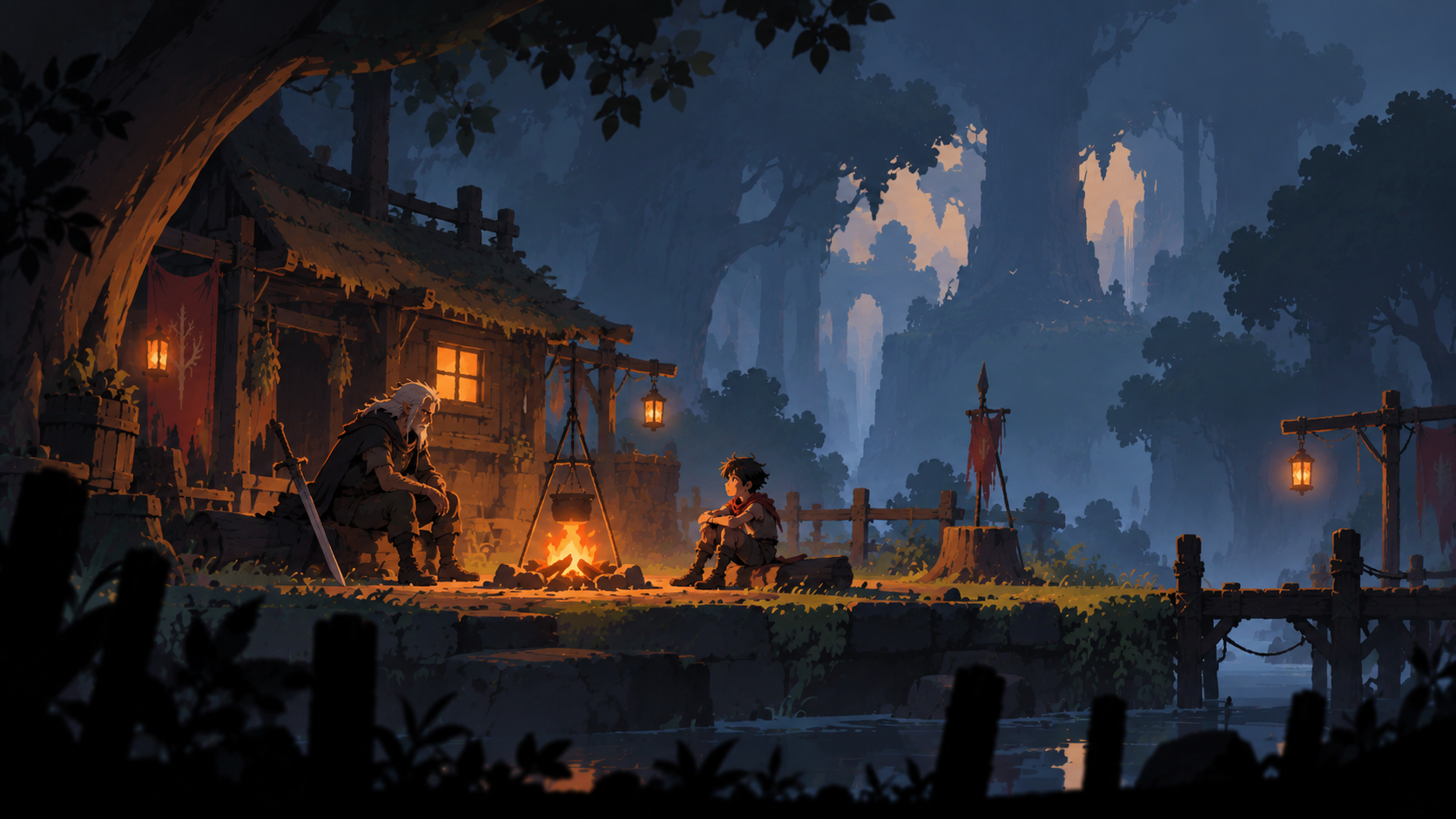
Factions
Each faction offers the boy a place, while carrying a contradiction he will eventually have to understand.
Seeks to restore its historical reach through elven governance and human labor. Its treatment of human communities produced the rebellion that now threatens it.
Controls the human region and intends to confront the elves after consolidating power. A liberation movement has become a centralized military hierarchy.
A community of people escaping Hangard rule. It has the strongest immediate moral claim and the least knowledge about the forest, the elves and Aaron’s role.
Aaron presents himself as a rescuer and teacher. He uses escape routes to supply labor to the Elf Kingdom and shapes the boy into a future weapon.
Jacob and Nora raised the boy and Jasmine. Layla rules Hangard and believes her son died. The political conflict is tied to a family whose members hold incompatible accounts of the same past.
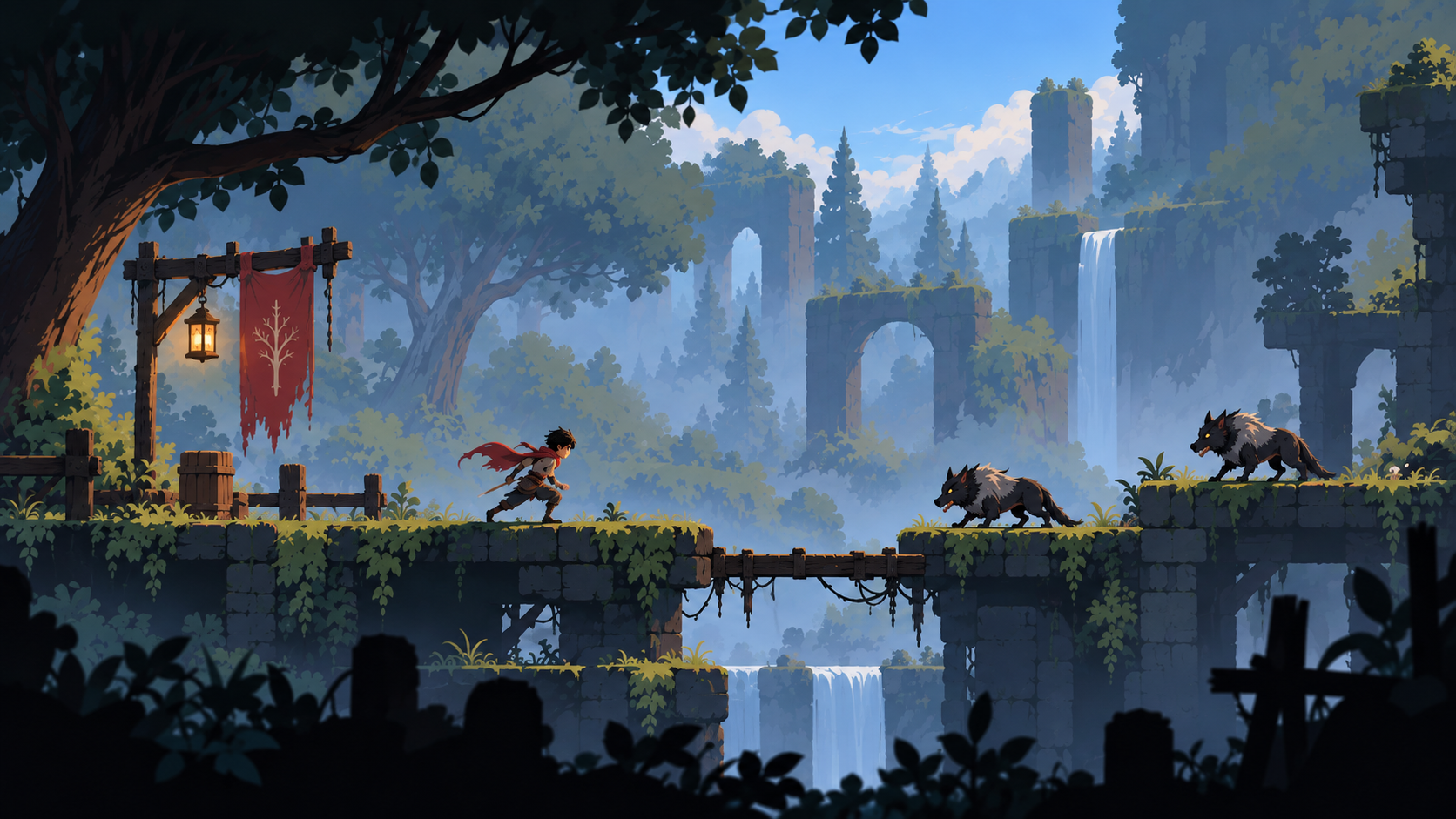
The forest protects the hidden kingdom through creatures changed by generations of elven magic.
World and family history
The political history and family history converge at the opening. The player learns the sequence in fragments because each surviving character knows a different part.
Exiled elves settle the barren Howling Wood. Their magic changes its trees and animals and hides their kingdom behind raised mountains.
Elven leadership assigns humans physical work and presents the arrangement as a stable division of function.
Human resistance uses stolen elven knowledge, wins territory and develops into a military empire under Layla.
Jacob and Nora raise the boy and Jasmine together. Layla believes her half-elf son died, and Aaron remains outside the household.
Hangard soldiers take the family. The boy enters the forest, meets Aaron and begins the search that exposes both histories.
01 · The world
The visual warmth of a fairy tale contains slavery, abandonment, institutional cruelty and adults whose partial truths shape two children.
A frontier town where Jacob and Nora raise the boy and Jasmine as siblings.
An older civilization whose protection and magical knowledge coexist with a labor system imposed on humans.
Human resistance became a military state, applying stolen elven knowledge through hard, monumental institutions.
He keeps demonstrating what he is before he knows what he is.
02 · Progression
The boy absorbs essence from defeated monsters. Humans cannot do this. Every new ability advances traversal while adding evidence about his half-elf nature.
Direct attack, stealth and environmental use support the physical limits of a young character who survives through movement, timing and improvisation.
Boss essence provides a combat ability and a traversal or utility ability used in the next region.
Previously inaccessible places open because the boy has changed, making progression part of the identity story.
03 · Information states
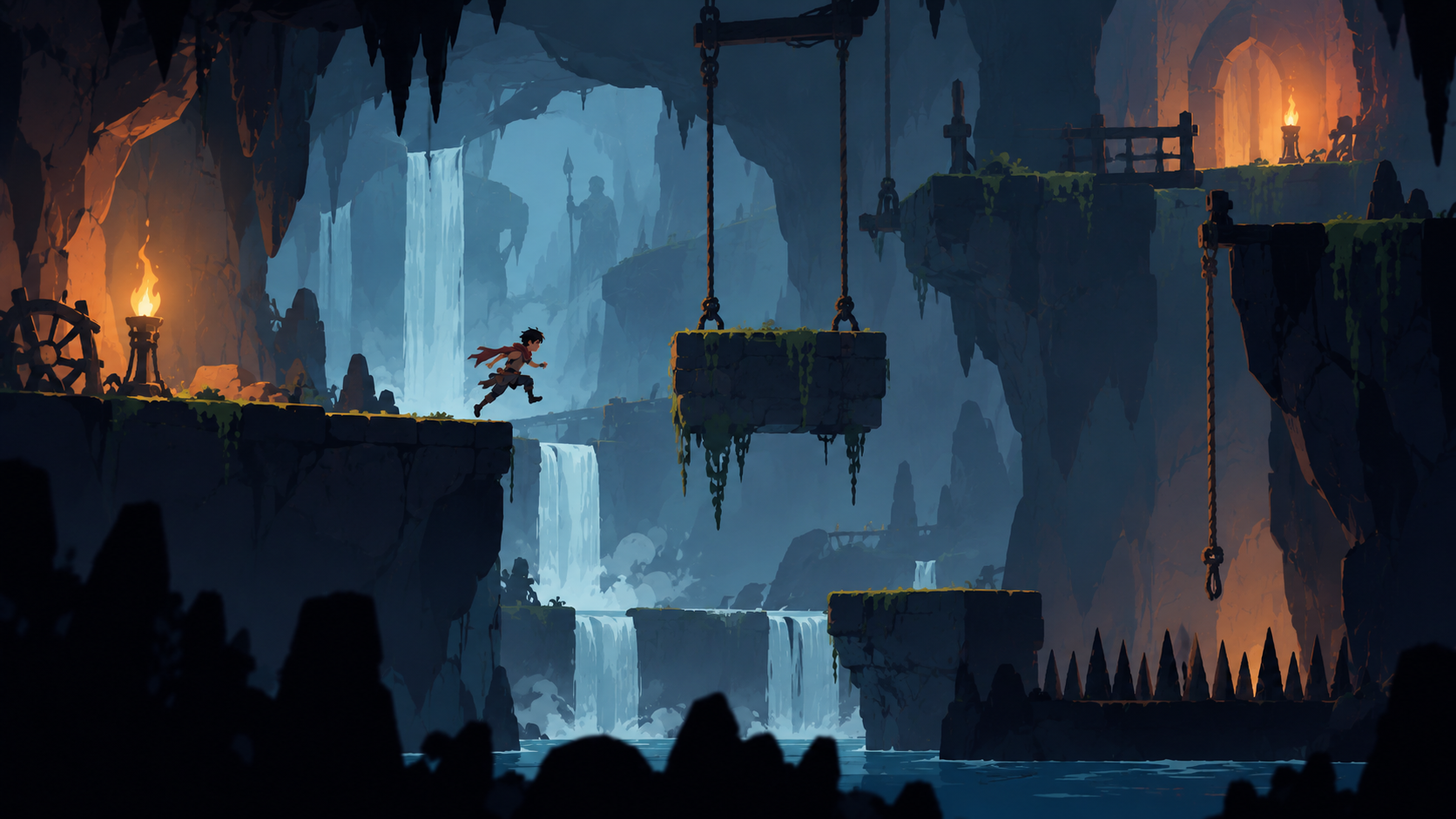
Each character possesses a specific part of the family history. The sequence of meetings determines which truths become available and how earlier scenes are reinterpreted.
He knows the boy is his son and engineers the loss that drives the child into his training. He does not know Jasmine shares the same mother.
The Hangard Empress knows she left a half-elf infant behind. She later reclaims Jasmine without knowing the children grew up together.
They raised both children and understand the connection every more powerful character has missed.
Original world bible, two-part narrative, character information architecture and gameplay progression by Hamza Trabelsi. Concept imagery is AI-assisted visual development.
04 · Ability design
Essence rewards are paired: one combat verb and one traversal or utility verb. The level after each boss first teaches practical use, then asks for combination.
| Encounter | What the fight teaches | Progression effect |
|---|---|---|
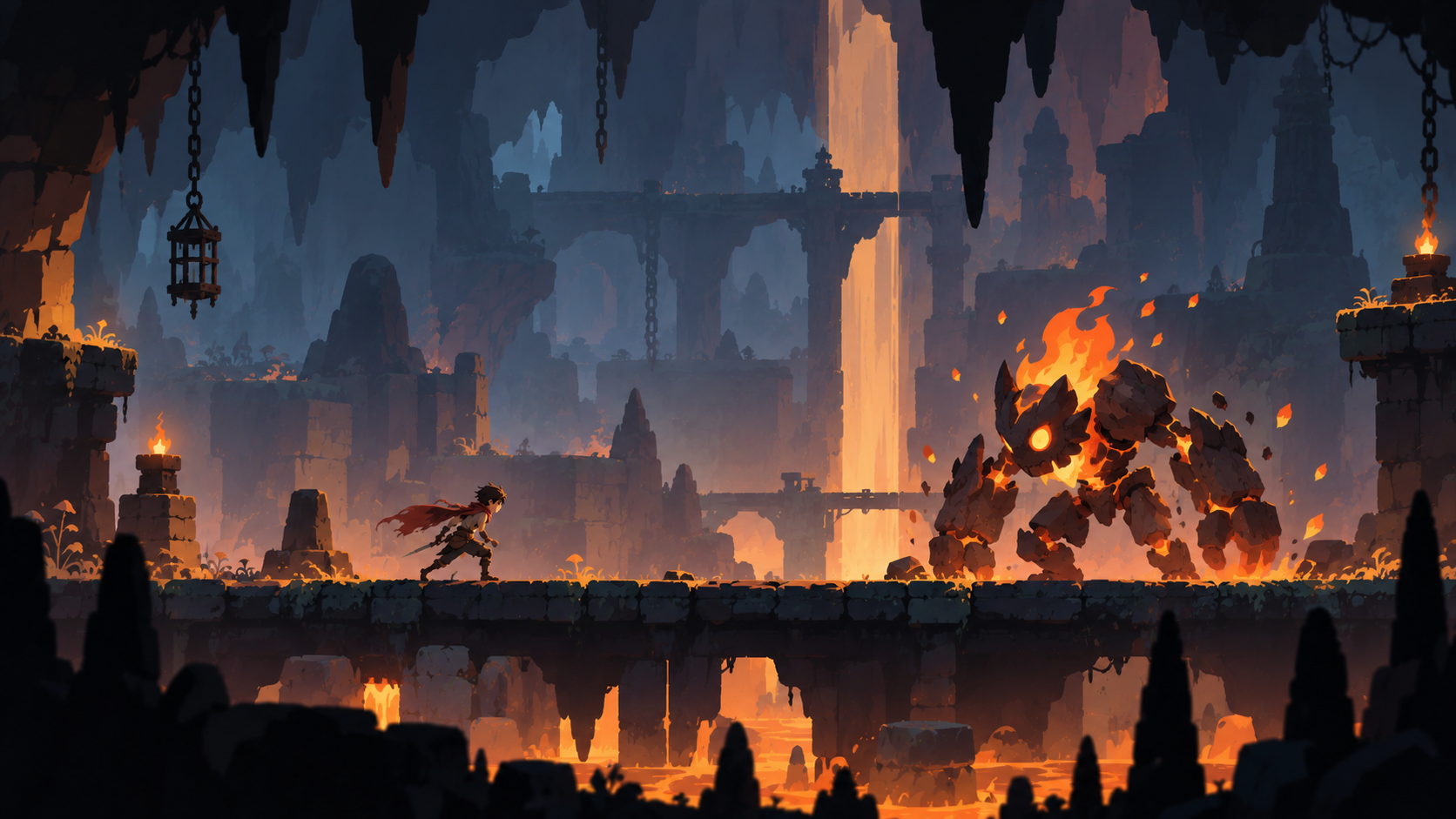
| Stone Golem | Read slow, heavy patterns and use openings | Physical force becomes a combat and traversal tool |
| Green Fire Goblin | Use range and patience against unstable movement | A new elemental capability changes enemies and environments |
| Hollow Armor Spirit | Bait the axe into a surface, then attack from behind | The recalled axe creates ranged combat and spatial puzzles |
| Winged Toro | Manipulate a charge when neither front nor rear is safe | The final movement set opens a three-crystal exploration test |
05 · Two readings of the same scene
Aaron is the boy’s father, the architect of his family’s destruction and a genuinely good teacher. Direction notes preserve all three truths.
Aaron appears during the worst night of the boy’s life and later rescues him. It reads as luck and compassion.
His readiness, his questions and his precise timing become evidence that he already knew the family and the raid.
Aaron’s certainty that the boy will pass the purity test first reads as belief. Later it reads as a father exploiting a motivation he created.
06 · Two-part narrative
The story widens only after the player has earned the ability set and learned the personal cost behind it.
Part one is about becoming strong enough to save the people you love.
It ends at the Elf Kingdom threshold when Aaron admits he designed the cave as a test, reveals that he is the boy’s father, and asks him to become a weapon for the kingdom.
Part two is about discovering that the people you love are embedded in a war you did not start.
The boy finds Jasmine positioned as heir to the empire that destroyed their home. His father’s people want a champion; his mother’s empire wants legitimacy; his own history makes him the only accidental connection among the factions.
Original world bible, two-part narrative, character information architecture, boss logic and gameplay progression by Hamza Trabelsi. Concept imagery is AI-assisted visual development.