Needs and opportunities
After introductory work, missions are logistical needs posted and funded by players.
Original IP · Persistent sandbox RPG · Vision document v4.0
You arrive without status, property or a language you can read. Every life you build from there becomes part of the server’s history.
The game
Third-person action RPG, economic simulation and political sandbox. The world persists indefinitely; players supply its labor, leadership, conflict and recorded history.
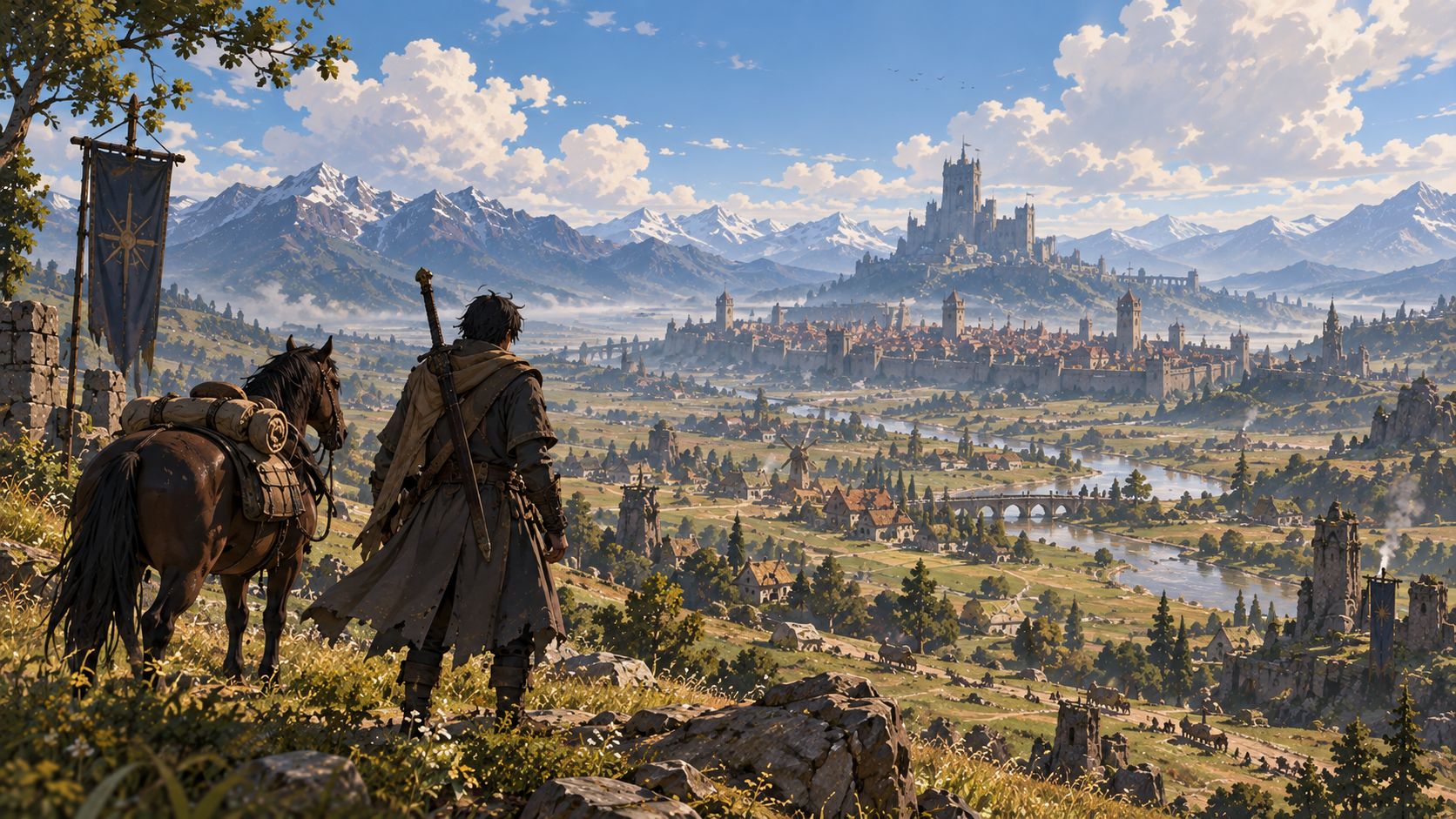
A new player crosses a wasteland and enters a functioning frontier society as a nameless, illiterate outsider. The first problems are food, shelter, work and understanding. If they remain long enough, those practical concerns can develop into a profession, a trade network, land, political office or a life spent descending into the civilizations buried below.
Every non-player character has a fixed ceiling. Players begin weaker than the people around them, but retain the ability to grow indefinitely. That single difference supports many lives: farmer, clerk, merchant, bandit, knight, landlord, spy, king, rebel or dungeon specialist. Roles remain fluid because status comes from relationships and access as much as combat level.
The upper world is deliberately warm and legible. Its busy roads and ordinary routines give the player something worth protecting. Far above that life, the King of Realms and the High Mage fight in the apex tier. Their victories appear across every server as changes in weather, danger and trade. A beginner can look up from a market and witness the consequence of a conflict they may spend years trying to reach.
After introductory work, missions are logistical needs posted and funded by players.
Literacy, routes, prices and observed behavior determine what a player can understand and safely attempt.
Land and authority create supply lines, obligations and targets. Growth increases dependence.
Servers do not reset. Laws, betrayals, shortages, discoveries and reputations accumulate.
Most players may remain here for years. Its settlements, professions and politics form a complete game.
Daily life
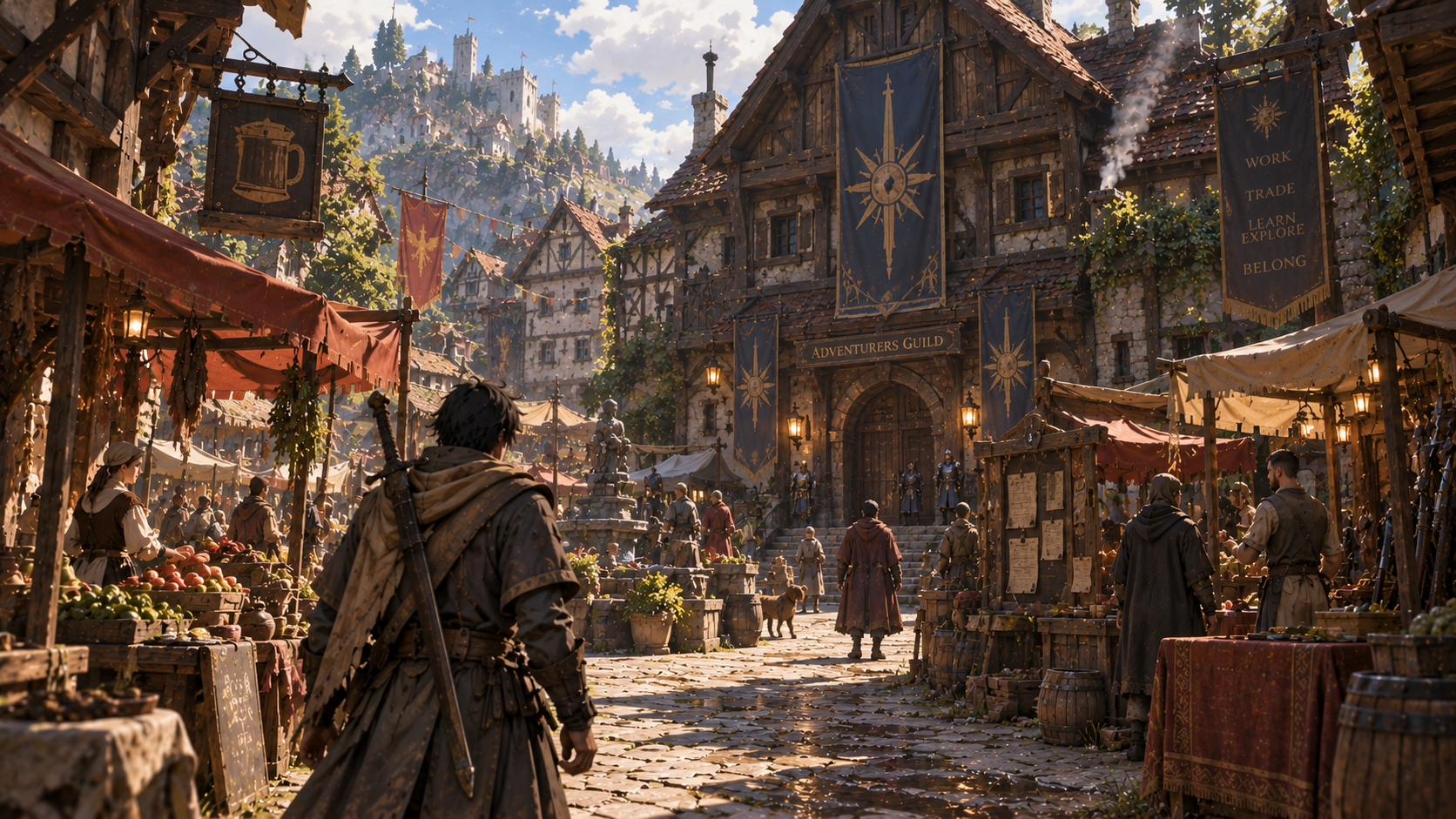
The opening hours teach the world through dependence. The player finds a settlement, registers as a resident and watches how people, materials and information move before choosing a place inside that network.
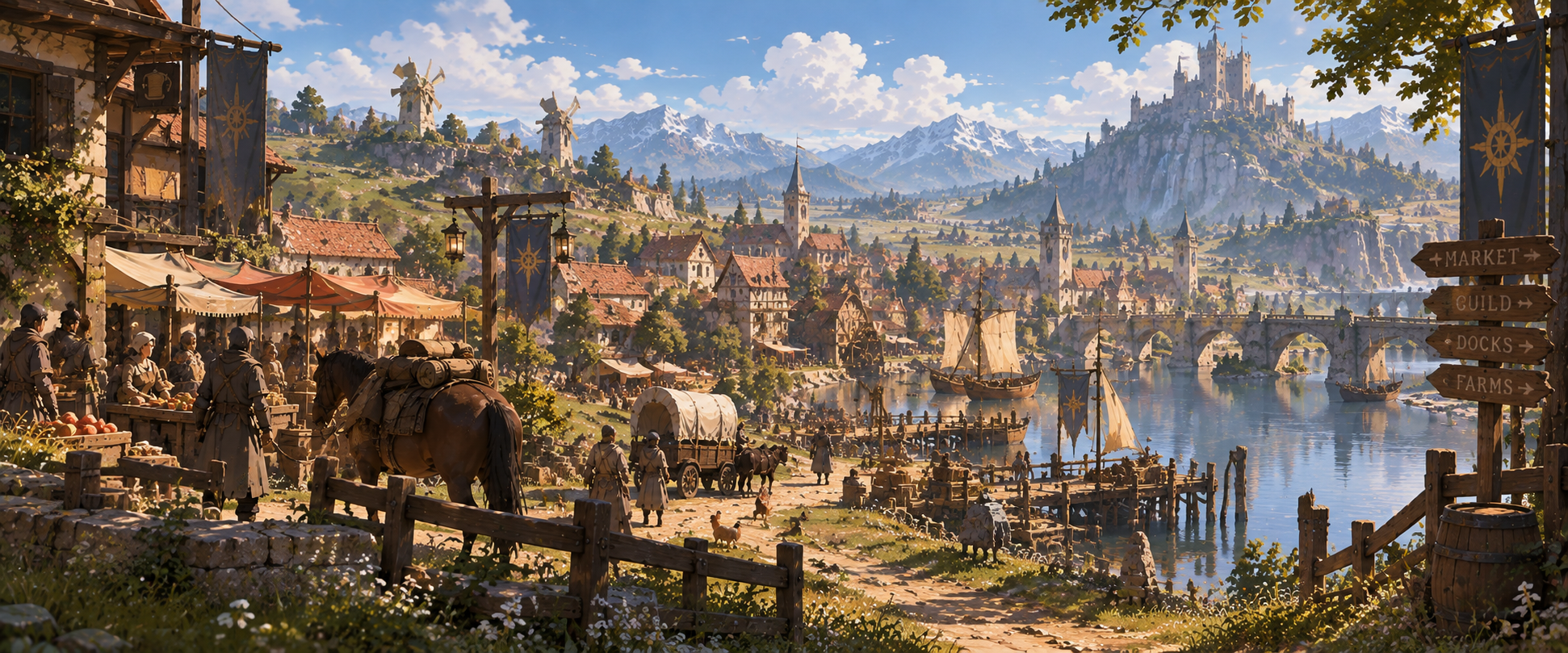
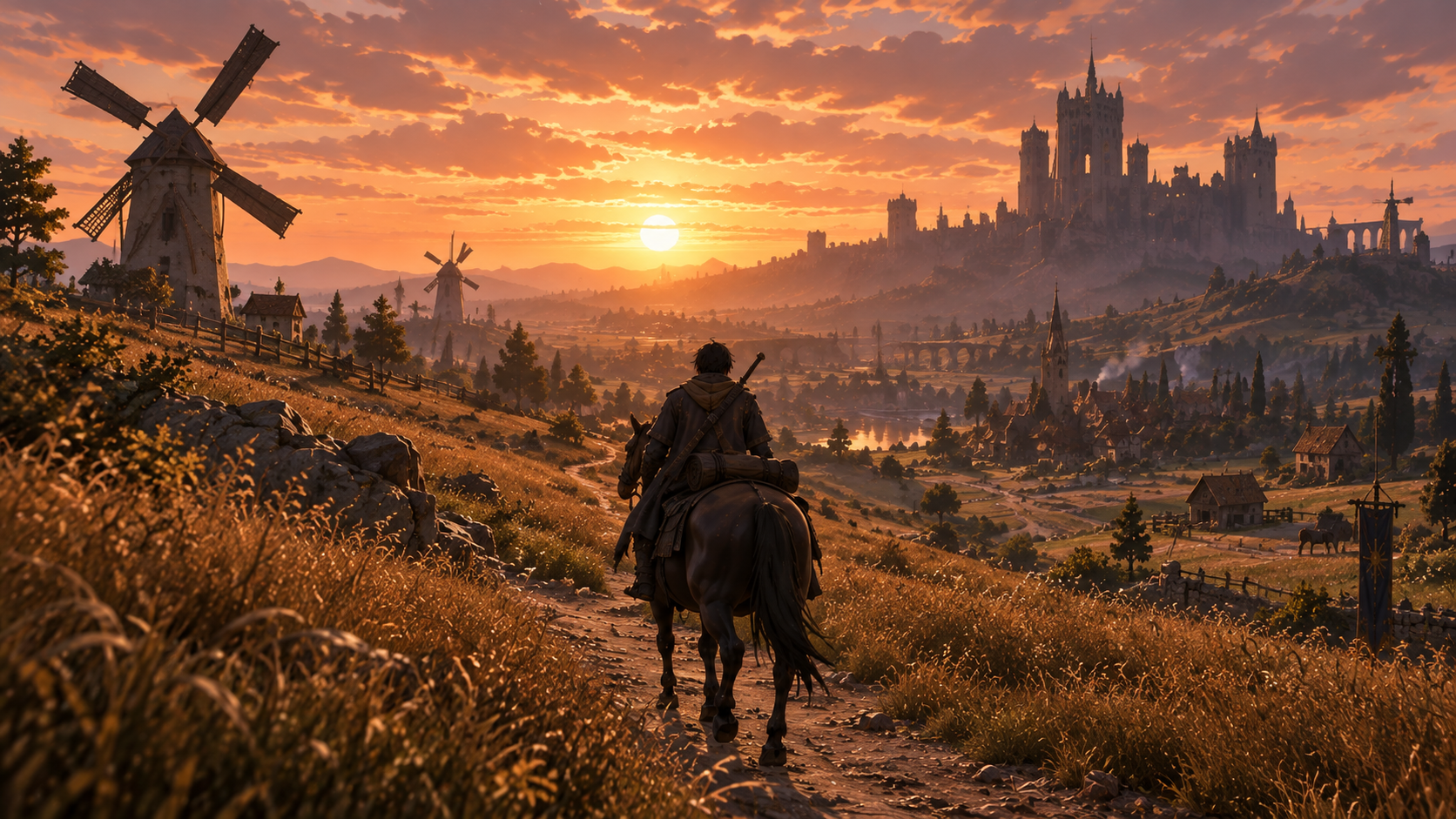
The player begins in rags outside the settled world. At the first village, registration records a name and makes the character visible to its institutions. The player’s arrival is handled inside the fiction.
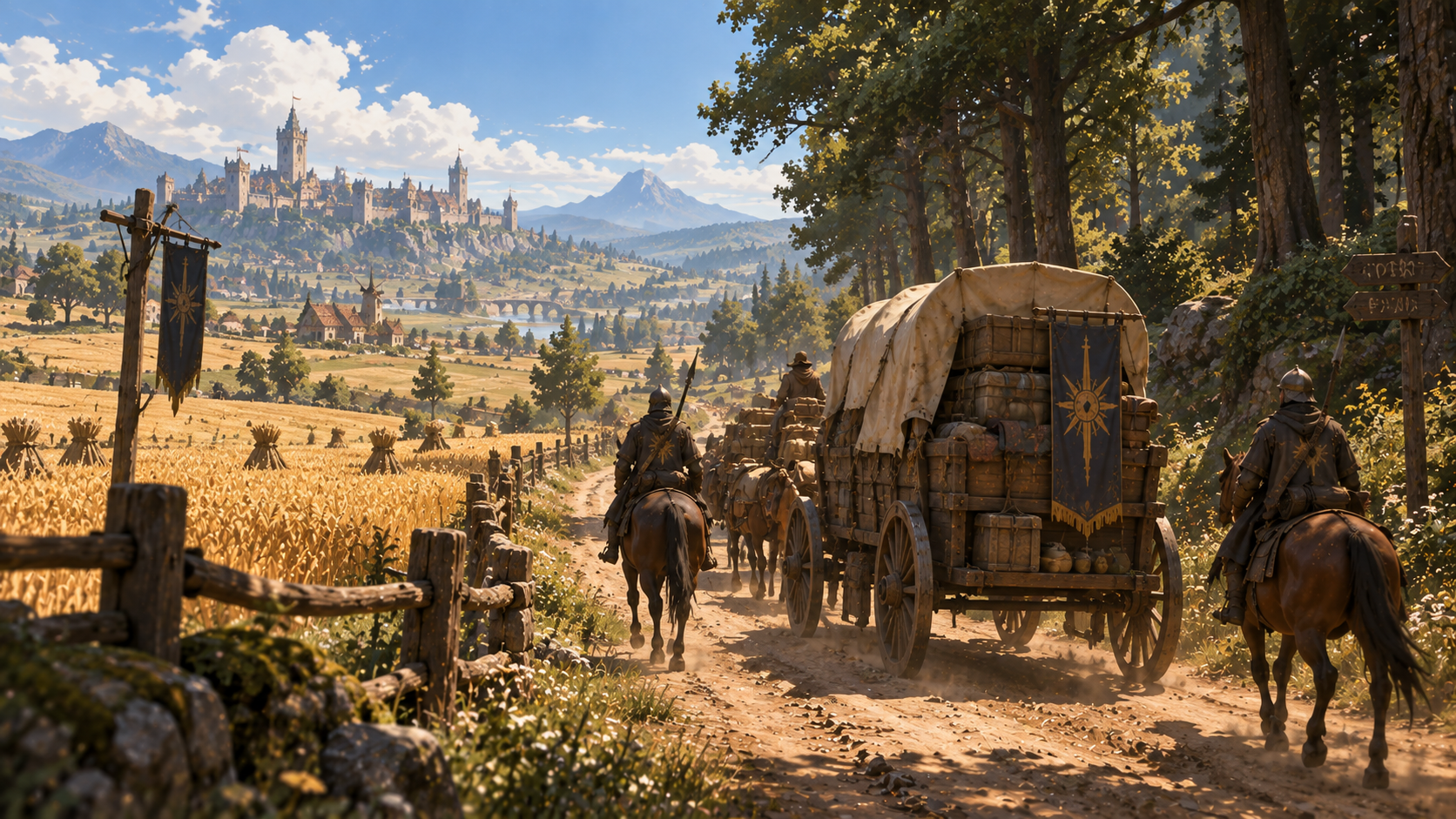
Farms require hands, workshops require materials and caravans require protection. Early baseline jobs keep a new server playable; after that, demand is created by other players building, trading and preparing for conflict.
Goods do not teleport and there is no universal price list. A closed road, failed harvest or nearby war changes what a settlement can supply and what its residents will pay.
A dependable carrier may be known in one valley and anonymous in the next. A fugitive can exhaust their safe territory. Social identity is earned in places and can be damaged there.
Player journey
The phases describe capability and responsibility. They leave the player free to change professions, reject institutions or begin the descent at any point they can survive it.
Core systems
Progress is expressed through interpretation, access and responsibility. A stronger character can still be excluded from a contract, misread a resource or enter a dungeon without the knowledge needed to survive it.
The written world begins as a real cipher. Lessons teach one symbol at a time through small puzzles, and each learned symbol becomes readable everywhere it appears. Partial literacy remains partial: a player may recognize most of a contract while still guessing at the word that changes its meaning.
Reading accelerates progress without blocking combat-led paths. A fighter can ignore lessons, but will need another person to verify a mission, interpret a law or recognize the real value of a scroll. Literate players can write contracts, coded messages and forged records. Every lower tier introduces another script, returning an expert to uncertainty.
Protection grows from economic dependency. A farmer supplies a miller, market, guild and landholder. Attacking that farmer interferes with every connected interest, giving many people a practical reason to respond. A coalition of weak players can isolate a powerful lord by cutting labor and supply lines.
Land therefore grants storage, production and tax income while binding its owner to roads, residents and defenses. The richest player has accumulated the most things that can be disrupted. Rulership becomes the management of loyalty and exposure.
Every advantage creates a vulnerability.
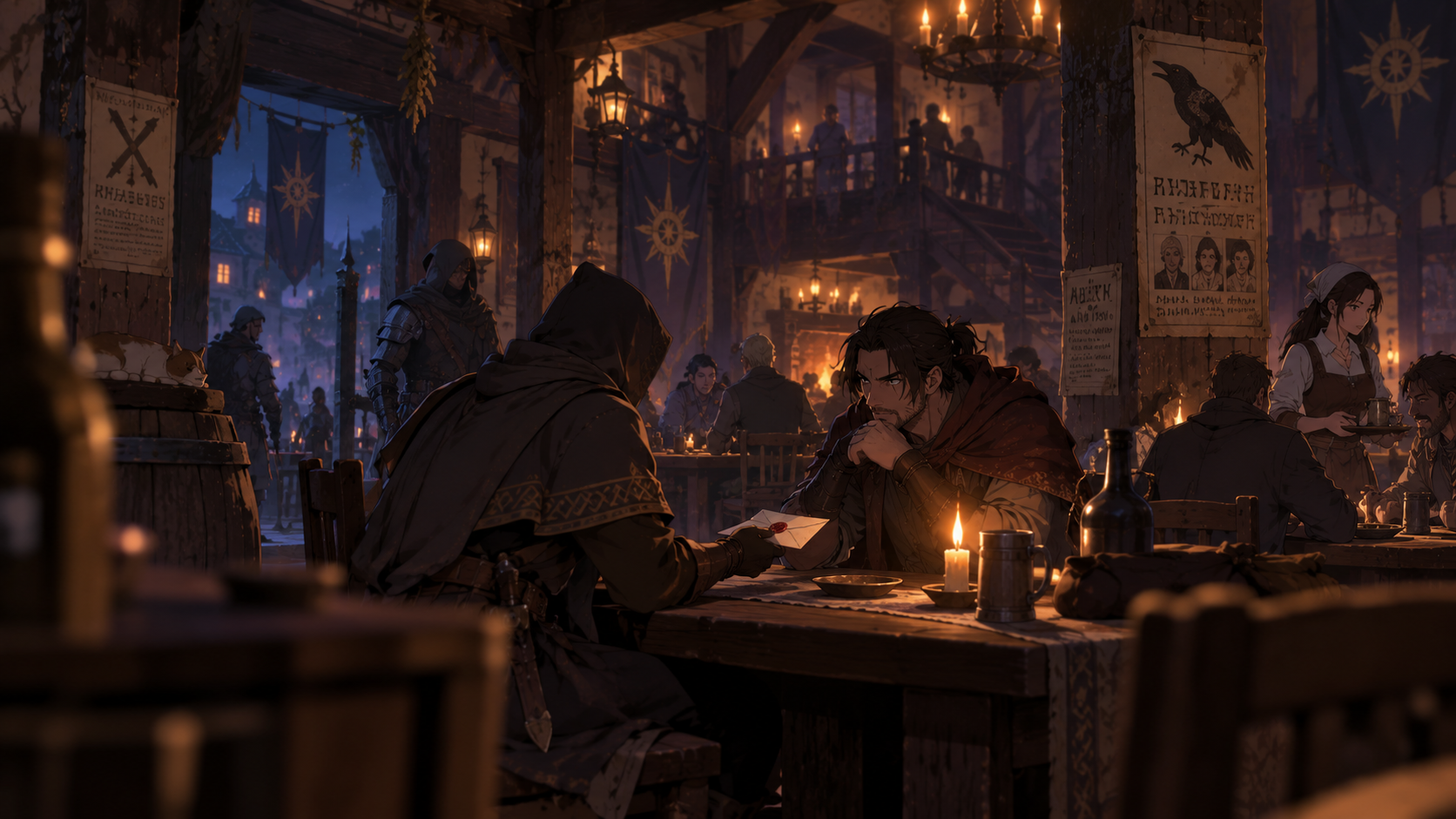
A private conversation, written record, reputation and territorial consequence are enough to produce espionage. A king can recruit through an ordinary guild posting. The agent may report faithfully, defect, sell misinformation or disappear. The system does not choose for them.
Long-term infiltration creates a cover that may take months to build and seconds to burn. Once exposed, a fugitive loses safe access to the betrayed territory. Information about assassination contracts is itself a commodity: players pay networks to learn whether they are a target, while never knowing which remote guild they failed to discover.
The lower worlds
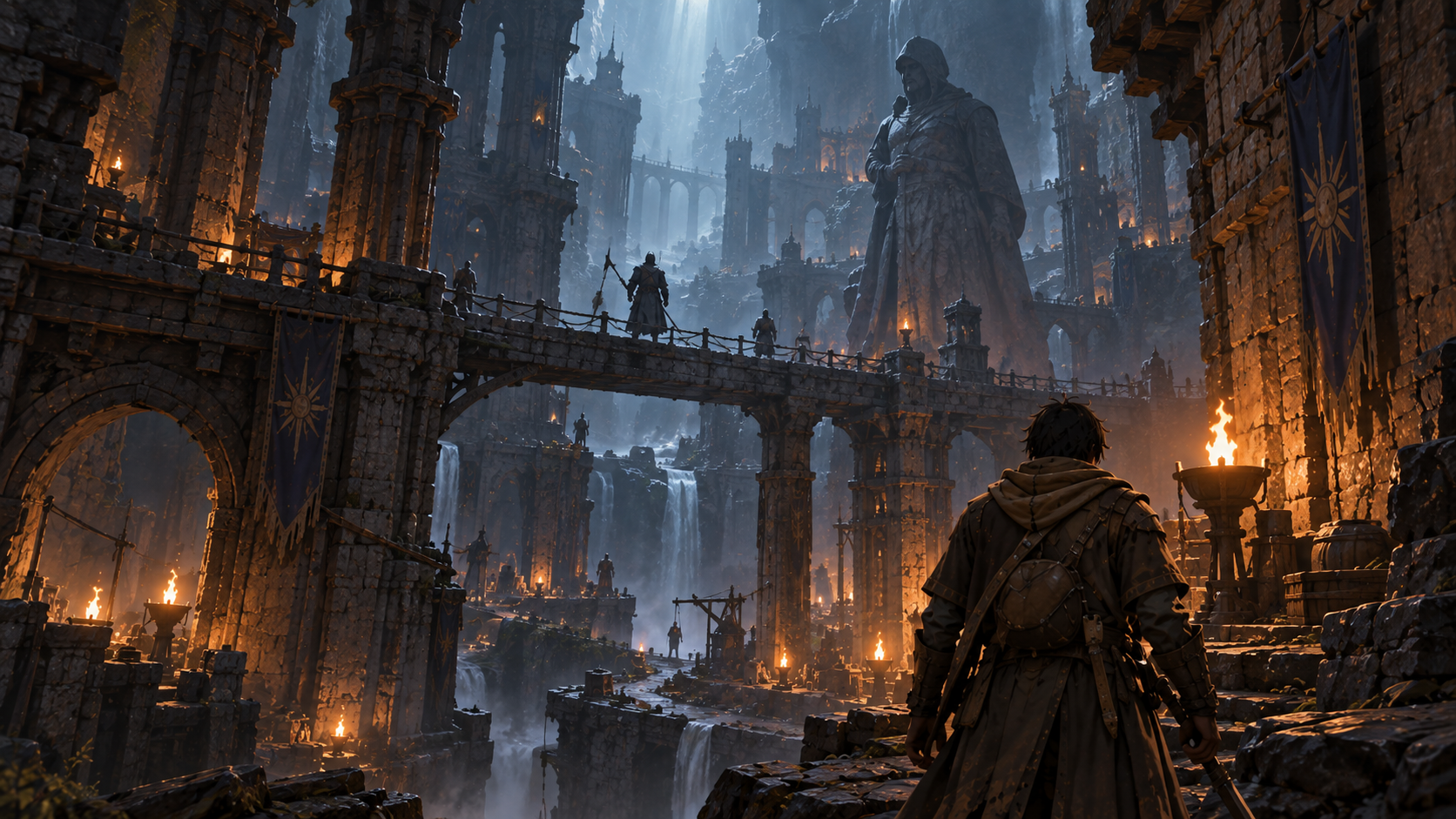
A major dungeon contains many floors, each large enough to function as a destination with its own ecology, architecture, language and incomplete history. The bottom is the physical entrance to the next world tier.
Upper floors retain recognizable human buildings and familiar dangers. Deeper down, those structures begin to incorporate something older. At the lowest levels, human scale and logic disappear entirely.
There is no explanatory narrator. Architecture, abandoned work, monster behavior and the changing script allow players to reconstruct what happened. Rushing into an unfamiliar ecology is punished. Observation becomes part of combat preparation, and knowledge of one floor may have little value on the next.
A serious expedition needs different forms of expertise: someone who has survived the route, someone who can read the local script, someone who understands the creatures, and someone responsible for extraction. News of a credible deep descent affects the whole server. Merchants anticipate new materials, rulers watch the dungeon entrance, and rivals consider intercepting the team on its return.
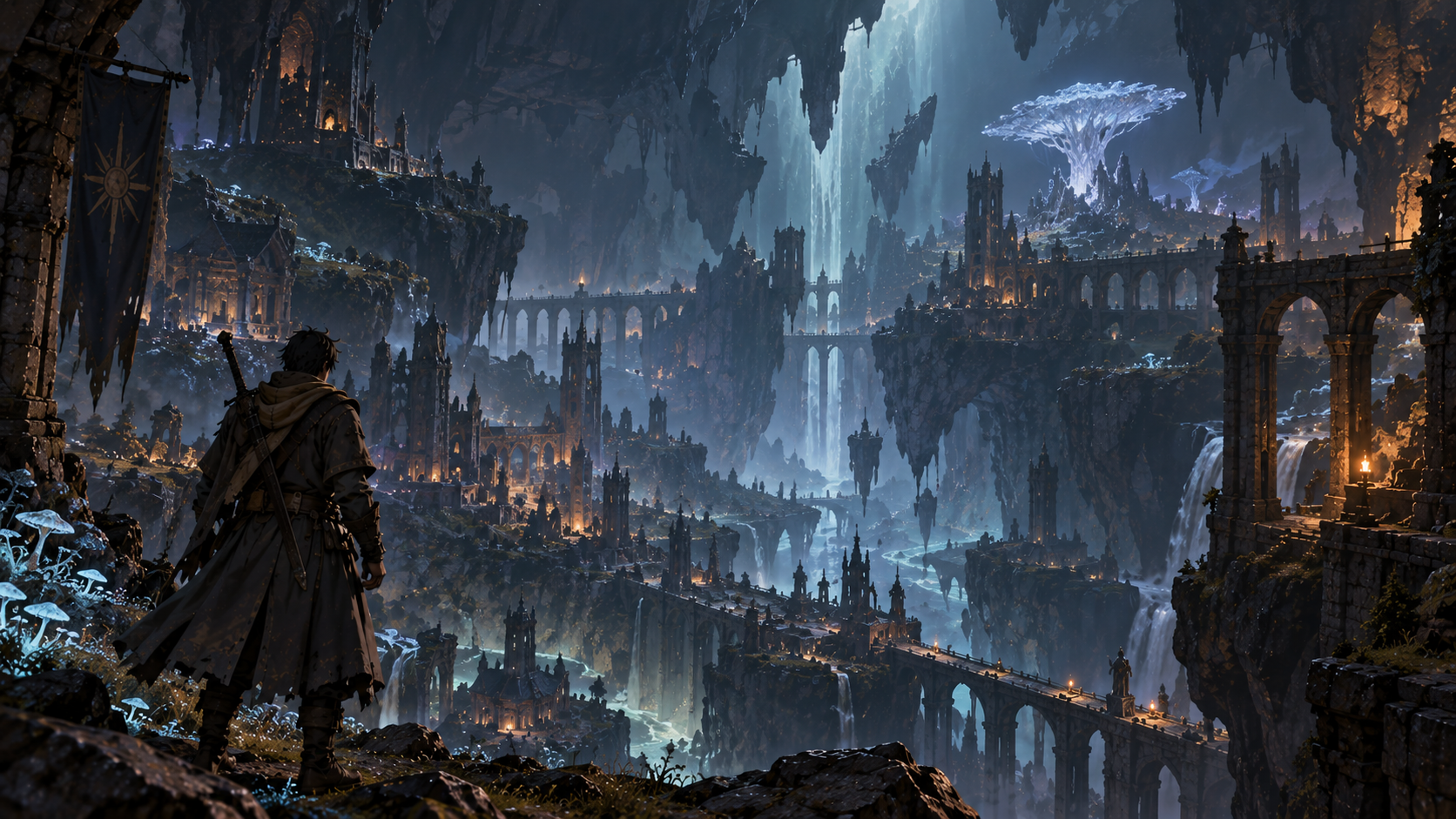
World structure
Knowledge and carried items survive the passage between tiers, while level and skills are heavily reduced. The player arrives weak but informed. Armies cannot follow, so the economy and politics of the lower world cannot be colonized by surface power.
Returning creates the cross-tier economy. A lower-world material may be useless to most people and priceless to the one craftsperson who understands it. A descender can partner with a trusted surface merchant who sells discoveries, protects their identity and finances the next expedition.
Warm, populous and politically complex. A complete social simulation where most lives unfold.
Smaller and stranger. Relationships carry more weight and familiar architecture loses human proportions.
A hostile world where the few surviving players have been reshaped by knowledge no surface ruler controls.
The engine room shared by the King of Realms and High Mage. Their conflict alters every world below.
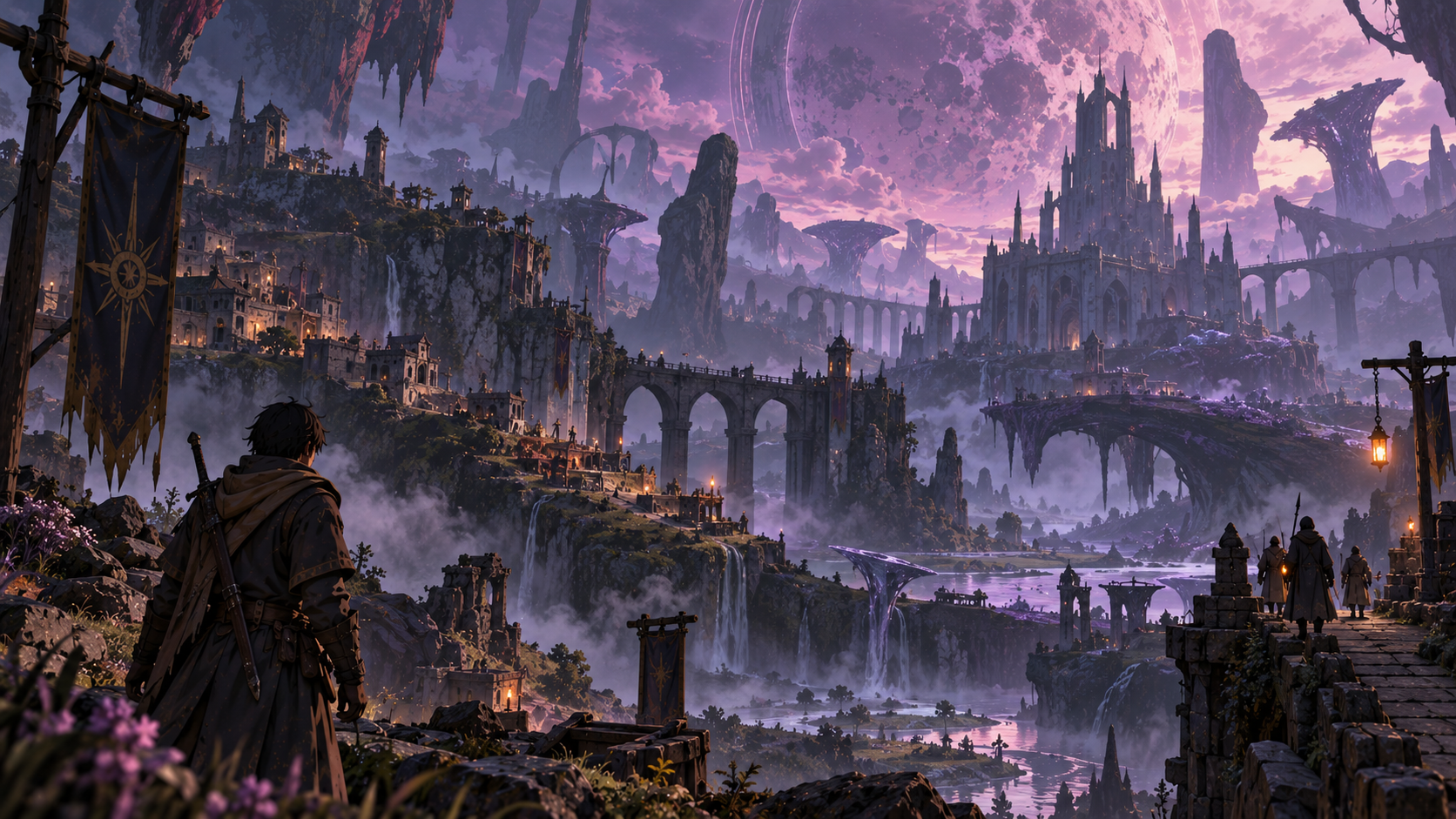
Old experience remains useful, but status and mastery do not transfer intact.
Politics and war
Guilds begin as labor institutions and become the base of formal politics. Land binds wealth to a place. Kings can set laws, but remain dependent on the landlords, soldiers and supply networks required to enforce them.
Guild membership gives access to training and high-value jobs. The same members later vote on who will represent them in the competitions for regional and world power.
A land charter fixes production and allegiance to a location. During war, a lord may still withdraw troops, open a gate or change sides, but cannot take the territory with them.
Landlords buy, equip and maintain NPC contingents. Mobilization takes time, leaving room for diplomacy and sabotage. Losing an army weakens the land that paid for it.
A king gains lawmaking power and a larger intelligence network while becoming the world’s most visible assassination target. Internal loyalty is the central problem of rule.
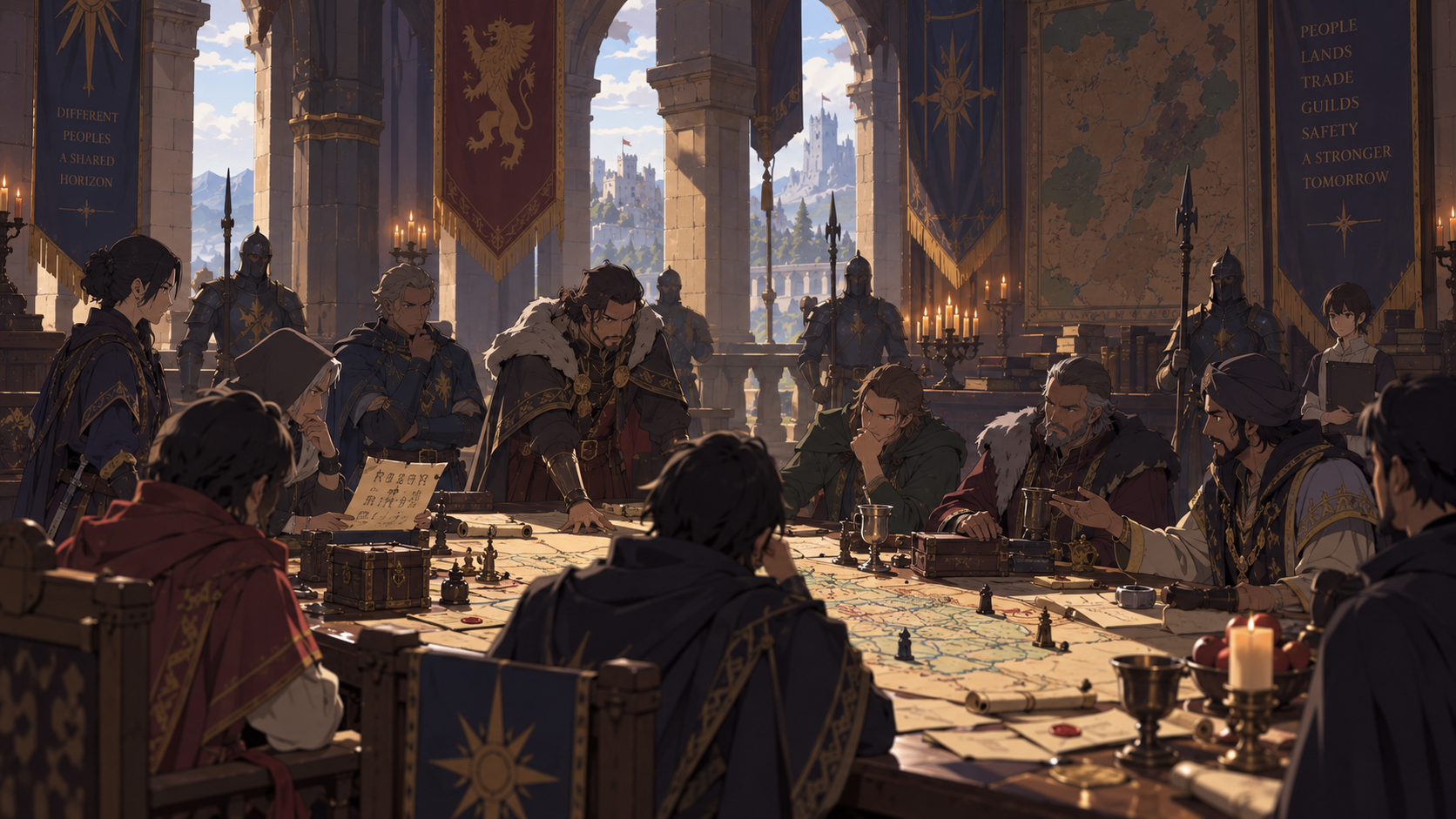
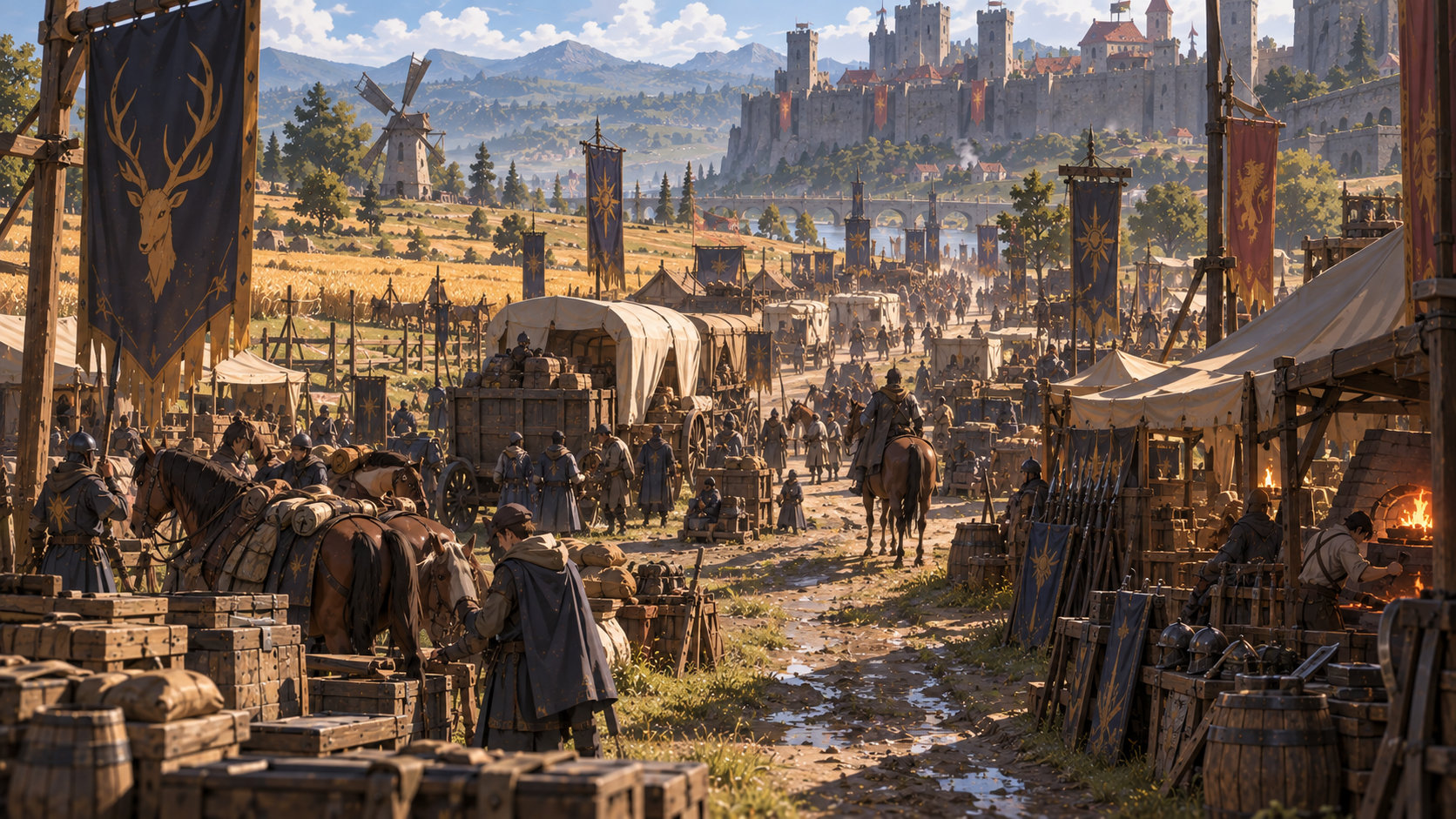
The living sport
Competitive play grows out of the same guilds, reputations and rivalries that structure ordinary life. Candidates carry histories with the spectators watching them, and every crown changes conditions outside the arena.
Guild-elected candidates compete in parallel order and chaos brackets. The winners become King of Realms and High Mage, choose five laws and confer an economic blessing on their guild.
Regional winners meet across servers. Returning rivals, guild dynasties and political campaigns allow the competition to develop a history people can follow.
Every King crowned during the year forms one team; every High Mage forms the other. Former rivals must cooperate in a war whose result changes the world for the following month.
During a Radiant Month, monster pressure retreats, trade routes reopen, surplus grows and the current laws become easier to enforce. During a Dark Month, border settlements fail, prices rise, formal power weakens and suppressed factions gain room to move. The contrast matters because the ordinary world is pleasant enough to miss.
Between tournaments, the two apex players continue their conflict in Tier IV. A victory produces a visible event across the server: the sky changes, creatures descend or retreat, and veterans recognize the sound before newcomers understand it. The distant endgame is therefore present from the first day.
Example world dialogue“Someone just became the most powerful being in the world. They started exactly where you’re standing.”A veteran explaining a server-wide coronation to a new player who cannot yet read the announcement.
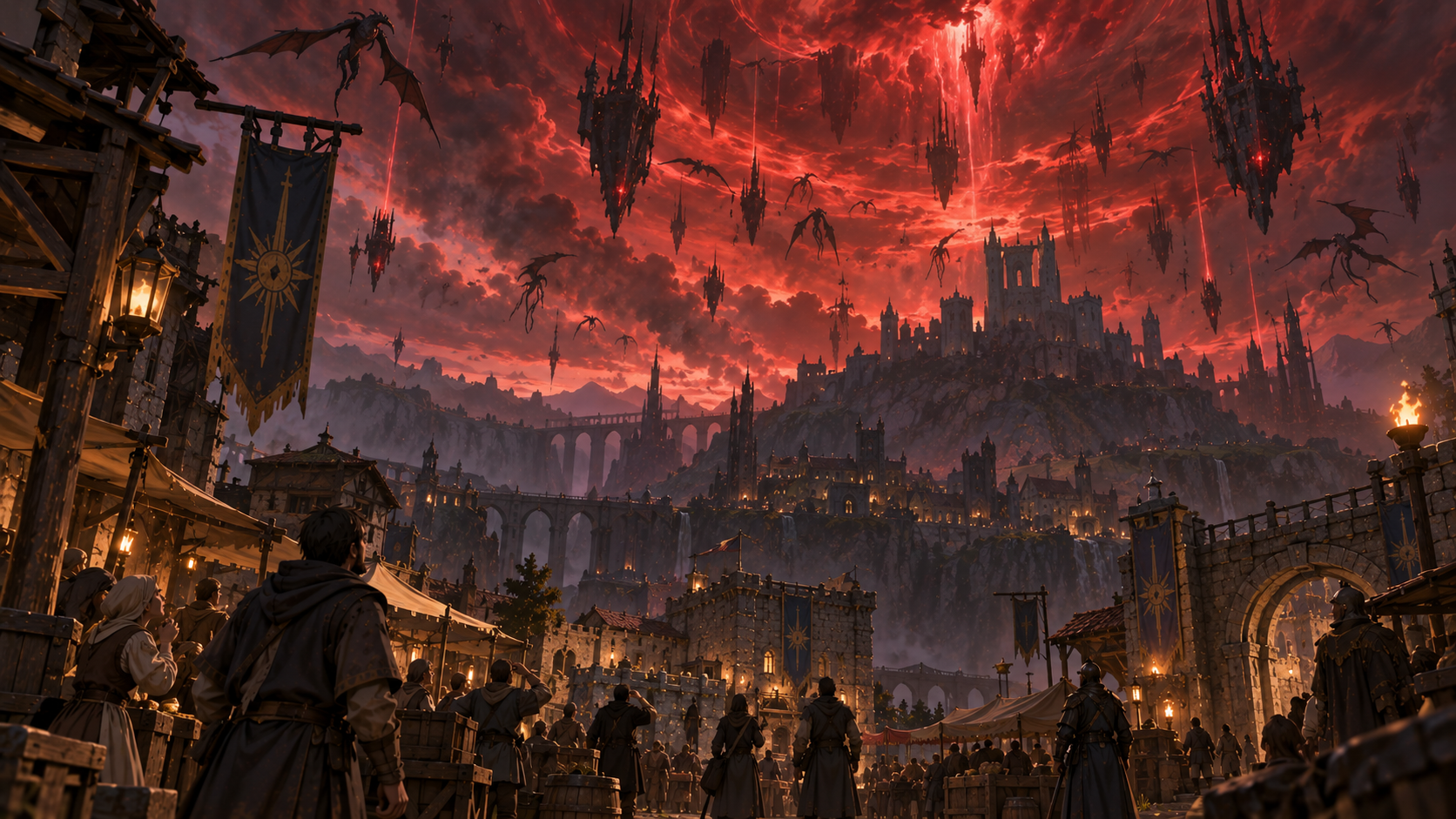
An apex victory becomes weather, danger and economic pressure across every tier.
Narrative design
There is no fixed heroic timeline after launch. Systems generate events, people interpret them, and competing records turn those events into history.
A guild wins office, a road falls, an expedition returns or a ruler changes the law.
Prices, work, access and political relationships respond throughout the affected region.
Ledgers, ceremonies, reports and personal accounts preserve conflicting versions.
Later arrivals meet the institutions, resentments and reputations created by people they never knew.
Old loyalties and disputed claims supply reasons for diplomacy, rebellion, revenge and legitimacy.
A powerful player loses their guild’s internal vote to a more trusted rival. They can support the winner, seek nomination in another kingdom, sabotage the campaign or join the chaos bracket. The political wound supplies the motive; player choice determines the story.
One player returns with materials from a lower tier and needs a discreet surface market. Another has money and contacts but cannot survive the journey. Their partnership grows from complementary needs and remains vulnerable to betrayal.
An apex ruler killed by a rebel is cast back into Tier III with knowledge and items intact but power reset. Yesterday’s ruler enters a lower-world market as a recognized, vulnerable legend and chooses whether to rebuild, mentor or take revenge.
Original concept, systems, world structure, economy, narrative design and vision document by Hamza Trabelsi. Concept imagery is AI-assisted visual development.