What each mission removes
The target list moves toward earlier and better-informed conspirators.
Original IP · Temporal crime thriller · World bible and story draft
Bureau of Temporal Affairs
A disavowed operative discovers that every mission he completed was cleanup for one man’s criminal past.
Case overview
A single-player stealth-action thriller set in a rebuilt post-war city. Missions move backward through a conspiracy while Danny lives forward through the consequences.
Former soldier Danny Reed is recruited by what appears to be a classified government agency. He enters recorded moments in the recent past to remove threats to national stability, then returns to a present that changes after every operation.
The targets are dangerous people. Every assignment can be defended on its own. Together, the deaths erase the financiers, officials and specialists who helped Morgan build an illegal temporal machine. Danny was selected because he was capable, underemployed and eager to serve again. Purpose made the cover convincing.
The real Bureau of Temporal Affairs also exists. It operates the official machine under government oversight and has never employed Danny. Its records identify him as an unauthorized temporal operator connected to several deaths. The only institution capable of confirming the truth initially sees him as the threat.
The target list moves toward earlier and better-informed conspirators.
Danny returns to altered presents and learns to read what his missions changed.
Guilty targets make complicity harder to dismiss once the operation becomes visible.
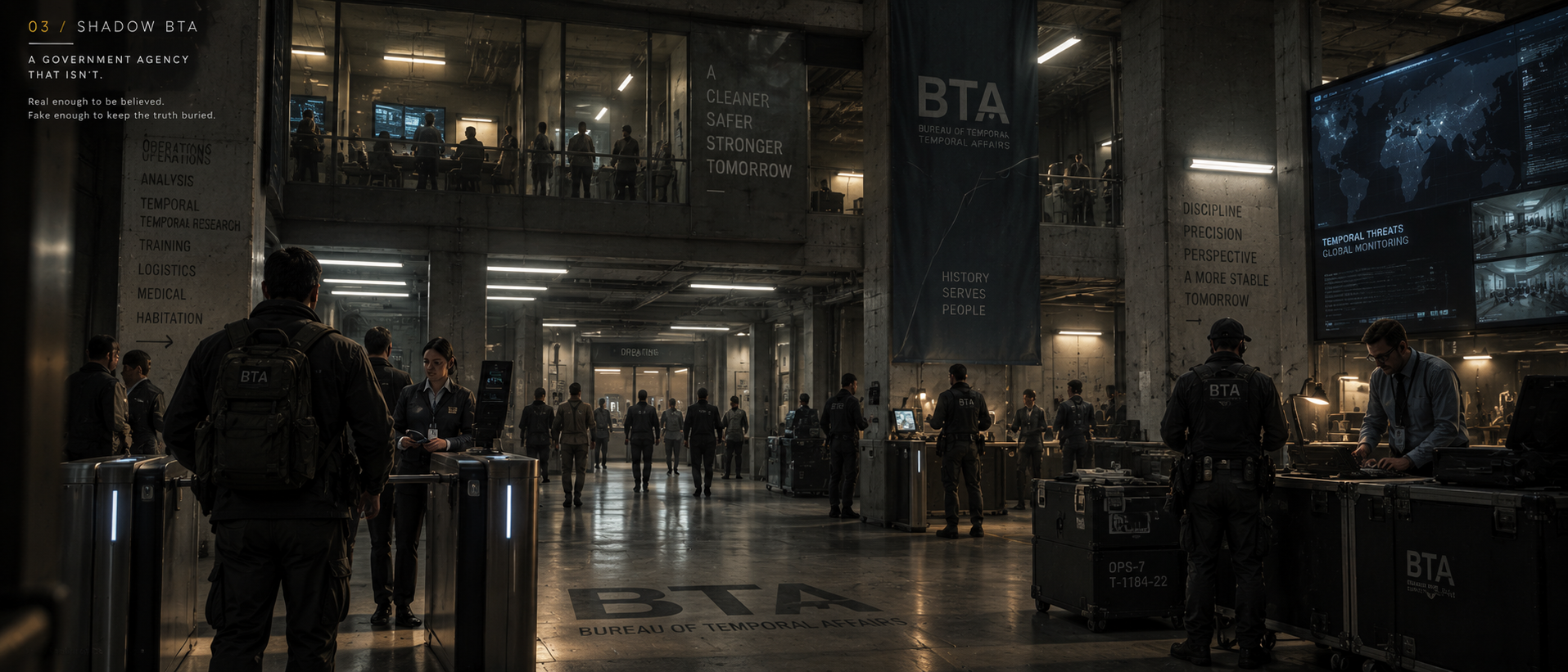
A government agency assembled from real credentials, diverted equipment and employees who believe the cover.
The world · 2056
The third world war has ended. Infrastructure works, trains run and the official language is recovery. The institutions rebuilt during the conflict kept much of their wartime reach.
Electric vehicles, transit and civic systems remain ordinary parts of life. They show dents, deferred maintenance and improvised repair. Technology has reached the future and inherited the same budgets and neglect as everything before it.
A generation returned with discipline, technical training and combat experience. Many found unstable work and little social purpose. Morgan recruits from this pool because its members are capable and want their service to matter again.
Criminal networks gained influence through reconstruction. Intelligence agencies expanded during the war and never fully contracted. In some places, the boundary between public authority and organized crime is maintained by forms, access and verification systems.
The city avoids neon spectacle. Temporal unease appears through repeated people, misaligned reflections, incompatible signage and small details that suggest the same street has carried more than one outcome.
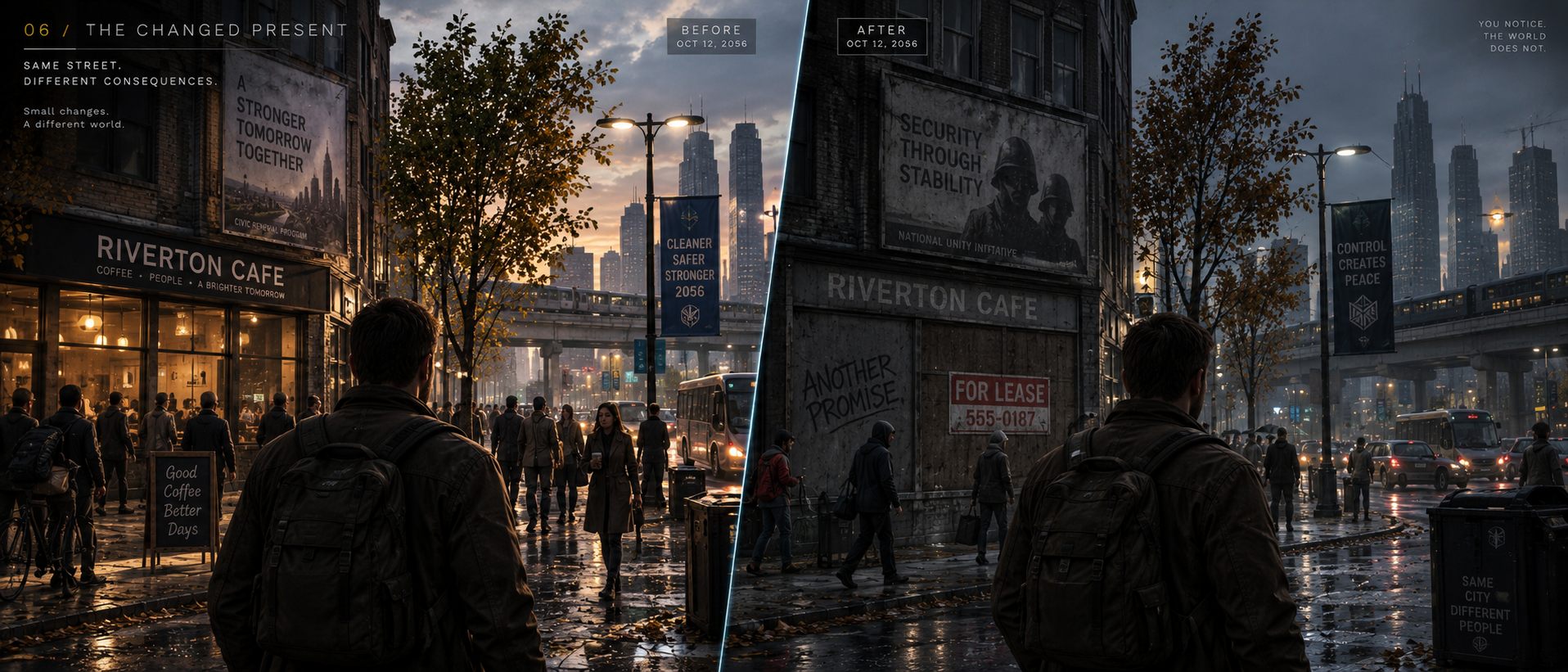
A removed shop owner leaves a closed business. A disrupted meeting prevents an alliance. A major death reorganizes the network around it. These changes first appear as environmental details; noticing them eventually becomes a survival skill.
The player compares familiar locations after recall. Buildings, advertisements, ownership and people can shift without an objective marker explaining the difference. Danny’s growing ability to read the city is also how he recognizes the scale of Morgan’s operation.
Temporal system
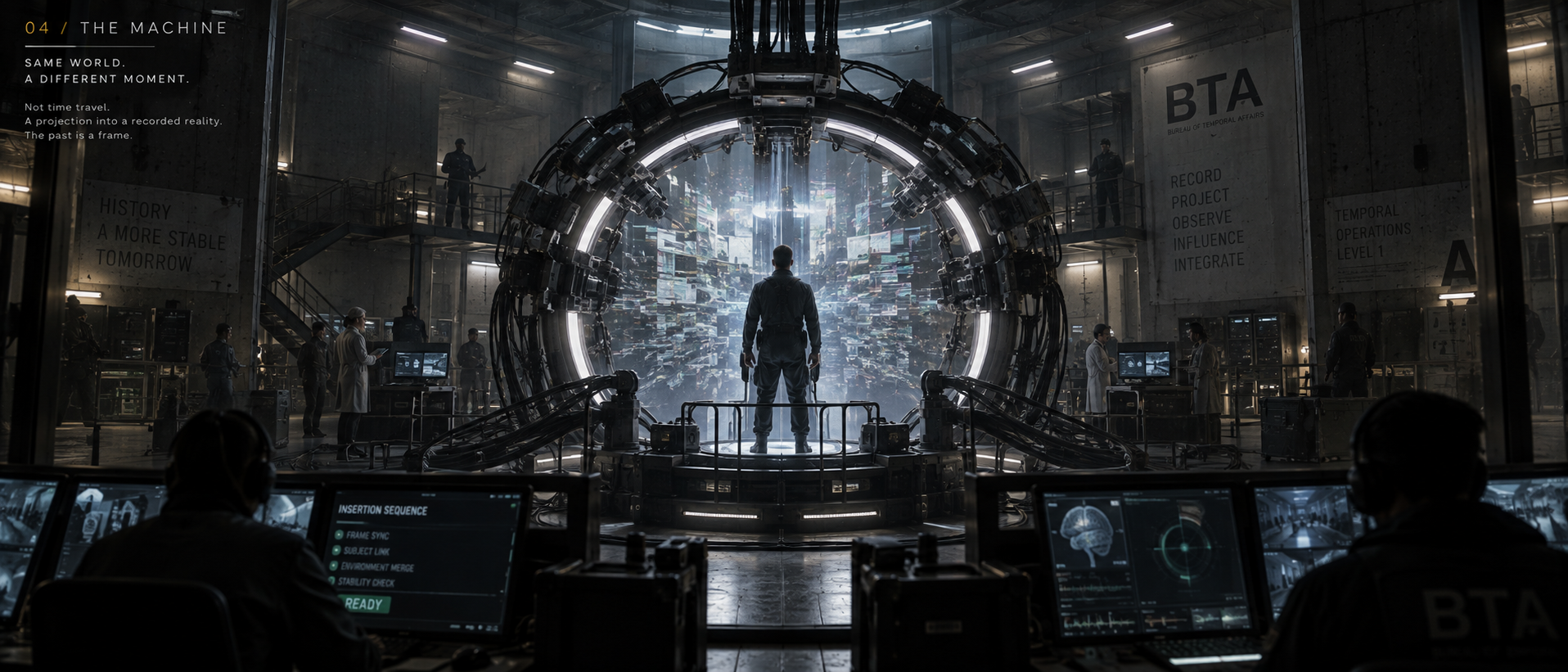
It projects a subject into a saved state of spacetime, generates a parallel branch and integrates a selected result back into the operating present.
The machine stores dimensional snapshots as moments occur.
A copy of the subject is merged onto a recorded frame.
The intervention continues as a real parallel outcome.
An operator at the present end retrieves the operative and result state.
The selected result alters the originating present.
The machine can only enter frames it recorded. Its first successful scan is a hard wall, and degradation limits reliable access to roughly five years.
An operative cannot pull themselves home. Destroyed equipment or a hostile operator can leave them stranded inside the branch.
If the operative dies inside a branch, no surviving result remains to retrieve or integrate.
Conspiracy structure
A classified government research body with oversight and the original temporal machine. Morgan has legitimate access through his CIA role, though he does not control the program.
A private machine built from stolen plans, criminal finance and black-market components. Morgan’s genuine access supplies equipment, records and credentials convincing enough to survive routine checks.
Mission design
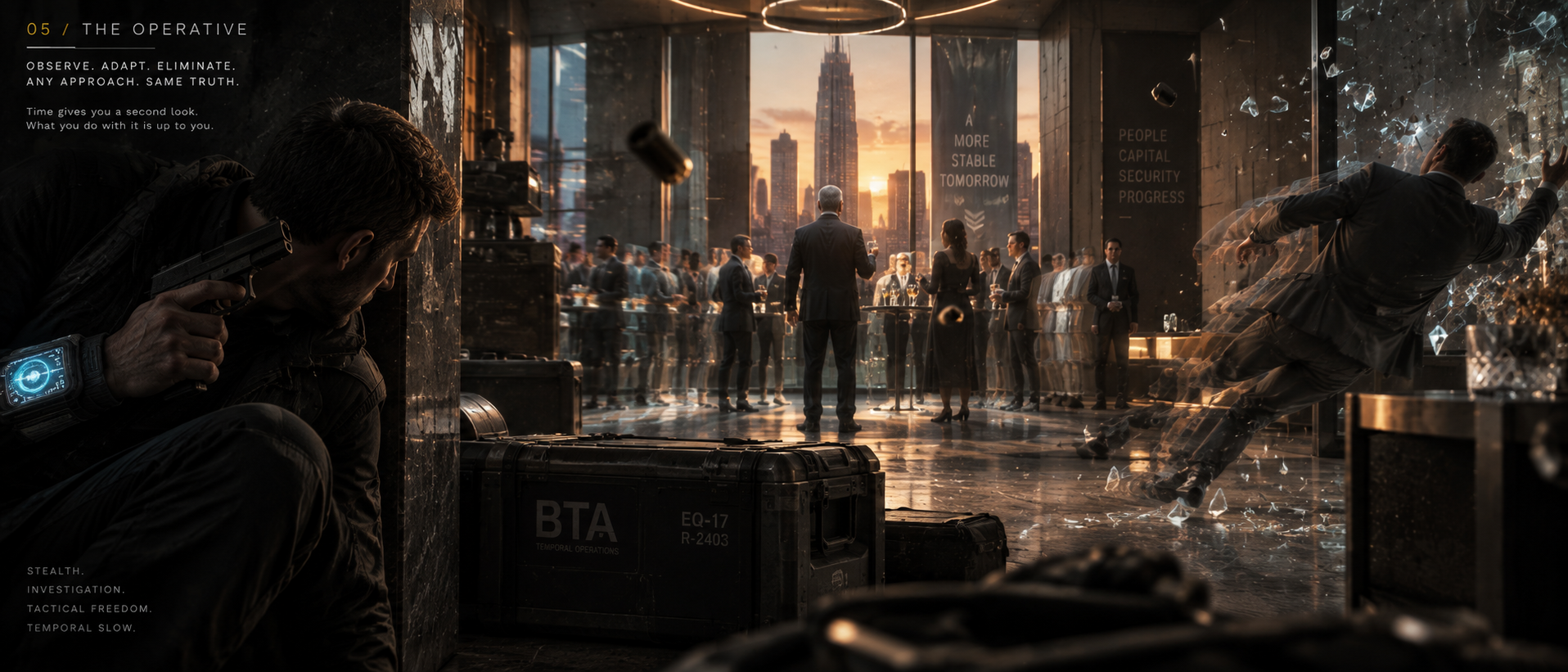
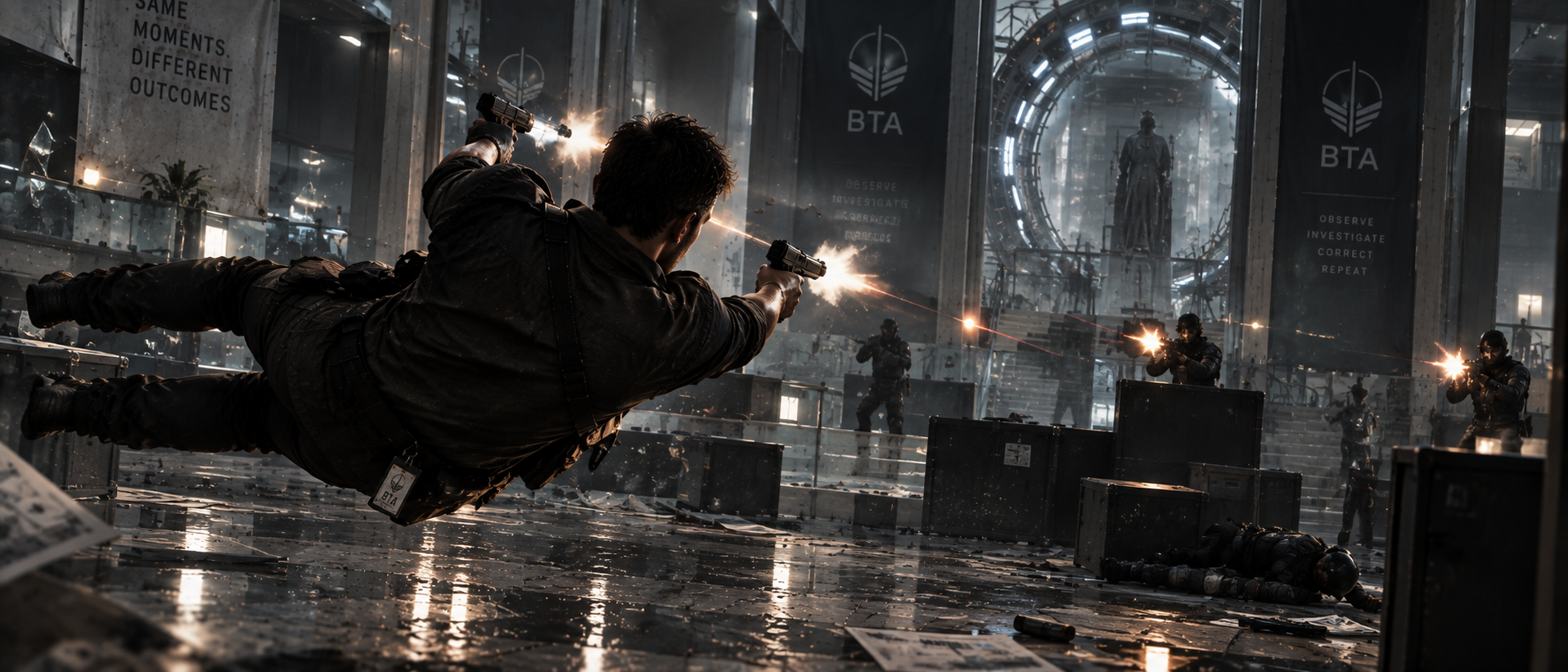
Target routines and environmental evidence support quiet infiltration, staged accidents or direct combat. The mission has no required style, but every approach creates evidence and consequence.
Narrative design
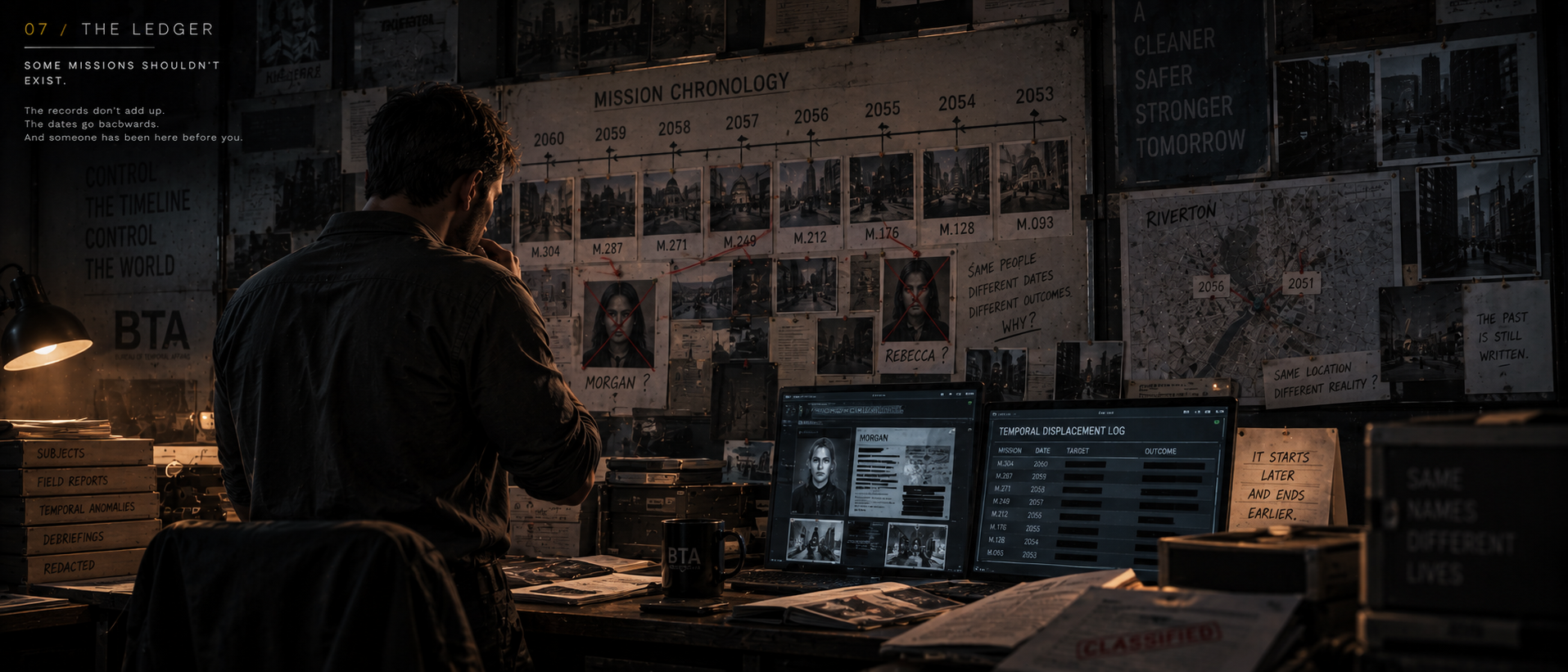
Morgan removes the criminal network from its newest member toward its founders. Each new mission begins earlier than the previous death, preventing the remaining members from ever seeing a pattern.
Danny removes the person with the least historical knowledge.
The following assignment begins before target A was killed.
People inside that branch have never experienced the prior elimination.
Every earlier target knows more about the machine and Morgan’s involvement.
Revelation sequence
The personal loop
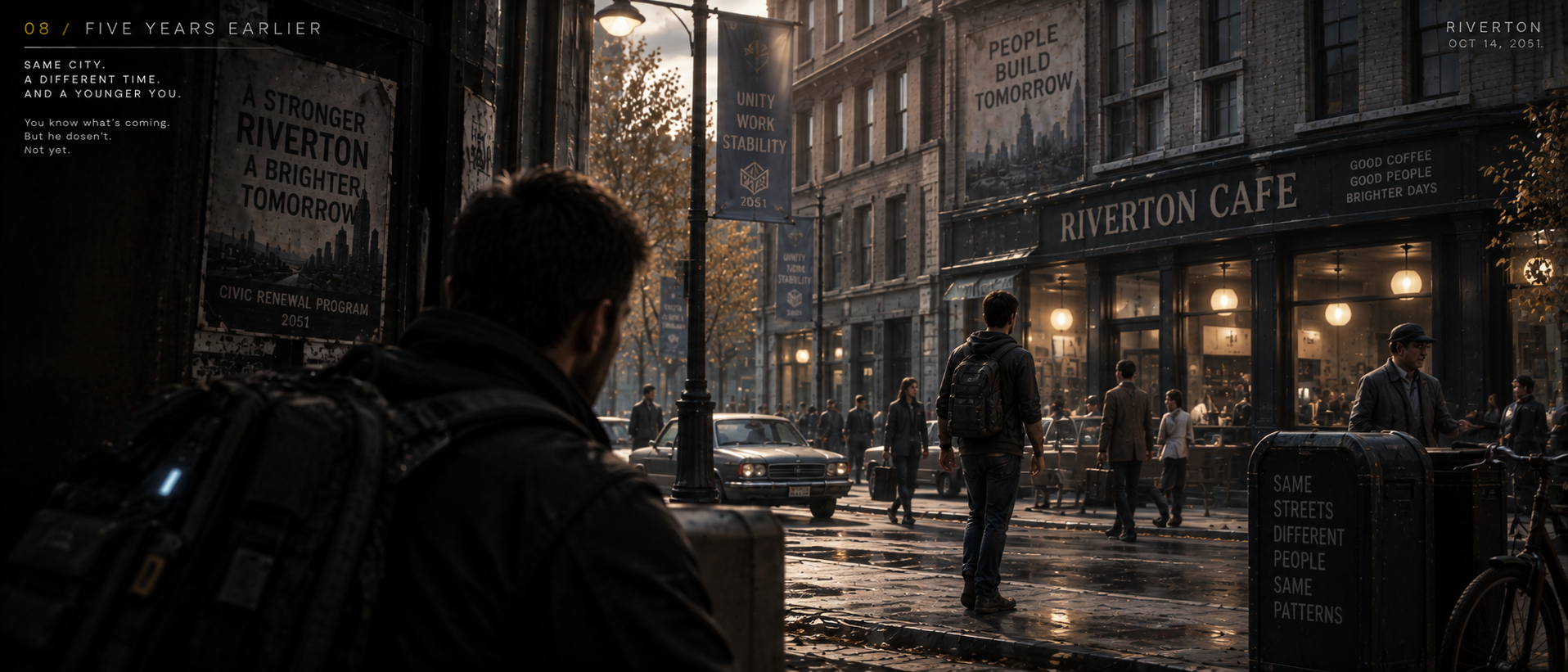
Danny eventually reaches a branch containing the younger man who will accept Morgan’s recruitment. The solution is personal because his own service made the cleanup operation possible. Stopping that version of himself removes the instrument Morgan designed the conspiracy around.
“Morgan said the targets were threats to national stability. He was right. He left out whose stability he meant.”
Character design
The central cast is organized around institutional identity, purpose and the moment each person decides what evidence can overturn belief.
A former soldier who signed because service once gave his life structure. He moves from efficient operative to investigator, then has to accept responsibility for acts committed without full knowledge.
Her belief in procedure makes her Morgan’s most effective hunter after Danny is disavowed. The same refusal to be bought makes her the one person he can trust when she recognizes the false agency.
A CIA executive who considers uncertainty a design failure. He sells guaranteed outcomes to criminals, then erases them to pursue a society where behavior, employment and dissent can be managed in advance.
Writing sample
Danny narrates in a dry, observant register. The lines carry information about the mission while showing how his trust in the Bureau is changing.
“Morgan said the targets were threats to national stability. He was not wrong. He just left out whose stability he meant.”
“I had been a weapon my whole career. The only thing that changed this time was that nobody told me who was holding the handle.”
“She opened the door braced for trouble. She had the right instinct and the wrong target.”
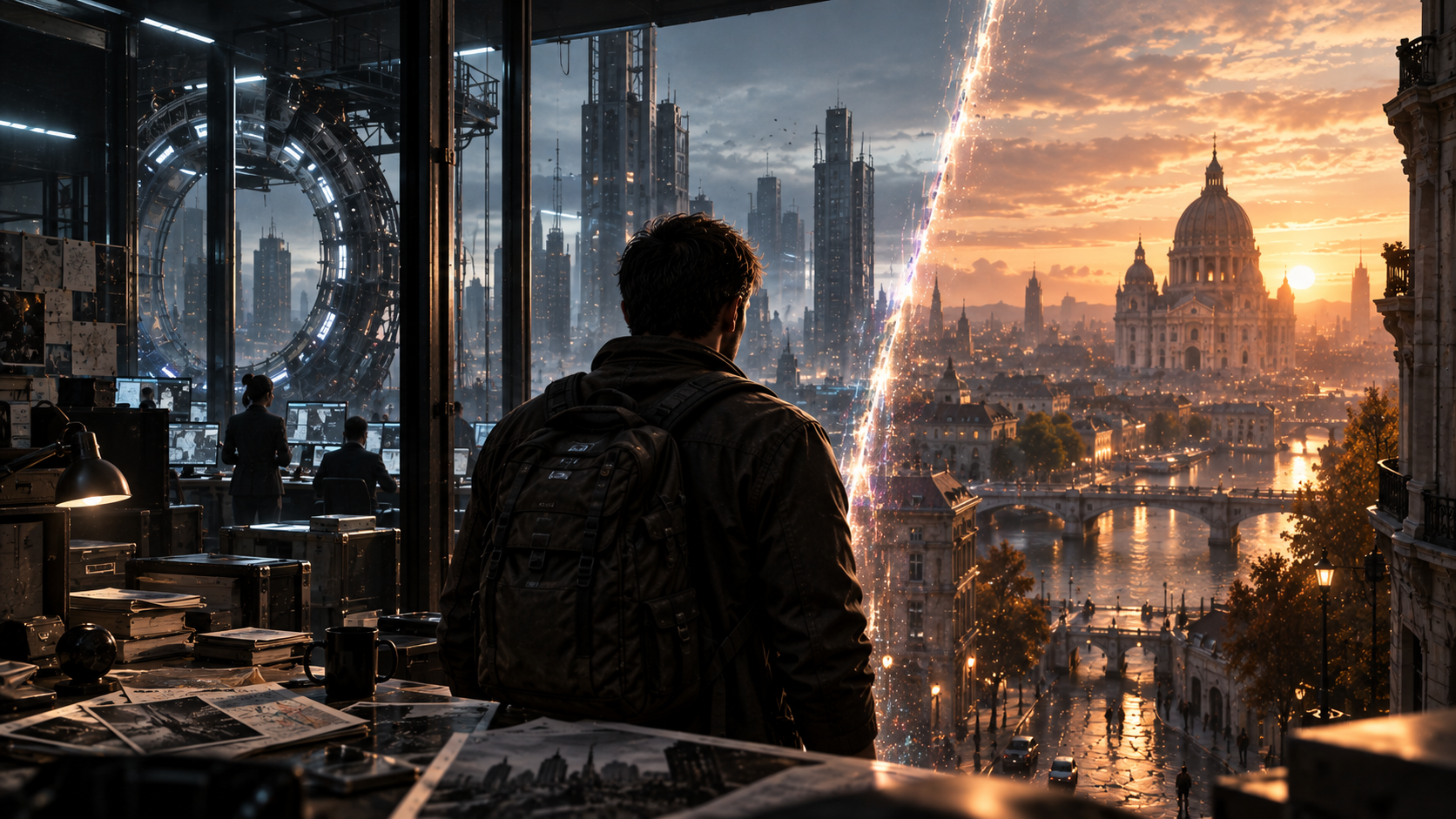
The first game closes the criminal network and Morgan’s shadow operation while leaving the official Bureau, the temporal technology and the consequences of integration alive.

Original concept, world rules, technology, characters, mission structure and story draft by Hamza Trabelsi. Concept imagery is AI-assisted visual development.