Why the institutions developed
Docks become leverage because the fleet once needed safe landings. Storehouses become power because hunger gives stored grain a political meaning.
Original IP · Political game world · Full world bible
A post-collapse island where land, food and identity form one political system. Its rulers do not need a crown because survival already passes through them.
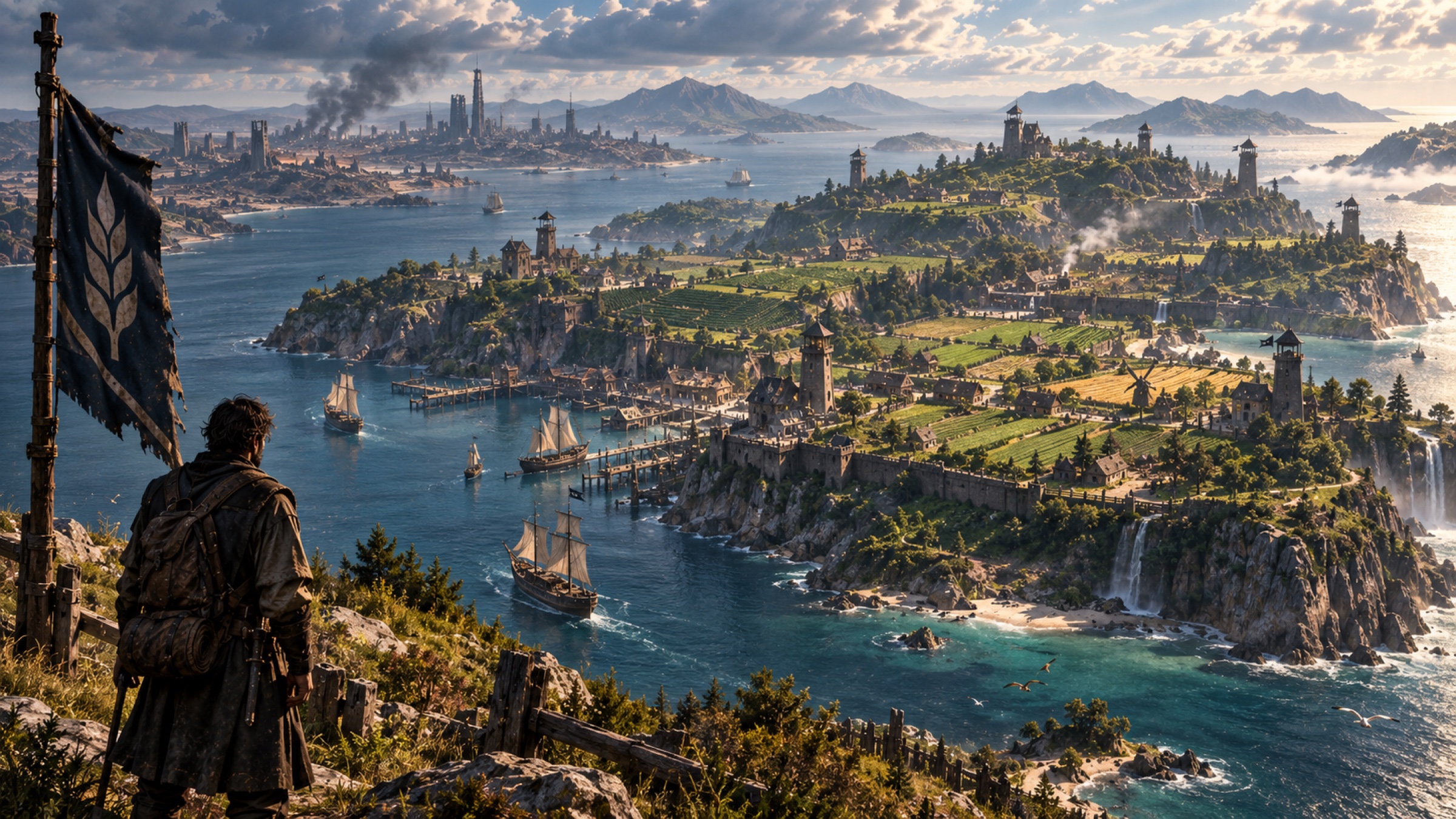
The island produces stability; the mainland remains its salvage reservoir and threat engine
World premise · Lore
The Covenant is a political survival RPG concept set generations after mainland collapse. The player moves between hereditary Farms, ungoverned Free Land and a growing dock settlement, using work, sponsorship and identity records to gain access. Its stories begin with practical needs such as food, movement, tools and legal recognition.
On the mainland, electricity fails by region, fuel stops moving and travel begins to cost more than it returns. Refugees become camps; camps become targets. A wooden fleet leaves quietly because any visible source of food or mobility attracts people who can overwhelm it.
The island retains clean streams, workable soil and enough distance from the collapse. The first settlers build above the tide line, test water, ration food and make a beach vow against hierarchy. Their competence saves lives and gives them first control of the boats, fields and storage that everyone later needs.
Generations afterward, each Farm has developed its own taxes, labor rules and internal market. Some permit broad trade and movement; others centralize tools, seed and metal. Shared tags, immigration lists and gate standards allow the estates to cooperate. The Council prevents war among Lords while leaving workers subject to local authority.
Most workers experience the state through ordinary transactions. A tag is checked at a market. A tool is rented against an ID. Water is allotted by a Farm. Children remain socially known but legally uncounted until registration. Control feels administrative until a name is revoked and each ordinary dependency closes at once.
Docks become leverage because the fleet once needed safe landings. Storehouses become power because hunger gives stored grain a political meaning.
A transfer, inspection, missing tag or denied tool can begin a story because each event changes a person’s access to work, movement or food.
Free Land resists the Lords but contains war chiefs and scarcity. The Farms provide safety while turning permission into coercion.
Gates, ledgers, docks, scales and storehouses receive the visual attention another setting might reserve for palaces.
The political system is experienced through ordinary routines: registering a child, borrowing a tool, crossing a gate, finding work and preparing for winter.
A permitted worker can marry, raise children, trade and build a stable life. Every part of that life depends on continued recognition by the estate recorded on the person’s tag.
Farms differ in character and law. Some allow workers to trade freely inside the estate. Others control seed, tools, metal and market stalls through the Lord’s storehouse. Taxes, punishments and labor terms change at each border. Shared tag standards make movement administratively possible while local permission determines whether a person can remain.
Children are socially known before they exist in the ledger. Registration marks the moment when a child becomes a counted resident and receives a Farm identity. A household may include an unregistered spouse or child for years, but every checkpoint or dispute exposes the uncertainty of that status.
Daily work follows the agricultural year. Seed, irrigation access, livestock, repair and stored grain matter more than abstract currency. A Farm with full storehouses controls winter; one with preserved seed controls the following year. Smiths and carpenters depend on mainland salvage because the island can maintain basic manufacturing but cannot reproduce every old material.
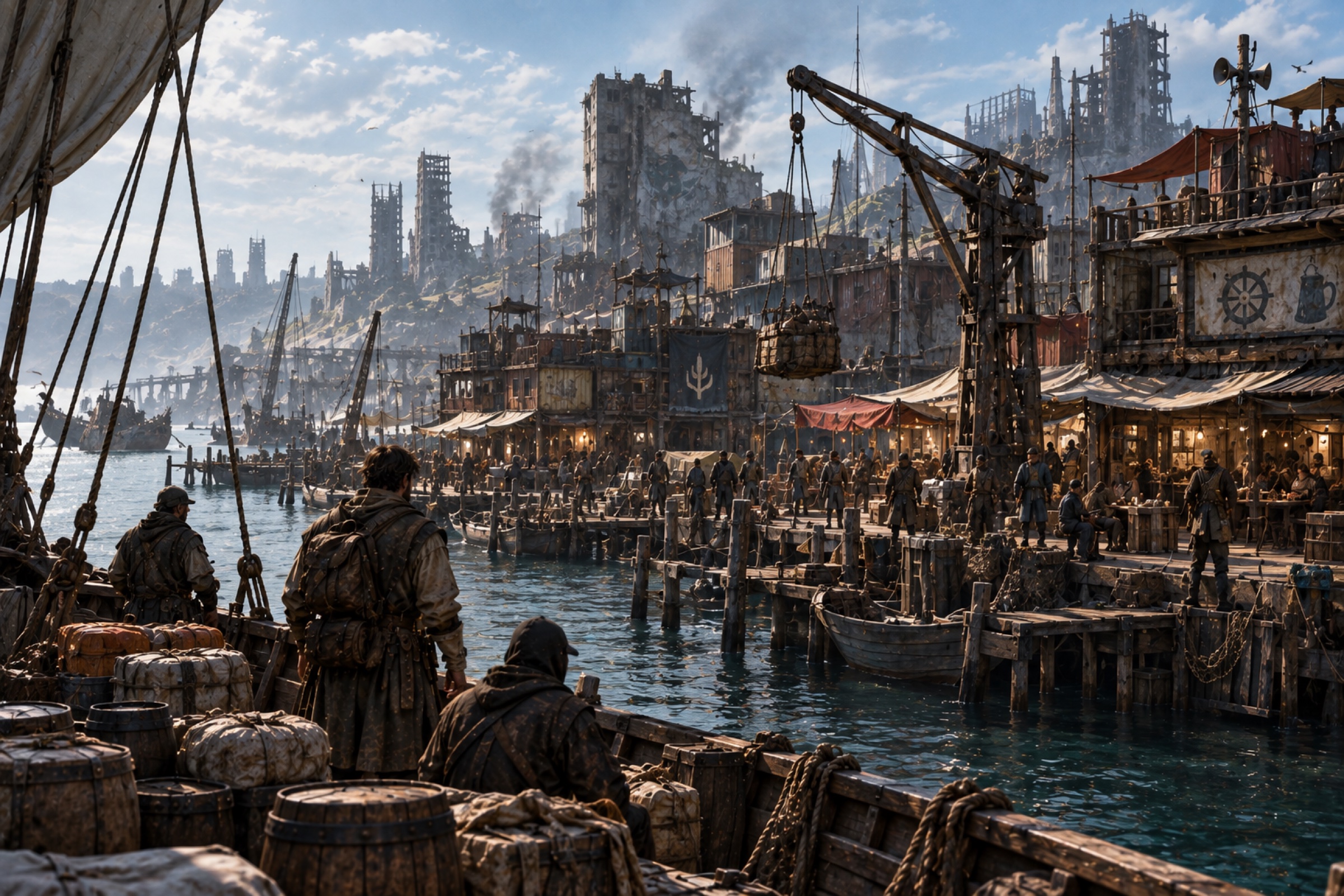
Free Land contains fortified villages, family territories and shifting alliances. It offers life beyond the tag system, along with weak protection and recurring violence. Dock Town attracts traders, guards, scavengers and new arrivals from the mainland. It is the first place many outsiders learn that entry to the island requires sponsorship.
Groups and institutions
Power is divided among estates, shared institutions and communities outside the ledger.
Descendants of the founding class control land, water, docks and local markets. Each estate sets its own taxes, employment terms and punishments.
The Council standardizes tags, transfers, immigration lists, gate protocols and conflict arbitration. Its purpose is compatibility and internal peace among owners.
The majority of the island’s population produces food, repairs equipment and moves goods. Their stability gives the Farms legitimacy, while their dependence keeps the system operating.
Former rebels, families, war chiefs and traders live beyond Farm permission. They compete internally and sell salvage back through the gates that present them as a warning.
Mainland organizers defend the landing, storage yards and trade lane. The Covenant supplies food, water and manufactured goods. Growth may eventually turn the town from buffer into rival.
Founding sequence
The island’s institutions develop from emergency tasks. Each generation inherits arrangements that now look natural because their original crisis has passed.
War, disease and infrastructure failure make mainland routes unreliable and concentrate survivors around remaining supplies.
A group leaves quietly, reaches an island and makes a vow against hierarchy and exclusion.
People who organize boats, fields, water and storage gain practical authority during the survival period.
Responsibility for land and infrastructure hardens into ownership, then passes between generations.
The Council coordinates estate systems while Free Land and Dock Town expose the limits of its control.
01 · Founding history
The mainland fails in layers. Survivors build a wooden fleet, find an island, and promise that no one will rule, no one will be turned away, and everything brought from the sea will be shared.
The founding vow erodes as responsibility for land and infrastructure becomes a claim of permanent ownership.
The founders clear the first fields, control the boats and construct the first docks and storehouses. When stability arrives, they treat their work as title. Temporary responsibility becomes hereditary control through accumulated precedent.
A wooden fleet leaves a mainland where stable routes now attract predators.
Shelter, water, rationing and shared work make survival possible.
Docks, fields, wells and storehouses concentrate practical authority.
Founders convert first responsibility into permanent title.
The island becomes a patchwork of private regimes.
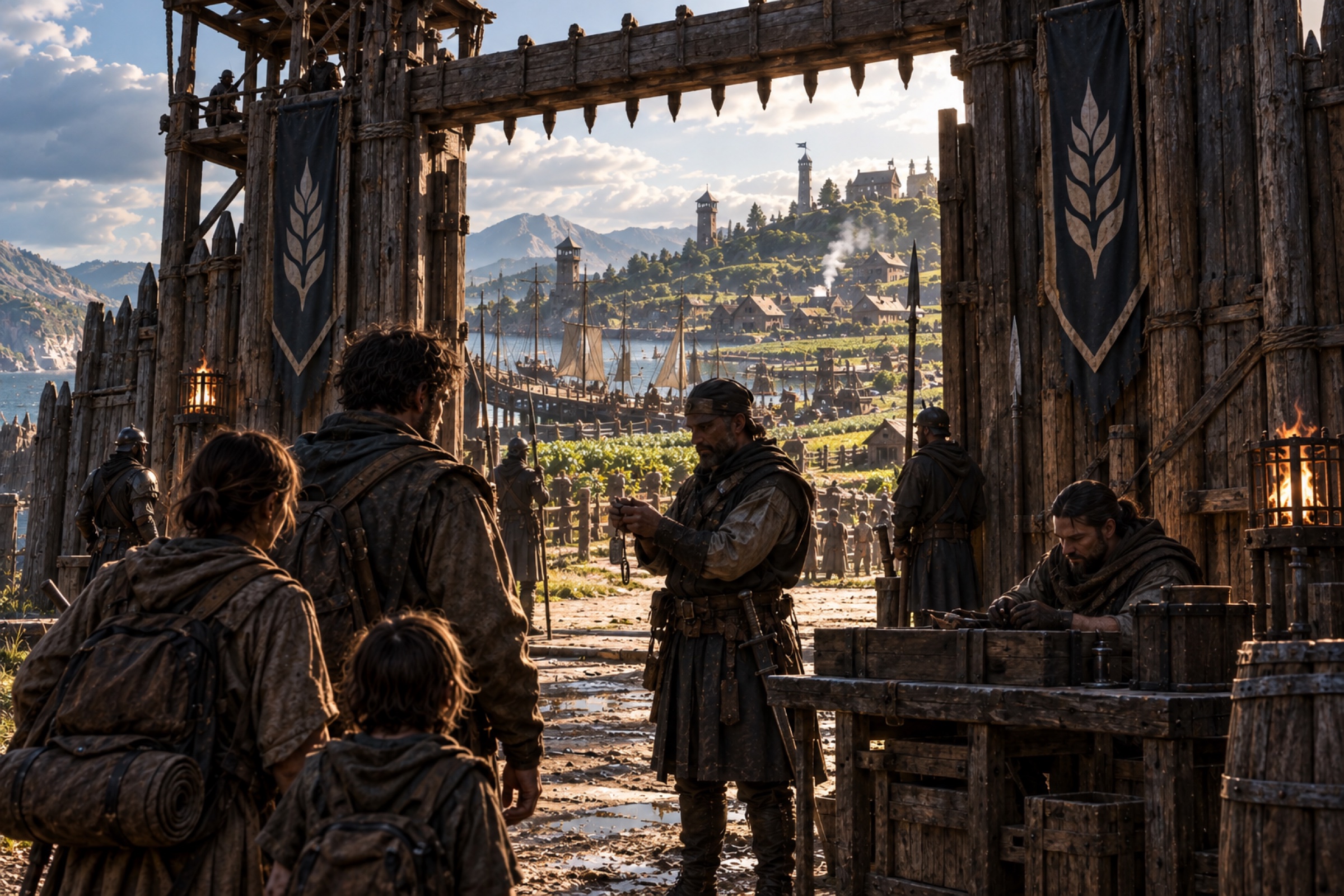
Permission is physical: a Farm tag connects identity to territory
02 · Identity system
Every permitted resident wears a marked metal tag. Gates and markets verify it against a record containing an ID, physical description and identifying notes.
A child has social existence but receives legal standing only when registered and issued a tag.
The origin Farm cannot forbid departure, but a destination must accept the worker and replace the old tag.
A removed ID loses official trade, land, tools, seed and water. The system applies pressure without requiring a prison.
You live on a Farm by permission.
03 · Political geography
The map is built around flows of food, salvage, labor and legitimacy, not a list of disconnected biomes.
Owned estates with local law, taxes, markets and controlled infrastructure. Common standards make them appear unified from a distance.
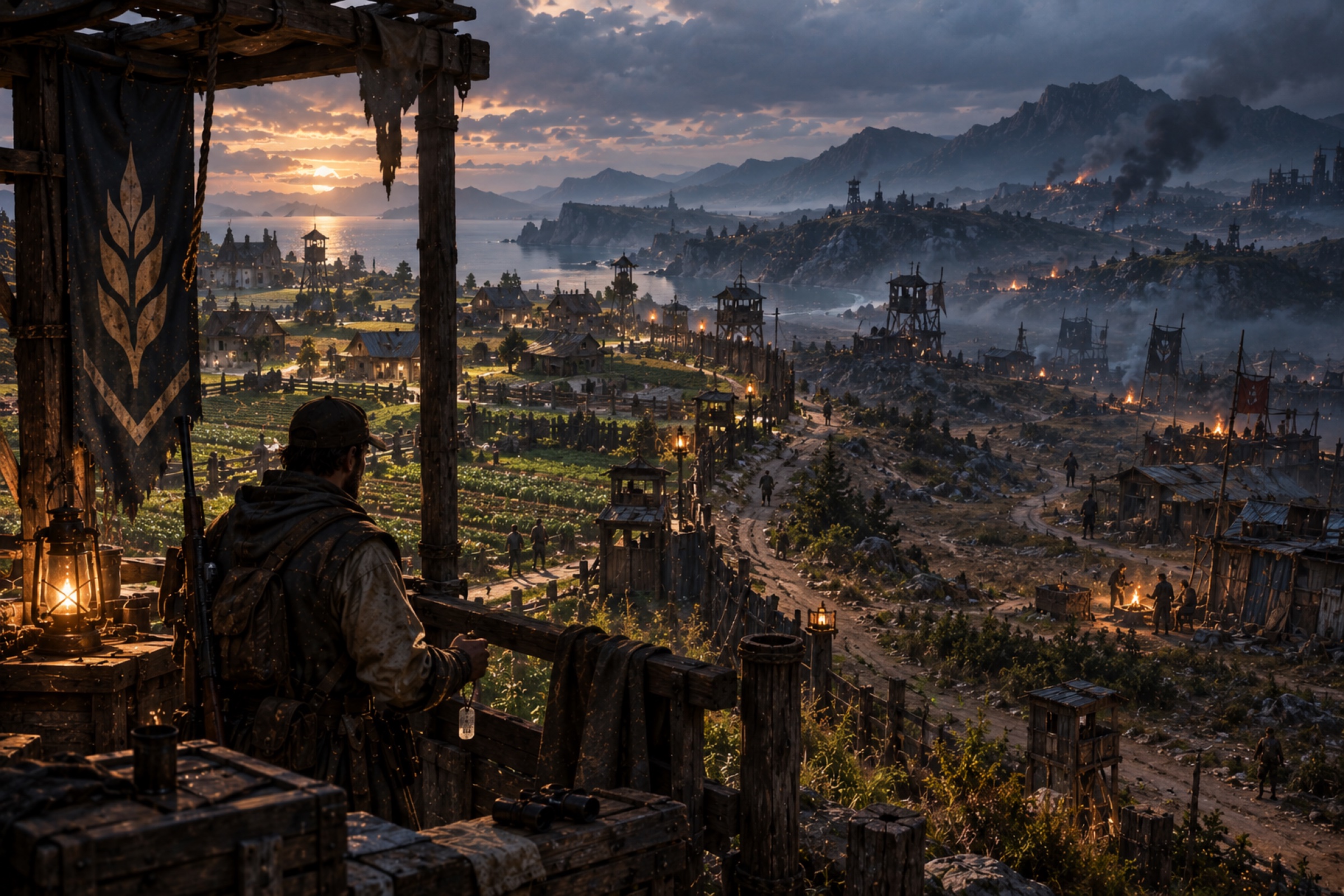
A failed uprising leaves forts, rival camps and informal trade. The Lords preserve the territory as a warning and avoid the cost of reconquest.
Industrial material and old medicine remain valuable, but every dependable route creates attention and danger.
A repeated salvage landing grows into a protected trade zone. Mainland operators provide security; the island pays in food, clean water and tools.
04 · Infrastructure is government
The design makes political control playable and visible in the places required for daily life.
Boats connect the island to salvage. Every Farm’s dock history is a history of leverage.
Stored grain governs winter, seed governs the next harvest, and metal governs every future tool.
Inspection sheds, toll tables and ledgers convert movement into a privilege that can be withdrawn.
05 · The Council
The Lords cooperate only where island-wide compatibility is useful.
| Shared by Council law | Controlled by each Farm | Result for the player |
|---|---|---|
| Tag standards and verification | Taxes, punishment and labor terms | Identity records and unequal rights |
| Transfer and immigration lists | Who receives local permission | Movement exists, but acceptance is scarce |
| Gate and trade protocols | Market access and local prices | The island functions as one economy of unequal estates |
| Conflict arbitration | Internal security | War is contained while coercion remains private |
06 · Systemic story engine
The world generates stories by making every solution produce a dependency.
Tags make trade and movement safer while giving the Farms a switch that can remove a person from lawful life.
The Farms condemn its disorder, buy its salvage, tax its traders and use its hardship as political evidence.
A dependable mainland hub lowers expedition cost while turning a repeated route into a target worth controlling.
Original history, governance, identity system, class structure, economy, locations and world bible by Hamza Trabelsi. Concept imagery is AI-assisted visual development.